
About one in three Americans will develop shingles in their lifetime, and the risk rises sharply after age 50. The pain — a band of burning, blistering rash following a single nerve — can last weeks, and a meaningful share of patients go on to develop postherpetic neuralgia, a chronic nerve pain that can persist for months or years. The current shingles vaccine, Shingrix, is more than 90% effective at preventing the disease across age groups and is one of the most consequential additions to adult immunization in the past decade. Public-health authorities strongly recommend it for eligible adults — and this guide is written from that pro-vaccine starting point, while leaving the final decision to you and your clinician.
This guide covers what shingles is, how Shingrix works, its effectiveness and side-effect profile, the dosing schedule, Medicare and private-insurance coverage, and who should and should not receive it. It is general education, not medical advice — your doctor or pharmacist can tell you whether Shingrix is right for you and when to get it. For related senior-health topics, see our healthy aging guide and pneumonia vaccine guide. Broader topics live in our medical conditions library.
What Shingles Is and Why Vaccination Matters
Shingles, also called herpes zoster, is the reactivation of the varicella-zoster virus that causes chickenpox. After a chickenpox infection (or, historically, the older chickenpox vaccine), the virus stays dormant in nerve ganglia for decades. As cellular immunity wanes with age, immunosuppression, or stress, the virus can reactivate, traveling along a nerve and producing a painful, blistering rash in the dermatome that nerve serves.
Beyond the acute illness, shingles can lead to postherpetic neuralgia (PHN), zoster ophthalmicus (when it affects the eye, with a risk of vision loss), Ramsay Hunt syndrome (facial paralysis with ear involvement), and rare but serious neurologic complications including encephalitis. According to the CDC’s shingles overview, there are roughly a million cases per year in the U.S., with risk climbing steeply after 50. Because PHN can be debilitating and hard to treat once it develops, preventing shingles in the first place is the central reason vaccination is recommended.
How Shingrix Works
Shingrix (recombinant zoster vaccine, RZV) is a non-live, adjuvanted subunit vaccine. It contains glycoprotein E from the varicella-zoster virus combined with the AS01B adjuvant system, which boosts the immune response — particularly important in older adults, whose immune systems tend to respond less robustly to standard vaccines.
Shingrix replaced Zostavax (a live attenuated vaccine, discontinued in the U.S. in 2020) because Shingrix is substantially more effective and works well even in older adults. The non-live formulation also makes it appropriate for many immunocompromised people, for whom live vaccines were contraindicated. Your pharmacist or clinician can confirm which vaccines are safe for your specific situation.
Who Should Get It
The CDC’s Advisory Committee on Immunization Practices (ACIP) recommends Shingrix for all adults 50 and older to prevent shingles and its complications — regardless of prior shingles history or prior Zostavax vaccination. ACIP also recommends Shingrix for adults 19 and older who are or will be immunodeficient or immunosuppressed due to disease or therapy, including people with HIV, hematologic malignancies, or solid-organ transplants, and those on chemotherapy or immunosuppressive medications. The CDC notes that adults with weakened immune systems face a higher risk of shingles complications, which is why the recommendation extends down to age 19 for that group.
People who have previously had shingles can still benefit, since recurrence is possible; the vaccine is generally given after the rash and acute pain have resolved. If you are unsure whether you are due — or whether your immune status changes the timing — ask your clinician or pharmacist, who can check your history and current medications.
Effectiveness
Shingrix demonstrated remarkable efficacy in pivotal trials, and the CDC continues to cite strong real-world protection. In adults 50 to 69 years old with healthy immune systems, the vaccine is about 97% effective at preventing shingles. In adults 70 and older — a group in which most vaccines work less well — it is about 91% effective against shingles and postherpetic neuralgia. In immunocompromised adults, effectiveness is lower and varies by condition (roughly 68% to 91%, per the CDC), but the vaccine still provides meaningful protection for a high-risk group.
Real-world studies and post-marketing data have confirmed strong, durable protection, and long-term follow-up shows efficacy remaining high for years after vaccination. CDC data also show that vaccinated adults who do develop shingles tend to have milder disease with shorter duration and lower rates of PHN. In short: the vaccine both prevents most cases and softens the ones it does not prevent.
Dosing Schedule
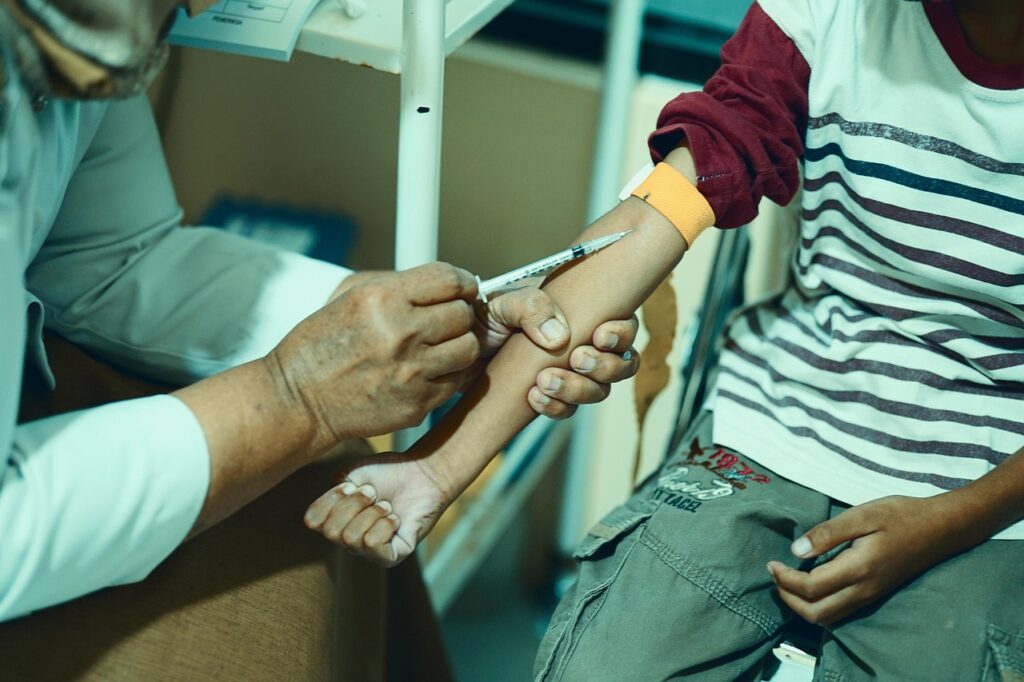
Shingrix is given as two intramuscular doses, typically in the upper arm (deltoid). The standard schedule places the second dose 2 to 6 months after the first. For immunocompromised adults, ACIP allows the second dose to be given as early as 1 to 2 months after the first to provide protection more quickly. Your clinician or pharmacist will confirm the right interval for you.
If the second dose is delayed beyond 6 months, it should still be given — there is no need to restart the series. People who previously received Zostavax should also complete the full two-dose Shingrix series, with a gap after the Zostavax dose (ACIP has advised at least 8 weeks). Completing both doses matters: a single dose does not provide the full, durable protection the two-dose series does.
Side Effects
Shingrix is reactogenic — meaning it produces noticeable short-term side effects in many people. The most common are injection-site pain, redness, and swelling, along with fatigue, muscle aches, headache, shivering, fever, and nausea. In trials, a notable share of recipients had reactions strong enough to briefly interfere with daily activities. According to the CDC, these reactions typically last only 2 to 3 days.
The intensity of these reactions is, in a sense, the vaccine working: the robust immune response that produces temporary soreness and fatigue is the same response that produces the strong protection. Many recipients plan the vaccine for a day when they can rest afterward. Acetaminophen or ibuprofen can help manage symptoms — ask your pharmacist about timing, since some clinicians prefer you not pre-medicate before the shot. If side effects worry you, that is worth a quick conversation with your provider rather than a reason to skip a highly protective vaccine.
Serious adverse events are rare. Post-marketing surveillance identified a small possible increased risk of Guillain-Barré syndrome (GBS) after Shingrix, and the FDA added this to the product labeling; the CDC notes GBS has been reported very rarely after the vaccine. Importantly, shingles itself can also trigger GBS, and public-health authorities continue to recommend the vaccine because the benefit-to-risk balance remains strongly favorable.
Cost and Insurance
Shingrix is covered under Medicare Part D at $0 out-of-pocket, following the Inflation Reduction Act provision that eliminated cost-sharing for adult ACIP-recommended vaccines under Part D. Beneficiaries with a Part D plan now generally pay nothing for Shingrix at participating pharmacies — a major change from earlier years, when copays of $40 to $200 per dose were common.
Most private insurance plans cover Shingrix as a preventive service with no cost-sharing under the Affordable Care Act. Without insurance, the list price is roughly $200 to $250 per dose, or about $400 to $500 for the full series; pharmacy programs and manufacturer assistance may reduce out-of-pocket costs. Prices and coverage details change, so confirm your specific cost with your pharmacy or plan.
One coverage nuance: Original Medicare Part B does not cover Shingrix — it is a Part D vaccine. Beneficiaries with only Part A and Part B (no Part D plan) may face the full cost, so a Part D plan or a Medicare Advantage plan with drug coverage is the usual route to the $0 benefit. A pharmacist can check your coverage before you get the shot.
Who Should Not Get Shingrix (Talk to Your Clinician)
Contraindications are limited: a severe allergic reaction (anaphylaxis) to a previous dose of Shingrix or to any component of the vaccine, and current shingles infection (wait until after recovery). Pregnancy is a precaution — ACIP has advised delaying until after pregnancy in most cases due to limited data. Anyone with questions about their own eligibility should ask their clinician or pharmacist rather than self-assessing.
Mild illness is not a reason to defer. Moderate or severe acute illness is generally a reason to wait until you recover. People who are currently immunosuppressed are explicitly recommended to receive Shingrix under ACIP’s guidance for immunocompromised adults — again, your care team can help you time it around your treatment.
When to seek emergency care: Call 911 or go to the emergency room for signs of a severe allergic reaction after vaccination — difficulty breathing, swelling of the face or throat, hives, rapid pulse, or fainting. These typically occur within minutes to hours and require immediate treatment. Separately, for shingles affecting the eye (zoster ophthalmicus — a rash near the eye or on the tip of the nose), seek same-day ophthalmology evaluation regardless of vaccination status.
Frequently Asked Questions
Do I still need Shingrix if I already had shingles?
Yes. Recurrence is possible, and ACIP recommends vaccination after the acute episode resolves. The vaccine protects against future episodes regardless of prior shingles. Ask your clinician about the right timing after a recent episode.
What if I previously got Zostavax?
You should still get the full two-dose Shingrix series, after an appropriate gap following the Zostavax dose (ACIP has advised at least 8 weeks). Shingrix provides substantially better and more durable protection.
Can I get Shingrix at the same time as the flu shot?
Generally yes. ACIP allows simultaneous administration of Shingrix with other adult vaccines, including flu, COVID-19, and pneumococcal vaccines, given at separate injection sites. Side effects may add up but are usually manageable. Confirm with the pharmacist administering your shots.
How long does Shingrix protection last?
Long-term studies show protection remains high for years after vaccination, with ongoing follow-up. ACIP does not currently recommend a booster dose; recommendations may evolve as more data emerge. Your clinician can share the latest guidance.
TL;DR: Shingrix is a highly effective, CDC-recommended shingles vaccine — about 97% effective in adults 50-69 and about 91% in adults 70+. The CDC recommends it for all adults 50+ and for immunocompromised adults 19+, as a two-dose series. Side effects (sore arm, fatigue, aches) are common but usually pass in 2-3 days; serious reactions are rare. Medicare Part D covers it at $0, and most private plans cover it free. Preventing shingles also helps you avoid postherpetic neuralgia. This is a pro-vaccine guide — but talk with your doctor or pharmacist about whether and when Shingrix is right for you.
This article is for general education only and is not medical advice. Vaccine recommendations, safety data, and coverage change; verify current details with the CDC, your clinician, and your pharmacist before making decisions.
Sources
- CDC / ACIP — Shingles (Herpes Zoster) vaccination: who should get Shingrix, effectiveness, and side effects
- FDA — Shingrix prescribing information (including the GBS labeling update)
- Medicare.gov — Shingles shots covered under Part D at $0 (Inflation Reduction Act)
The Bottom Line
Shingrix is one of the most effective adult vaccines available — more than 90% efficacy across age groups, durable protection, and now $0 out-of-pocket for Medicare Part D enrollees. The two-dose series can produce 1 to 3 days of unpleasant but transient reactions, which is a fair trade for avoiding shingles and the chronic nerve pain that so often follows it. The CDC recommends it for all adults 50 and older and for immunocompromised adults 19 and older. If you have not yet completed the series, your next visit to the doctor or pharmacy is a good time to ask whether Shingrix is right for you.