
If a blood test has shown that your potassium is high, the most important thing to understand up front is this: high blood potassium — known medically as hyperkalemia — is a clinical finding, not a lifestyle problem you should try to solve on your own with food. It usually points to an underlying cause, most often reduced kidney function or a medication effect, and it can, at higher levels, disturb the heart’s rhythm in dangerous ways. So while many people search for how to lower potassium naturally, the honest and safe answer is that diet is one tool your medical team may use — never a substitute for being evaluated and treated by a clinician. This wellness guide explains what hyperkalemia means, why it happens, and the clinician-guided eating strategies a doctor or renal dietitian may recommend as part of a larger plan.
When to seek emergency care: Severe hyperkalemia is a medical emergency because very high potassium can cause life-threatening heart arrhythmias. Call 911 or go to the nearest emergency room if you have a very high lab value or symptoms such as new muscle weakness, palpitations, an irregular or unusually slow heartbeat, chest discomfort, fainting, or difficulty breathing — especially if you have kidney disease or take medications that raise potassium. Do not wait to “fix it with diet.” Bring a list of your current medications with you.
Get Evaluated First: Why High Potassium Is Not a Do-It-Yourself Problem
A high potassium result is a signal to talk to your doctor, not a cue to redesign your diet alone. The reason is that hyperkalemia almost always has a cause that needs to be found and managed. Sometimes the result is even a false reading (called pseudohyperkalemia) caused by how the blood was drawn or handled — which is one reason a clinician may repeat the test before acting. Only a healthcare professional can interpret your value in the context of your kidney function, your medications, your other lab results, and an EKG if needed.
Managing hyperkalemia typically involves treating the underlying cause, reviewing and possibly adjusting medications, and — when appropriate — dietary changes and, in some cases, prescription potassium binders. A lower-potassium diet supports that process; it does not replace it. Throughout this article, “work with your doctor or a renal dietitian” is not a formality — it is the safest way to lower potassium without swinging too far the other way, since low potassium (hypokalemia) can be just as dangerous as high potassium.
Understanding Potassium and Why It Gets Too High
Potassium is an essential mineral that helps regulate heartbeat, muscle function, and nerve signals. The body normally keeps blood potassium within a narrow range through a balance of dietary intake and removal by the kidneys. When that balance breaks down, levels rise. According to the National Kidney Foundation, potassium that climbs too high can cause symptoms like muscle weakness, tingling, and nausea, and at higher levels it raises the risk of dangerous, potentially fatal heart rhythm problems. Your care team, not an article, sets the specific target that is right for you.
The most common reasons potassium builds up include:
- Kidney disease. Chronic kidney disease (CKD), kidney failure, or acute kidney injury reduce the kidneys’ ability to excrete potassium. This is the single most common driver of hyperkalemia.
- Medications. Several common drugs raise potassium, including ACE inhibitors (such as lisinopril), angiotensin receptor blockers or ARBs (such as losartan), potassium-sparing diuretics like spironolactone, and NSAIDs such as ibuprofen and naproxen. Never stop, start, or change a prescription on your own — ask the prescriber.
- Other conditions. Poorly controlled diabetes, certain hormonal disorders, severe tissue injury, and dehydration can all contribute.
Because the cause matters so much, dietary changes are most useful when they are part of a plan built around your specific situation. Managing high potassium overlaps with managing other chronic conditions; our medical conditions guide offers a broader overview of when to seek evaluation.
High-Potassium Foods to Moderate (With Your Care Team’s Guidance)
If your doctor or renal dietitian has recommended a lower-potassium eating pattern, the first step is usually to identify the biggest potassium sources in your current diet. High-potassium foods are often defined as those with more than roughly 200 mg per serving, though exact amounts vary by portion, ripeness, and preparation. Common high-potassium foods people are often asked to moderate include:
- Bananas, oranges, and orange juice
- Potatoes and sweet potatoes
- Tomatoes and tomato products (sauce, paste, juice)
- Avocado
- Spinach and other cooked leafy greens
- Beans, lentils, and other legumes
- Dairy such as milk and yogurt
- Dried fruits like raisins and prunes
- Nuts, seeds, and bran products
Avoid potassium-based salt substitutes entirely. Products marketed as “salt substitutes” or “lite salt” (such as No Salt and Nu-Salt) frequently replace sodium chloride with potassium chloride, which can deliver a large dose of potassium in a single quarter-teaspoon. The U.S. Food and Drug Administration and kidney specialists warn that these products are a hidden hazard for people with kidney disease or hyperkalemia. Read labels closely, because potassium chloride and other potassium additives also appear in many processed and “low-sodium” packaged foods.
The Leaching Method: A Kitchen Technique for Root Vegetables
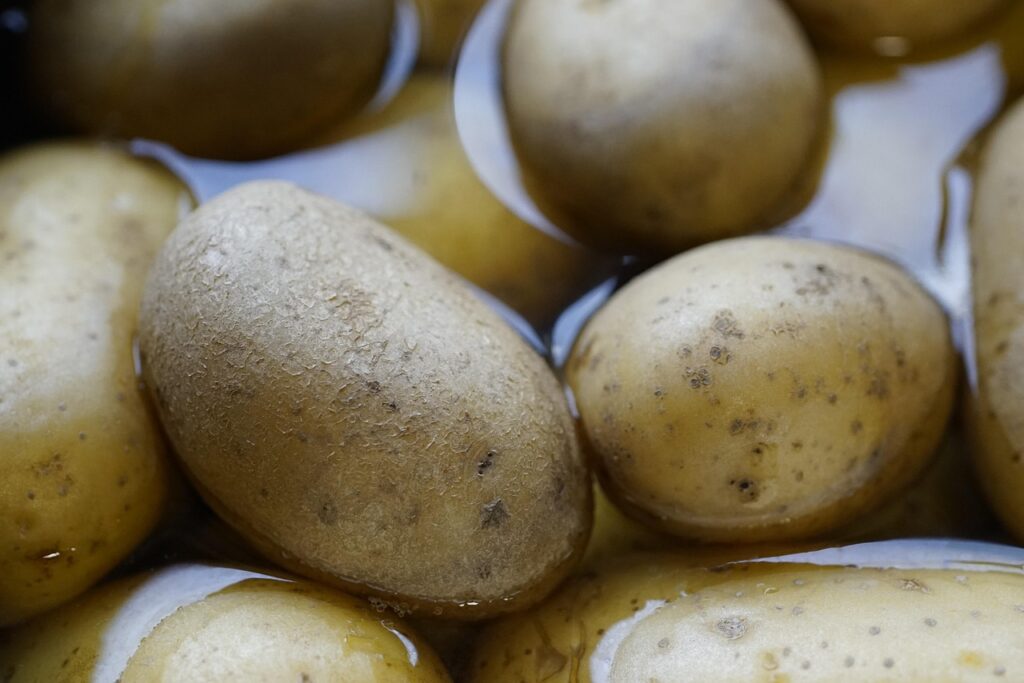
One technique renal dietitians sometimes teach is leaching (also called double-boiling), which draws some potassium out of certain vegetables. Because potassium is water-soluble, it can move from food into cooking water. Leaching can reduce the potassium content of suitable vegetables meaningfully, though it does not remove all of it and results vary.
A typical approach: peel and slice the vegetable thinly to increase surface area, soak the pieces in a large volume of warm water for a couple of hours, drain and rinse, then boil in a fresh, large pot of water for the normal cooking time and discard that water before eating. The National Kidney Foundation notes this works best for potatoes, sweet potatoes, carrots, beets, and winter squash. Leaching lets some people keep enjoying these foods in moderation instead of cutting them entirely — but portion size still matters, so confirm what fits your plan.
Lower-Potassium Food Alternatives
A lower-potassium diet does not have to be bland. Many everyday foods are naturally lower in potassium and can be used to replace higher-potassium choices. Lower-potassium fruits often include apples, blueberries, cranberries, grapes, pineapple, and watermelon. Lower-potassium vegetables often include cabbage, cauliflower, green beans, onions, bell peppers, and lettuce. White rice, white bread, and regular pasta are also comparatively low in potassium.
For protein, options such as chicken, eggs, and many fish are moderate in potassium and can be worked into appropriate portions. The goal your dietitian helps you hit is a reasonable total daily potassium intake, not the elimination of any single food. If you are also working on heart-health goals, our guide on how to lower cholesterol naturally offers complementary strategies — but coordinate changes with your clinician so the two plans fit together.
Beverages and Potassium
Drinks are an easy-to-miss source of potassium. Orange juice, tomato juice, prune juice, coconut water, and milk are all relatively high in potassium and can add up quickly across a day. Lower-potassium beverage choices generally include water, apple juice, cranberry juice, and lemonade, while coffee and tea contribute moderate amounts most people can include in reasonable quantities. If you have kidney disease, you may also have a fluid limit, so discuss both potassium and total fluid with your renal dietitian. Our article on whether coconut water is healthy covers its notably high potassium content in more detail.
Portion Control and Everyday Strategies
Rather than banning every moderate-potassium food, many renal dietitians emphasize portion control: a smaller serving of a food you enjoy can keep variety in your diet while limiting potassium. The Mayo Clinic recommends reading nutrition labels, and potassium content is now listed on U.S. Nutrition Facts labels, which makes tracking easier. Keeping a short food-and-drink diary for a week or two often reveals that one habit — a daily glass of orange juice, a nightly banana — accounts for a surprising share of intake, and adjusting that one habit can help.
Other Factors That Influence Potassium
Beyond food, a few other factors play a role. Dehydration can concentrate potassium in the blood, so staying adequately hydrated (within any fluid limit your doctor sets) supports normal handling. Constipation can raise potassium because the bowel is a secondary route for its removal, so adequate fiber from lower-potassium sources may help. Intense exercise can transiently raise potassium; moderate activity is generally fine, but if your potassium is already elevated, ask your physician before pushing intensity. And because NSAIDs and several prescription medications can raise potassium, review your full medication and supplement list with your doctor or pharmacist rather than adjusting anything yourself.
Frequently Asked Questions
Can I lower high potassium with diet alone?
Usually not, and you should not try. Diet is one part of managing hyperkalemia, but the underlying cause — such as kidney disease or a medication effect — needs medical evaluation and treatment. A lower-potassium diet works alongside that care, not in place of it. Always confirm your plan with your doctor or a renal dietitian.
How quickly can dietary changes affect potassium?
It varies with kidney function and the cause. Some people notice changes within days; those with more advanced kidney disease may take longer. Only repeat blood tests ordered by your clinician can tell you whether your level is actually improving — do not rely on how you feel.
Is a low-potassium diet safe for everyone?
No. Low potassium (hypokalemia) can be just as dangerous as high potassium. Restrict dietary potassium only if a clinician has confirmed your level is elevated and advised you to. People with normal kidney function and normal potassium generally benefit from potassium-rich foods.
What potassium level is dangerous?
Higher values carry more risk, and a very high level can trigger life-threatening heart rhythm problems that require emergency treatment. Rather than fixating on a number, treat a high result as a reason to contact your doctor promptly, and treat symptoms like weakness, palpitations, or an irregular heartbeat as a reason to seek urgent care or call 911.
Are salt substitutes okay if I am watching sodium?
Not the potassium-based ones. Many salt substitutes replace sodium with potassium chloride and can be dangerous if you have kidney disease or hyperkalemia. Ask your doctor or dietitian about safe ways to add flavor, such as herbs, spices, citrus, and vinegar.
What to Do Next
If your blood work shows elevated potassium, the first step is not to change your grocery list — it is to contact your healthcare provider so the cause can be identified and managed, and so any medications can be reviewed. If you have symptoms of severe hyperkalemia, treat it as an emergency and call 911. Once your clinician has evaluated you, ask whether a lower-potassium diet is appropriate and request a referral to a renal dietitian, who can build a personalized plan that keeps potassium in your target range without shortchanging your other nutritional needs. Use techniques like leaching and portioning within that plan, avoid potassium-based salt substitutes, read labels, and keep every follow-up appointment and blood test your care team recommends.
The short version: High blood potassium (hyperkalemia) is a medical finding that needs a clinician — not something to self-treat with diet. It usually reflects an underlying cause such as kidney disease or certain medications (ACE inhibitors, ARBs, potassium-sparing diuretics, NSAIDs). Severe hyperkalemia is an emergency: weakness, palpitations, or an irregular or slow heartbeat mean call 911. A lower-potassium diet — moderating foods like bananas, potatoes, tomatoes, oranges, avocado, beans, and dairy, avoiding potassium-based salt substitutes, and using leaching and portioning — is a legitimate part of treatment, but only alongside medical care and ideally with a renal dietitian.
This article is general information, not medical advice, and does not replace evaluation and treatment by a qualified clinician. Do not start, stop, or change any medication or diet on your own. For a medical emergency, call 911.
Sources
- National Kidney Foundation — potassium and hyperkalemia information (kidney.org)
- MedlinePlus, U.S. National Library of Medicine — high potassium / hyperkalemia (medlineplus.gov)
- National Institute of Diabetes and Digestive and Kidney Diseases (NIDDK) — kidney disease and diet (niddk.nih.gov)
- Mayo Clinic — nutrition, kidney diet, and reading food labels (mayoclinic.org)
- Cleveland Clinic — hyperkalemia overview (clevelandclinic.org)
- U.S. Food and Drug Administration — salt substitutes and potassium chloride (fda.gov)