
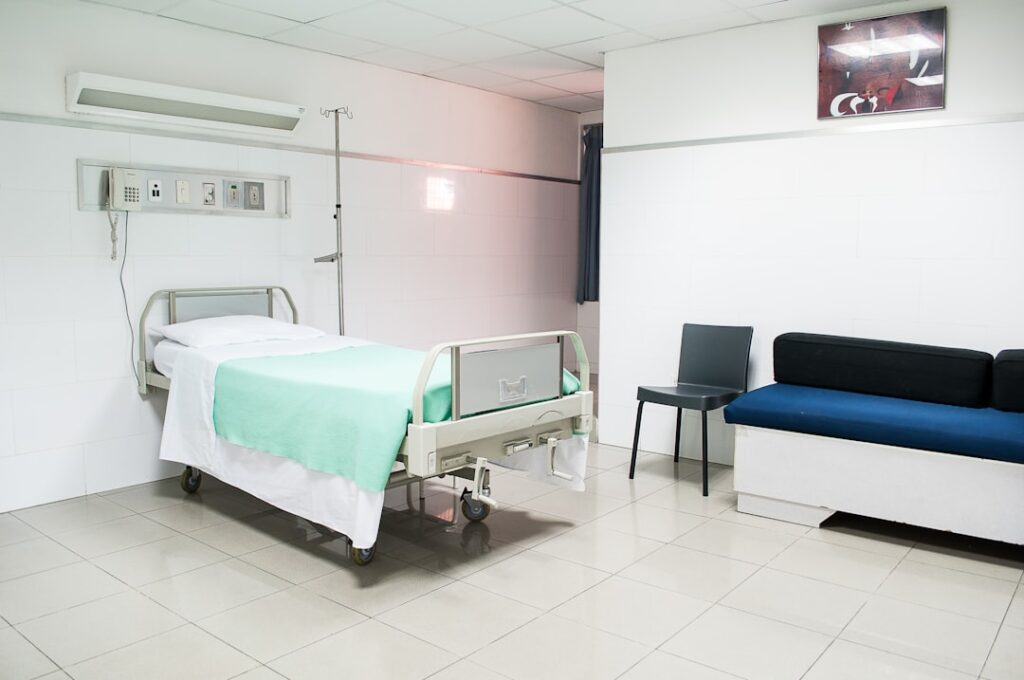
- For a true, life-threatening emergency, go to the ER or call 911 immediately — cost should never delay emergency care.
- Urgent care costs a fraction of the ER (often $100–$300 vs. $1,000+) and usually has much shorter waits.
- Urgent care handles minor injuries and illnesses; the ER handles serious, life- or limb-threatening problems.
- Going to the ER for a minor issue can mean a large bill and a long wait — urgent care is the better value when it is clinically appropriate.
- When symptoms are severe (chest pain, trouble breathing, stroke signs, heavy bleeding), always choose the ER regardless of cost.
Go to urgent care for minor, non-life-threatening problems — it is far cheaper (often $100–$300 vs. $1,000+) and much faster. Go to the emergency room (ER) for serious, life- or limb-threatening conditions, where cost should never be a factor. Knowing which door to walk through can save you hundreds or thousands of dollars for minor issues — and save your life when it is a real emergency.
If you are facing a true emergency — chest pain, difficulty breathing, signs of a stroke, severe bleeding, a serious head injury, or any situation you believe is life-threatening — go to the ER or call 911 immediately. Do not weigh the cost. This article is about choosing wisely for non-emergencies; it is never a reason to delay emergency care.
Urgent care centers and emergency rooms overlap in the public’s mind, but they are built for very different jobs. This guide compares them on cost, wait times, and what each is equipped to treat, then gives clear scenarios for when to choose each — and when the answer is always the ER.
Urgent care vs ER at a glance
Here is the core comparison. Costs are typical self-pay ranges and vary widely by location, severity, and what treatment you actually receive.
| Urgent care | Emergency room (ER) | |
|---|---|---|
| Typical self-pay cost | $100 – $300 per visit | $1,000 – $3,000+ per visit |
| Typical wait time | Minutes to about an hour | Often hours, and longer for non-urgent cases |
| What it treats | Minor injuries & illnesses | Serious, life- or limb-threatening conditions |
| Hours | Extended, but not always 24/7 | 24/7, always open |
| Equipment | Basic labs, X-ray, stitches | Advanced imaging, trauma, surgery, ICU access |
| Best for | Non-emergencies when your doctor is unavailable | Any true emergency, no matter the cost |
For the underlying detail, see our guides on urgent care cost without insurance and ER visit cost without insurance. Coverage rules for both settings are summarized on HealthCare.gov and Medicare.gov.
Cost: the biggest practical difference
For the same minor problem — say a sprained ankle or a sore throat — the ER can cost five to ten times more than urgent care. ERs carry the overhead of round-the-clock staffing, trauma readiness, and advanced equipment, and that cost is built into every bill, even a simple one. An urgent care center, by contrast, is set up for lower-acuity care and prices accordingly.
This is why using the ER for a non-emergency is one of the most common ways people overpay for healthcare. If your problem is genuinely minor and urgent care can handle it, choosing urgent care is often the difference between a $150 bill and a $2,000 one. Just note that ambulance cost is billed separately and can add substantially to an ER trip — another reason to reserve the ER for situations that truly need it.
Wait times
Urgent care is usually much faster for minor issues. ERs triage by severity, not by arrival time, which is exactly as it should be — the heart attack that comes in after you will be seen before you. The practical consequence is that a non-urgent complaint at the ER can mean a long wait, sometimes several hours, while sicker patients are treated first. At urgent care, minor cases are typically seen within minutes to about an hour. For a non-emergency, urgent care usually wins on both time and money.
What each one treats
Urgent care is the right choice for problems that need attention soon but are not dangerous, such as:
- Minor cuts that may need stitches, and minor burns
- Sprains, strains, and suspected simple fractures
- Sore throat, ear infections, flu, and mild fevers
- Minor allergic reactions and rashes
- Urinary tract infections and other minor infections
The emergency room is built for serious, potentially life-threatening problems, including:
- Chest pain or pressure, or signs of a heart attack
- Difficulty breathing or shortness of breath
- Signs of a stroke (face drooping, arm weakness, slurred speech)
- Severe or uncontrolled bleeding
- Serious head, neck, or spine injuries; major trauma
- Severe abdominal pain, seizures, or loss of consciousness
When it is a true emergency, always choose the ER
This point is worth repeating because getting it wrong is dangerous: for any condition that could be life-threatening, go to the ER or call 911 immediately, regardless of cost. Urgent care centers are not equipped for major trauma, cardiac emergencies, or strokes, and being sent from urgent care to the ER wastes critical time. If you are unsure how serious something is and it feels severe or is rapidly worsening, treat it as an emergency. Money can be dealt with afterward; a delayed emergency cannot be undone. Federal rules also require that emergency care be covered as in-network even at an out-of-network ER, so cost should not drive this decision.
Which should you choose?
Use these scenarios to decide quickly. When in doubt about severity, err toward the ER.
Choose urgent care if…
- Your problem is minor and not life-threatening, but you cannot wait for a regular appointment.
- Your primary care doctor is unavailable (after hours, weekends).
- You need something like stitches, an X-ray for a possible simple fracture, or treatment for an infection.
- You want to avoid a large ER bill and a long wait for a minor issue.
Choose the ER (or call 911) if…
- You have chest pain, trouble breathing, or signs of a stroke.
- You have severe bleeding, a major injury, or a serious head injury.
- You have severe abdominal pain, a seizure, or have lost consciousness.
- Any symptom feels severe, is rapidly worsening, or you genuinely fear for your life — no matter the cost.
A third option for the most minor issues
For the very mildest complaints — a cold, a minor rash, a prescription refill — a retail clinic (inside a pharmacy or big-box store) or a telehealth visit can be cheaper still than urgent care. See retail clinic vs urgent care to understand where each fits. The general rule holds: match the setting to the severity, and reserve the ER for true emergencies.
The bottom line on cost
For non-emergencies, urgent care is almost always the better value — lower cost, shorter wait, and fully capable of handling minor injuries and illnesses. Using the ER for a minor problem is one of the most expensive mistakes in healthcare, often turning a $150 situation into a four-figure bill. But that cost logic applies only to non-emergencies. The moment a situation is or might be life-threatening, the ER is the right and only choice, and cost should play no part in the decision.
Frequently asked questions
Is urgent care cheaper than the ER?
Yes, dramatically. A typical urgent care visit runs about $100–$300, while an ER visit often runs $1,000–$3,000 or more for a comparable minor problem. For non-emergencies, urgent care is usually the far better value.
When should I go to the ER instead of urgent care?
Go to the ER — or call 911 — for any serious or life-threatening problem: chest pain, difficulty breathing, stroke signs, severe bleeding, major injuries, severe abdominal pain, seizures, or loss of consciousness. When a situation feels severe or is rapidly worsening, always choose the ER regardless of cost.
Can urgent care treat broken bones?
Many urgent care centers can X-ray and splint a suspected simple fracture. Complex, open, or severe fractures — especially with heavy bleeding or deformity — need the ER, which has the imaging, orthopedic, and surgical resources to manage them.
Does urgent care have shorter wait times than the ER?
Usually, yes, for minor issues. ERs triage by severity, so a non-urgent complaint can wait hours while sicker patients are treated first. Urgent care typically sees minor cases within minutes to about an hour.
Will insurance cover an ER visit for a non-emergency?
It depends on your plan, and some plans apply a higher cost share or scrutinize ER visits that turn out to be non-emergencies. However, true emergency care must be covered as in-network even at an out-of-network ER. Never skip the ER in a genuine emergency out of fear about coverage.
What if I am not sure whether it is an emergency?
If a symptom feels severe, is worsening quickly, or you genuinely fear for your life or someone else’s, treat it as an emergency and go to the ER or call 911. It is always safer to be checked and be fine than to delay care for a serious condition to save money.
Related reading: compare the full details of urgent care cost without insurance and ER visit cost without insurance, understand ambulance cost, and browse the full Healthcare Costs guide for more ways to lower what you pay.
Costs in this article are typical 2026 self-pay ranges and vary by location, severity, and treatment received. This article is general information, not medical or financial advice. In a medical emergency, call 911 or go to the nearest emergency room immediately.