
—————————————————————-
Roughly hundreds of thousands of women undergo permanent contraception procedures in the US each year, making it one of the most chosen long-term birth control methods worldwide. Tubal ligation — sometimes called “getting your tubes tied” — blocks or removes the fallopian tubes so eggs cannot reach the uterus and sperm cannot reach the egg. The procedure is meant to be permanent, with effectiveness over 99 percent, and most patients go home the same day. The decision is rarely urgent, which gives you time to weigh effectiveness, recovery, alternatives, and cost with your clinician. This article is general information, not medical advice; your own care should be guided by a qualified clinician who knows your history.
What Tubal Ligation Is and Who Considers It
Tubal ligation is a form of female sterilization. According to the American College of Obstetricians and Gynecologists (ACOG), permanent contraception is appropriate for adults who have completed their families or are confident they do not want future pregnancies. Modern variations include cutting and tying the tubes, applying clips or rings, cauterizing a segment, and salpingectomy — full removal of the fallopian tubes. Salpingectomy is increasingly the preferred approach in the US because it is highly effective and may reduce the risk of certain ovarian cancers (many of which are now thought to originate in the fallopian tube).
Candidates are generally healthy enough for surgery and have considered alternatives such as long-acting reversible contraception (LARC — IUDs and implants) and male sterilization (vasectomy). Because the procedure is intended to be permanent, clinicians usually emphasize careful, unpressured decision-making. Reversal is technically possible in some cases but is not always successful and is rarely covered by insurance, so tubal ligation should be chosen as a permanent method rather than a reversible one.
Interest in permanent contraception has risen in the US in recent years. Research has documented an increase in tubal sterilization procedures among women following the 2022 Dobbs Supreme Court decision that ended the federal constitutional right to abortion. This is context, not a reason to rush the decision; the right choice still depends on your individual goals, health, and circumstances, discussed with your clinician.
How the Procedure Is Performed
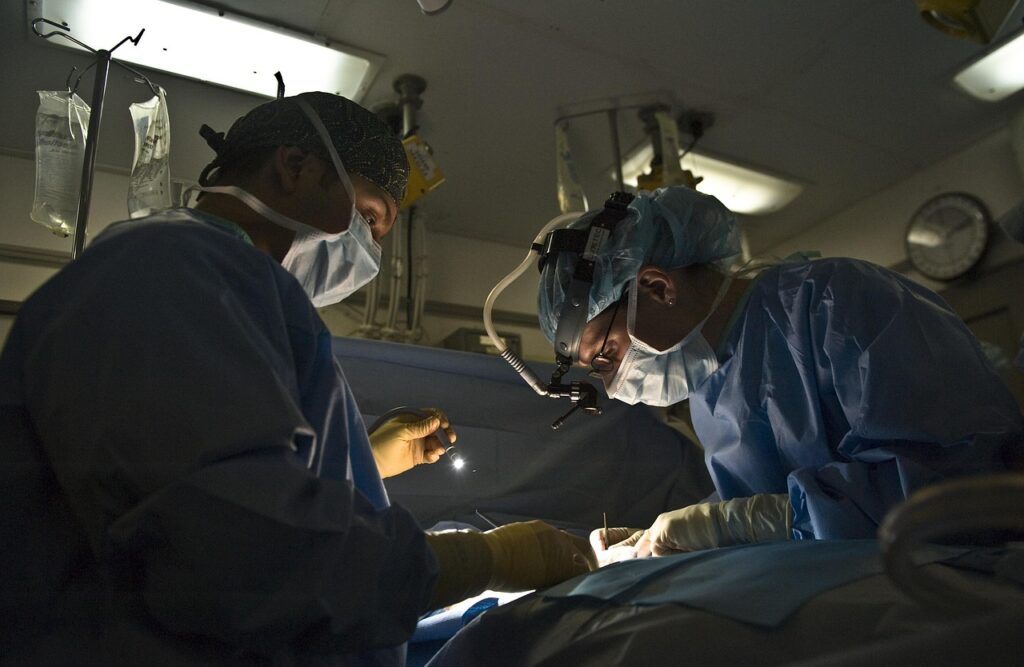
Most tubal ligations are done laparoscopically under general anesthesia and take roughly 20 to 45 minutes. The surgeon makes one or two small incisions near the navel and lower abdomen, inflates the abdomen with carbon dioxide gas to improve visualization, inserts a thin camera, and uses specialized instruments to occlude or remove the tubes. When the tubes are fully removed, the operation is a bilateral salpingectomy, now a common choice for the reasons above.
Two other timing options exist. A postpartum tubal ligation is performed within about 24 to 48 hours after vaginal delivery through a small incision near the navel; if a cesarean section is already planned, the tubes can be addressed during that surgery without a separate operation. A mini-laparotomy uses a slightly larger incision when laparoscopy is not feasible. The NIH MedlinePlus describes each approach in more detail. Which technique is used depends on your anatomy, timing, and your surgeon’s judgment.
Preparation and What to Expect on the Day
Pre-operative steps usually include a pregnancy test, basic labs, and a discussion of contraception in the days leading up to surgery, since you should avoid pregnancy in the cycle of the procedure. Patients are typically asked to fast beforehand (often after midnight) and to stop certain blood thinners if applicable — follow the specific instructions your care team gives you.
On the day of surgery, you will check in, change, meet the anesthesia and surgical team, and have an IV placed. After a laparoscopic procedure, most patients spend a few hours in recovery and go home the same day. Shoulder pain from residual carbon dioxide gas is common and usually resolves within 24 to 48 hours.
Recovery Timeline
Recovery from outpatient laparoscopic tubal ligation is usually quick. According to the Cleveland Clinic, many patients return to desk work within about a week and to full activity, including exercise, within roughly one to two weeks, though individual recovery varies.
Expect mild abdominal soreness, light vaginal spotting for a few days, and some bloating. Showering is usually allowed the next day; baths and swimming typically wait until the incisions are fully closed (about a week). Many surgeons advise avoiding heavy lifting for around a week and not driving while taking opioid pain medication. Follow your surgeon’s specific post-operative instructions, which take priority over general timelines.
Postpartum tubal ligation recovery overlaps with recovery from delivery; the additional procedure typically does not extend the hospital stay or significantly slow healing.
When to seek emergency care: Call 911 or go to the nearest emergency room if you experience severe abdominal pain not relieved by prescribed medication, fever above about 101 degrees Fahrenheit, heavy bleeding, persistent vomiting, redness or drainage from the incisions, or sudden shortness of breath or chest pain.
Effectiveness, Risks, and Outcomes
Tubal ligation is highly effective. The CDC and other authorities put the typical-use failure rate under 1 percent, so it is among the most effective methods available. Salpingectomy (full tube removal) is at least as effective as older tube-blocking techniques. No method is perfect: when pregnancy does occur after tubal ligation, the risk that it is ectopic (in the tube) is elevated, which is why new pregnancy symptoms after the procedure should be evaluated promptly.
Risks of the procedure are uncommon but real: bleeding, infection, injury to the bowel, bladder, or blood vessels, anesthesia reactions, and, occasionally, conversion to open surgery. ACOG describes major complications as uncommon (roughly on the order of 1 to 2 percent in many series, though estimates vary). The procedure does not affect menstrual cycles, hormone levels, or sexual function. The older “post-tubal ligation syndrome” theory of hormonal disruption is not supported by current evidence.
Salpingectomy and Ovarian Cancer Risk
One meaningful reason bilateral salpingectomy has become the preferred approach is emerging evidence that many high-grade ovarian cancers actually begin in the fallopian tubes. Removing the tubes at the time of sterilization — sometimes called opportunistic salpingectomy — appears to reduce the risk of these cancers more than tube-blocking techniques do, without meaningfully increasing surgical risk in most patients. Professional bodies including ACOG have supported offering opportunistic salpingectomy to appropriate patients undergoing pelvic surgery who have completed childbearing. Because it removes the tubes entirely, salpingectomy is not reversible, which is one more reason to be confident the decision is permanent. Ask your surgeon whether full salpingectomy is appropriate for you.
Alternatives and When to Reconsider
Several long-acting reversible contraceptives (LARC) are nearly as effective as tubal ligation and do not require surgery. Hormonal IUDs and copper IUDs have failure rates well under 1 percent and last several years (roughly 3 to 12 years depending on the device). The contraceptive implant lasts about 3 to 5 years. Vasectomy is a simpler outpatient procedure for a male partner, with a similarly low failure rate, lower cost, and faster recovery, making it a worthwhile comparison for couples considering permanent contraception together.
Tubal reversal is technically possible by reattaching cut segments of tube, but it is generally not an option after salpingectomy and is not guaranteed to work. Reported success rates for live birth after reversal vary widely (often cited in a broad range such as roughly 30 to 70 percent) depending on age, the original technique, and remaining tube length. In vitro fertilization (IVF) bypasses the tubes entirely and is often a more reliable path to pregnancy after sterilization regret. If there is meaningful uncertainty about future childbearing, a reversible LARC method may be a better starting point than a permanent procedure.
Cost Considerations
Prices vary widely, so treat these as estimates and verify with your own insurer and facility. Without insurance, tubal ligation costs in the US commonly range from roughly $2,500 to $7,000, depending on location, technique, and facility. With most commercial insurance, the Affordable Care Act requires plans to cover female sterilization as preventive care with no cost sharing, so out-of-pocket costs are often $0 — but confirm this with your plan. Medicaid covers the procedure for eligible patients, though specific consent forms and waiting periods may apply. Postpartum tubal ligation performed alongside delivery typically does not add a separate facility fee. Our healthcare costs guide covers how to verify ACA preventive coverage with your insurer. Reviewing the broader medical conditions resource library can help frame contraceptive decisions in the context of overall reproductive health.
Frequently Asked Questions
Does tubal ligation cause early menopause?
Current evidence does not support a meaningful effect on the timing of menopause. The ovaries remain in place and continue to produce hormones normally. Some older studies suggested earlier menopause, but more recent reviews have not confirmed this.
Will my periods change after the procedure?
Most patients see no change in their cycles. If you discontinue hormonal birth control around the same time as surgery, you may notice your “natural” cycles return — sometimes heavier or with more cramping than you remembered — but that reflects stopping hormonal contraception, not the surgery itself.
Can I get the procedure right after giving birth?
Often, yes. A postpartum tubal ligation is typically performed within about 24 to 48 hours of vaginal delivery, or during a planned cesarean section. It is added to the existing hospital stay without significantly extending recovery. Availability can depend on the hospital and your circumstances, so discuss it in advance.
How soon after surgery is contraception effective?
Tubal ligation is effective essentially immediately, with no waiting period or backup contraception generally needed — unlike vasectomy, which requires a confirmatory semen analysis (usually around 3 months) before relying on it.
Is salpingectomy better than having my tubes tied?
For many patients, removing the tubes (bilateral salpingectomy) is now preferred because it is highly effective and may lower the risk of certain ovarian cancers. It is also definitively permanent. Whether it is right for you is a shared decision with your surgeon based on your anatomy, health, and preferences.
What to Discuss With Your Doctor
Because tubal ligation is meant to be permanent, the conversation before surgery matters — and it is a shared decision between you and your clinician. Useful questions include which technique your surgeon prefers and why, whether full salpingectomy is appropriate for you (given its cancer-risk-reduction potential), how the procedure compares to LARC methods or a partner’s vasectomy for your situation, what your insurance covers, and how you would feel if your circumstances changed in 5 or 10 years. If there is any real uncertainty, a long-acting reversible method may be a better starting point.
TL;DR: Tubal ligation is permanent contraception that blocks or removes the fallopian tubes, with effectiveness over 99 percent and usually same-day recovery. Bilateral salpingectomy (full tube removal) is now the preferred US approach because it is highly effective and may reduce the risk of some ovarian cancers. Consider it permanent — reversal is not guaranteed and is rarely covered. Alternatives worth weighing include LARC (IUDs, implants) and vasectomy. Interest in permanent contraception has risen since the 2022 Dobbs decision, but the choice should still be a shared decision that fits your own situation.
This article is general educational information, not medical advice. Decisions about contraception and surgery should be made together with a qualified clinician who knows your history. For an emergency after surgery — such as severe pain, high fever, heavy bleeding, or trouble breathing — call 911 or go to the nearest emergency room.
Sources
- ACOG — Sterilization by laparoscopy; guidance on opportunistic salpingectomy for ovarian cancer risk reduction (acog.org)
- NIH MedlinePlus — Tubal ligation (medlineplus.gov)
- CDC — Contraceptive effectiveness and reproductive health (cdc.gov)
- Cleveland Clinic — Tubal ligation procedure and recovery (my.clevelandclinic.org)
- Peer-reviewed research on post-Dobbs permanent contraception trends and salpingectomy for ovarian cancer prevention (PubMed/PMC)