
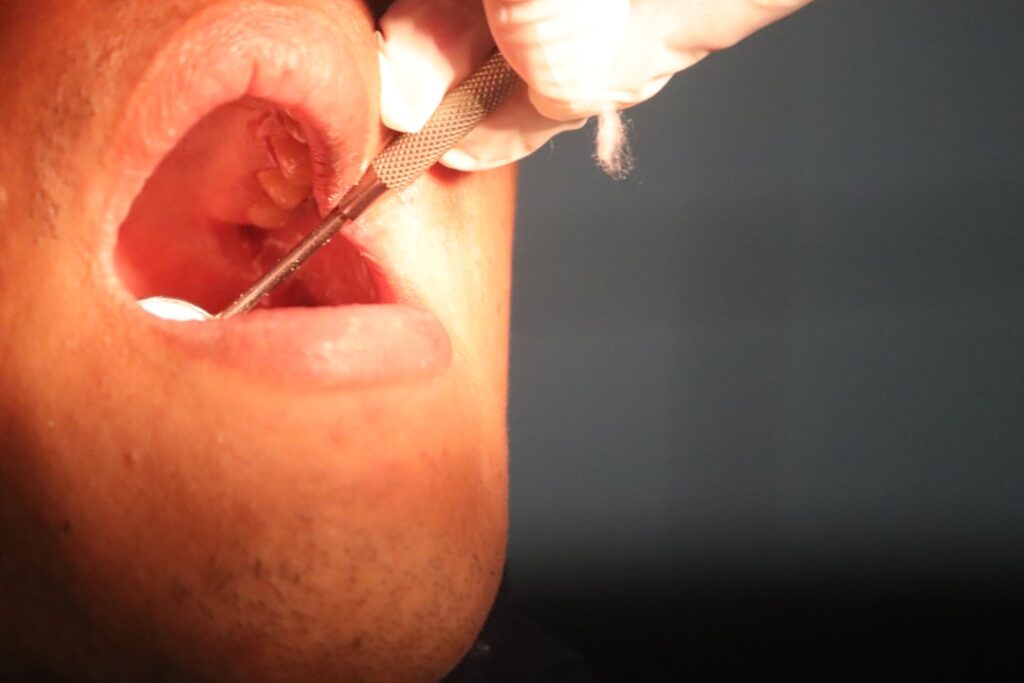
Learning to recognize the symptoms of oral cancer early can be lifesaving, because survival improves dramatically when the disease is caught in its initial stages. Symptoms of oral cancer are often visible and accessible to self-examination, yet many people overlook or dismiss the early warning signs for weeks or months — frequently because an early lesion doesn’t hurt.
Oral cancer refers to cancers that develop in the mouth (oral cavity) or the back of the throat (oropharynx). This includes cancers of the lips, tongue, cheeks, floor of the mouth, hard and soft palate, gums, tonsils, and the base of the tongue. According to the National Cancer Institute’s SEER program, oral cavity and pharynx cancers account for roughly 3% of cancers diagnosed in the United States, with an estimated figure on the order of 60,000 new cases and around 12,000 deaths a year in recent estimates; exact counts are updated annually, so treat these as approximate. Whatever the precise number, the pattern is consistent: outcomes are far better when the cancer is found early.
The Short Version: Get These Checked Promptly
- A mouth or lip sore that doesn’t begin to heal within 2 weeks — painful or not.
- A red patch (erythroplakia) or white patch (leukoplakia) that can’t be scraped or wiped off.
- A lump, thickening, or rough spot in the mouth, on the lip, or a lump in the neck.
- Numbness, persistent pain, difficulty or pain swallowing, a persistent sore throat, hoarseness, loose teeth without a dental cause, or unexplained bleeding.
See a dentist or doctor promptly for evaluation and, if needed, a biopsy. The point is to get it checked — don’t wait for it to go away on its own. This box is general information, not a diagnosis.
The encouraging news is that oral cancer is one of the more detectable cancers when you know what to look for. This guide covers the key warning signs, how to perform a self-examination, risk factors, and when to seek professional evaluation. For more health information, visit our medical conditions guide.
Early Warning Signs of Oral Cancer
The early symptoms of oral cancer often resemble common mouth problems, which is why they’re so frequently overlooked. The critical difference is persistence. While canker sores, minor injuries, and infections typically heal within two weeks, oral cancer symptoms persist and gradually worsen.
A sore or ulcer in the mouth that does not heal within two to three weeks is the most common early sign. This sore may or may not be painful — and its lack of pain is one reason people delay. It can appear anywhere in the mouth, including on the tongue, gums, inner cheeks, roof of the mouth, or floor of the mouth. According to the Mayo Clinic, any mouth sore that persists beyond a couple of weeks warrants professional evaluation.
Red or white patches on the oral tissues are another important early sign. White patches (leukoplakia) and red patches (erythroplakia) on the gums, tongue, tonsils, or lining of the mouth can be precancerous or cancerous. The Cleveland Clinic notes that erythroplakia, in particular, has a high rate of containing cancerous or precancerous cells and should always be evaluated promptly. A patch that can’t be wiped or scraped away is more concerning than one that can.
Comprehensive Symptom List
Beyond the early warning signs, the fuller range of oral cancer symptoms includes a persistent lump, thickening, or rough spot on the lip or inside the mouth; numbness or loss of feeling in any area of the mouth, face, or neck; difficulty chewing, swallowing, or moving the tongue or jaw; ear pain that occurs without an ear infection (often on one side); a chronic sore throat or a feeling that something is caught in the throat; hoarseness or a change in voice; unexplained weight loss; and loose teeth without an obvious dental cause.
Jaw pain or stiffness may also occur, particularly if the cancer involves the jawbone or surrounding muscles. Some people notice that their dentures no longer fit the way they used to. Unexplained bleeding in the mouth that isn’t clearly from brushing or a known injury is another reason to be seen. In advanced cases, a visible mass or growth may be present on the lip, in the mouth, or on the neck. A painless lump in the neck (an enlarged lymph node) can sometimes be the first noticed sign of an oropharyngeal cancer.
If you experience persistent ear, throat, or neck symptoms, consider consulting a specialist. Our resource on how to find an ENT doctor can help you locate an ear, nose, and throat (otolaryngology) specialist in your area.
How to Perform an Oral Cancer Self-Exam
The Oral Cancer Foundation encourages regular self-examinations. The process takes only a few minutes and can be done at home with a mirror and good lighting. A self-exam does not replace a professional screening, but it helps you notice changes between visits.
Start by looking at your face and neck in the mirror. Check for any asymmetry, lumps, bumps, or swelling on one side that is not present on the other. Feel along both sides of your neck and under your jawline for any lumps or enlarged lymph nodes.
Pull down your lower lip and look inside for any sores, discoloration, or changes in texture. Repeat with the upper lip. Open your mouth wide and examine the inside of your cheeks. Look for red, white, or dark patches. Use a clean finger to feel for any lumps or thickened areas, pressing gently.
Tilt your head back and examine the roof of your mouth. Look for any color changes, lumps, or sores. Stick your tongue out and look at the top surface, then move it from side to side to examine each edge — the sides of the tongue are a common site for oral cancer. Lift your tongue to the roof of your mouth to examine the underside and the floor of your mouth, which is another common site.
Finally, look at the back of your throat as best you can. If you notice anything unusual during your self-exam — especially something that persists for two weeks or more — schedule an appointment with your dentist or doctor rather than waiting to see whether it clears on its own.
Risk Factors for Oral Cancer
Several factors significantly increase the risk of developing oral cancer. Understanding your personal risk profile helps determine how vigilant you need to be about monitoring and screening. Having a risk factor does not mean you will develop cancer, and some people with oral cancer have none of the classic risks.
Tobacco use is the leading risk factor. This includes cigarettes, cigars, pipes, chewing tobacco, snuff, and other smokeless tobacco products. According to the CDC, tobacco use is linked to the large majority of oral cancers, and the risk rises with the amount and duration of use. Quitting at any age lowers risk over time.
Heavy alcohol consumption is the second major risk factor. People who drink heavily are at substantially higher risk of oral cancer than non-drinkers. When combined with tobacco use, the risk is multiplied rather than simply added, making the combination of heavy drinking and tobacco use the highest-risk profile.
Human papillomavirus (HPV), specifically HPV-16, has become an increasingly significant cause, particularly for cancers of the oropharynx (back of the throat, tonsils, and base of the tongue). The CDC reports that HPV is responsible for the majority of oropharyngeal cancers in the United States, and these HPV-related cancers have risen over recent decades. They tend to occur in younger, otherwise healthy individuals and may not carry the traditional tobacco-and-alcohol history — which is exactly why a persistent sore throat, neck lump, or trouble swallowing shouldn’t be dismissed just because someone doesn’t smoke or drink.
Additional risk factors include heavy sun exposure to the lips (relevant for lip cancer), a weakened immune system, a diet low in fruits and vegetables, prior head and neck cancer, and older age — although HPV-related cancers are shifting some of the age demographics younger. Betel quat/areca nut use, common in parts of South and Southeast Asia, is another well-established risk factor.
Oral Cancer Versus Common Mouth Problems
One of the biggest challenges in recognizing oral cancer is distinguishing it from common, benign mouth conditions. Here are some key differences — but remember that only a professional evaluation, and sometimes a biopsy, can tell for certain.
Canker sores are small, shallow ulcers that are typically painful from the start and heal within one to two weeks. They usually have a white or yellow center with a red border and tend to recur in the same general areas. Oral cancer sores may or may not be painful initially, do not heal within two to three weeks, and may have irregular, raised, or firm borders.
Cold sores caused by the herpes simplex virus typically appear on the lips or outside the mouth, are preceded by tingling or burning, and form clusters of small blisters that crust over and heal within two weeks. Oral cancer on the lip usually appears as a single, persistent sore, lump, or thickened area rather than a recurring blister.
Thrush, a yeast infection, causes creamy white patches that can be wiped away to reveal red tissue underneath. Leukoplakia associated with oral cancer risk cannot be scraped off and is firmly attached to the underlying tissue.
Clinicians consistently emphasize the “two-week rule”: any oral lesion that does not begin to heal within two weeks of removing potential irritants (such as a sharp tooth, ill-fitting denture, or cheek-biting) should be evaluated by a healthcare professional.
Diagnosis and the Importance of Early Detection
When you present with suspicious oral symptoms, your doctor or dentist will examine the mouth, throat, and neck. If a suspicious area is identified, a biopsy — removing a small sample of tissue for examination under a microscope — is the definitive way to diagnose or rule out cancer. A normal-looking area can still be biopsied if it has persisted or has worrying features.
Additional tests may include imaging studies such as CT, MRI, or PET scans to determine the extent of the cancer; endoscopy to examine the throat and airway; and, for oropharyngeal cancers, HPV/p16 testing of the tissue, which helps guide treatment and prognosis.
According to the National Cancer Institute’s SEER data, five-year survival for oral cavity and pharynx cancers is high when the cancer is localized and considerably lower once it has spread to distant sites — a large gap that makes early detection through self-examination, regular dental visits, and prompt evaluation of symptoms genuinely important. HPV-related oropharyngeal cancers generally have a more favorable prognosis than tobacco-related cancers, but they still need timely diagnosis and treatment.
When to See a Doctor
Schedule an appointment with your dentist or doctor if you have a mouth sore that has not healed in two to three weeks, a persistent white or red patch, a lump or thickening anywhere in the mouth or neck, difficulty or pain when swallowing or chewing that doesn’t resolve, persistent hoarseness or sore throat lasting more than two weeks, numbness in the mouth or face, unexplained one-sided ear pain, unexplained loose teeth, or unexplained bleeding. Frame it as “getting it checked,” not seeking reassurance — the value of the visit is a professional look, whatever the result.
Your dentist is often the first line of defense in detecting oral cancer. Regular dental checkups — commonly every six months — often include an oral cancer screening as part of the examination. Ask whether your dentist is performing this screening, and don’t hesitate to point out any areas of concern.
Frequently Asked Questions
Can oral cancer be cured?
Oral cancer can often be treated successfully, especially when detected early. Treatment typically involves surgery, radiation therapy, chemotherapy, targeted therapy, or a combination, chosen based on the tumor’s type, location, and stage. Early-stage oral cancers have substantially better outcomes than advanced ones, and even in more advanced cases, treatment can often control the disease and improve quality of life. HPV-related oropharyngeal cancers tend to respond particularly well to treatment.
Does oral cancer hurt?
Not always, especially in the early stages. Many oral cancers are painless at first, which is one reason they go unnoticed. Pain tends to develop as the cancer grows and affects surrounding tissues and nerves. A painless sore or lump that persists is just as concerning as a painful one and should be evaluated by a professional.
Can young people get oral cancer?
Yes. While oral cancer has traditionally been more common in people over 55, HPV-related throat cancers are increasingly diagnosed in younger adults, including those in their 30s and 40s. The CDC notes that HPV vaccination can help prevent HPV-related cancers; vaccination is routinely recommended in early adolescence, with catch-up vaccination generally recommended through age 26 and shared clinical decision-making with a clinician for some adults aged 27 through 45.
How fast does oral cancer spread?
The rate varies by type and location. Some oral cancers grow slowly over months, while others spread more quickly. Cancers of the floor of the mouth and tongue can behave more aggressively than lip cancers. According to the Mayo Clinic, oral cancer can spread to nearby lymph nodes and eventually to distant organs, which is why prompt evaluation and early treatment matter.
Is a lump in my neck a sign of oral cancer?
A persistent, painless lump in the neck can be an enlarged lymph node and is sometimes the first noticed sign of an oropharyngeal (throat) cancer, though neck lumps have many benign causes such as infections. A neck lump that lasts more than two weeks, is hard, or is growing should be evaluated by a doctor.
Take Your Oral Health Seriously
The symptoms of oral cancer are among the more accessible and identifiable of any cancer type. Regular self-examinations, routine dental visits, and a willingness to have persistent oral changes evaluated can catch this disease at its most treatable stage. Don’t ignore a sore that won’t heal, a patch that looks different, or a lump that wasn’t there before — and don’t be reassured just because it doesn’t hurt or you don’t smoke. A few minutes of attention to your oral health, and a prompt visit when something persists, could make a real difference. This article is general information and not a substitute for professional evaluation.
Sources
- National Cancer Institute — SEER, oral cavity and pharynx cancer statistics
- American Cancer Society — Oral cavity and oropharyngeal cancer key statistics
- Mayo Clinic — Mouth cancer (symptoms and causes)
- Cleveland Clinic — Leukoplakia and erythroplakia
- CDC — Tobacco use; HPV and cancer; HPV vaccination recommendations
- Oral Cancer Foundation — Oral cancer self-examination