
Uncontrolled hyperthyroidism can escalate into thyroid storm (thyrotoxic crisis)—a rare but life-threatening surge in thyroid activity. Call 911 or go to the nearest emergency room if you or someone with known or suspected hyperthyroidism has a high fever, a very rapid or irregular heartbeat, severe agitation, confusion or delirium, and vomiting or diarrhea, sometimes with chest pain or fainting. Thyroid storm is often triggered by infection, surgery, injury, or stopping thyroid medicine, and it can be fatal even with treatment. It requires immediate hospital care. Never stop your antithyroid medicine on your own—doing so is a known trigger.
The symptoms of hyperthyroidism can mimic everything from an anxiety disorder to a cardiac arrhythmia to early menopause, which is exactly why the diagnosis is frequently missed, delayed, or attributed to another condition. Roughly 1% of the US population has hyperthyroidism, according to the National Institute of Diabetes and Digestive and Kidney Diseases, with Graves’ disease—an autoimmune condition—accounting for most cases. When your thyroid gland floods your body with excess hormone, nearly every organ system accelerates: your heart races, your metabolism burns hotter, your nerves fire faster, and your whole body enters a state of metabolic overdrive. Knowing the full symptom pattern can help you connect the dots faster and get to the right diagnosis before complications develop. For more on health conditions, explore our medical conditions guide. This article is general education, not medical advice.
What Is Hyperthyroidism?
Hyperthyroidism is the overproduction of thyroid hormones T3 (triiodothyronine) and T4 (thyroxine) by the thyroid gland, a butterfly-shaped organ at the base of your neck. While hypothyroidism slows your metabolism and produces sluggishness, cold intolerance, and weight gain, hyperthyroidism does the opposite—it cranks your metabolic rate into overdrive. Your heart beats faster at rest, your digestion accelerates, you burn calories at an abnormally high rate, your nervous system becomes hyperexcitable, and heat production rises throughout the body.
The most common cause by far is Graves’ disease, an autoimmune disorder in which thyroid-stimulating antibodies bind to TSH receptors on the thyroid gland and stimulate it to overproduce hormones. Unlike most autoimmune diseases that damage or destroy tissue, Graves’ disease activates the target organ, causing overproduction rather than destruction. Other causes include toxic multinodular goiter (an enlarged thyroid with autonomously functioning nodules), toxic adenoma (a single nodule independently producing excess hormone), subacute (de Quervain’s) thyroiditis (inflammation that releases stored hormone from damaged thyroid cells), postpartum thyroiditis, and excess thyroid hormone intake or iodine exposure (from contrast dye, the heart medication amiodarone, or iodine-rich supplements).
Women are several times more likely to develop hyperthyroidism than men, and the peak age of onset for Graves’ disease is roughly 30 to 50 years—prime working and child-rearing years, which amplifies the functional impact of the condition. Genetic susceptibility is well established, and having a first-degree relative with Graves’ disease or other autoimmune thyroid disease increases your risk significantly.
Common Symptoms of Hyperthyroidism
Hyperthyroid symptoms reflect the body’s accelerated metabolic state. They often develop gradually over weeks to months, making them deceptively easy to attribute to stress, too much caffeine, anxiety, aging, or lifestyle factors. This insidious onset is a major reason diagnosis is so often delayed.
Weight Loss and Appetite Changes
Unintentional weight loss—despite eating normal or even increased amounts of food—is one of the most recognizable hyperthyroid symptoms. People commonly lose weight over a period of weeks to months as the accelerated metabolism burns calories faster than intake can replace them. Some develop a ravenous appetite (hyperphagia) that partly compensates, while a subset actually gain weight from overeating in response to the metabolic demand. The classic presentation, however, is weight loss with a normal or increased appetite.
Rapid or Irregular Heartbeat
Cardiovascular symptoms are among the most prominent and medically significant features of hyperthyroidism. A resting heart rate above 100 beats per minute (sinus tachycardia), palpitations—a sensation of the heart pounding, fluttering, or skipping beats—and exercise intolerance are common. The most serious cardiac manifestation is atrial fibrillation (AFib), which develops in a meaningful minority of hyperthyroid patients and carries a risk of stroke. The American Heart Association and endocrine guidelines recommend thyroid function testing in patients with new-onset atrial fibrillation, as treating the underlying hyperthyroidism may resolve the arrhythmia. New AFib is a red flag that warrants prompt evaluation.
Anxiety, Irritability, and Nervous Energy
A persistent state of nervousness, inner restlessness, irritability, and emotional volatility is extremely common and frequently leads to misdiagnosis as generalized anxiety disorder or panic disorder. People describe feeling “wired but tired,” unable to relax, on edge for no identifiable reason, and disproportionately reactive to minor stressors. Insomnia compounds the problem—the hyperactive nervous system makes it hard to fall and stay asleep, creating a cycle of exhaustion and agitation. Some experience full-blown panic attacks with rapid heartbeat, sweating, tremor, and a sense of impending doom that are physically indistinguishable from primary panic disorder.
Tremor
A fine, rapid tremor of the hands and fingers is a classic hyperthyroid sign, most noticeable when holding a cup, writing, or extending the arms with fingers spread. The tremor is caused by sympathetic nervous system overactivity and typically resolves with treatment.
Heat Intolerance and Excessive Sweating
Feeling uncomfortably warm when others are comfortable, seeking cool environments, fanning yourself constantly, and sweating excessively (particularly at night) are direct consequences of the elevated metabolic rate generating excess body heat. Warm, moist skin on examination is a classic physical finding.
Increased Bowel Frequency
Accelerated gastrointestinal motility leads to more frequent bowel movements—often three or more per day—though frank diarrhea is less common than increased frequency and looser consistency. Some people lose weight partly through reduced absorption caused by rapid intestinal transit.
Fatigue and Muscle Weakness
Despite the hypermetabolic state, many hyperthyroid patients feel profoundly exhausted. The body is essentially running in overdrive around the clock and burning out its energy reserves. Proximal muscle weakness—difficulty climbing stairs, rising from a chair, or lifting the arms overhead—develops from thyrotoxic myopathy and can be mistaken for a primary muscular or neurological disorder.
Eye and Skin Symptoms Specific to Graves’ Disease
People with Graves’ disease may develop additional symptoms not seen in other forms of hyperthyroidism, because the autoimmune process affects tissues beyond the thyroid gland—specifically the orbital tissues behind the eyes and, less commonly, the skin of the lower legs.
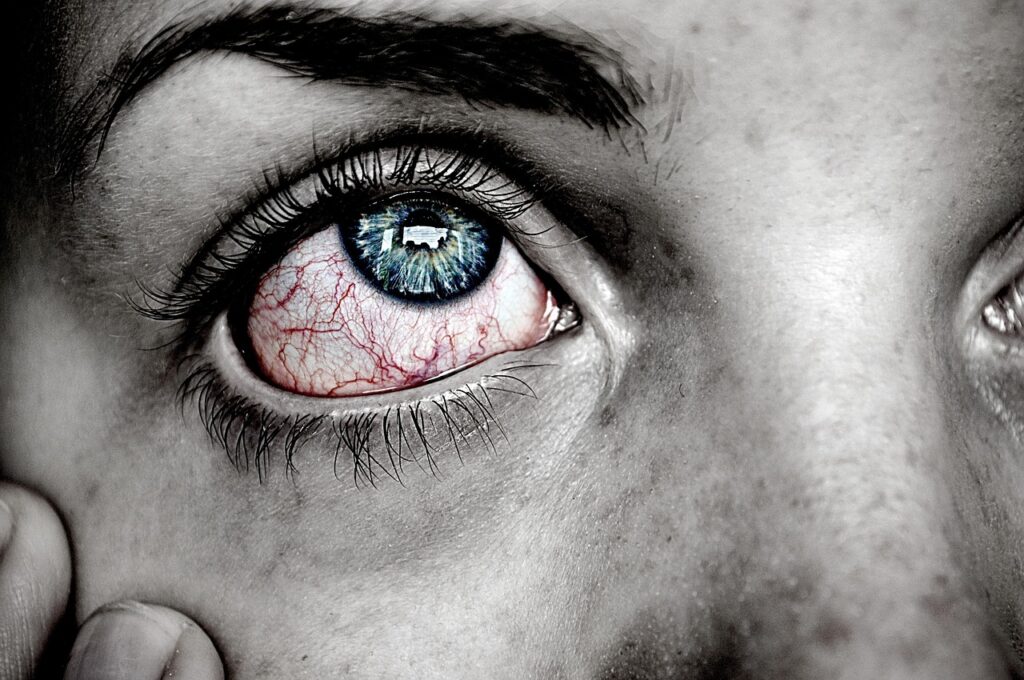
Graves’ ophthalmopathy (thyroid eye disease, or TED) affects a substantial share of Graves’ patients to varying degrees. Symptoms range from mild eye irritation to severe, vision-threatening disease and include: bulging or protruding eyes (proptosis/exophthalmos)—the single most recognizable sign of Graves’ disease; a dry, gritty, or sandy sensation; excessive tearing (paradoxically, in response to dryness); redness and swelling of the eyelids and the white of the eye; light sensitivity (photophobia); double vision (diplopia) from swelling of the muscles that move the eye; eye pain or pressure, especially with eye movement; and, in severe cases, compression of the optic nerve that threatens vision. Thyroid eye disease can worsen, stabilize, or improve independently of thyroid hormone levels, and it requires monitoring by an ophthalmologist experienced in TED. The American Academy of Ophthalmology recommends that patients diagnosed with Graves’ disease receive a baseline eye evaluation. The biologic teprotumumab (Tepezza), first FDA-approved in 2020, has changed the treatment landscape for moderate-to-severe active TED, and it is used under specialist care.
Most thyroid eye disease is uncomfortable but not dangerous. However, new or worsening vision changes, loss of color vision, or significant eye pain—especially with marked bulging or the inability to fully close the eye—can signal optic nerve compression or corneal damage that threatens sight. Seek urgent ophthalmology or emergency care the same day. Do not wait to see whether it settles on its own.
Graves’ dermopathy (pretibial myxedema) is less common. It appears as thickened, waxy, reddish or brown skin—often with an orange-peel texture—typically on the shins, tops of the feet, and occasionally the forearms. While cosmetically concerning, it is usually painless and often improves with topical treatment prescribed by a clinician and management of the underlying thyroid condition.
Less Commonly Recognized Symptoms
Several hyperthyroid symptoms are frequently overlooked by both patients and clinicians, contributing to diagnostic delay:
- Insomnia: difficulty falling asleep, staying asleep, and achieving restful sleep despite exhaustion—driven by sympathetic nervous system overactivation.
- Thinning hair: diffuse scalp hair loss that may be gradual or rapid, sometimes confused with other forms of hair loss. Hair texture can also become fine and difficult to style.
- Menstrual changes: lighter, shorter, less frequent, or absent periods in women—the opposite of the heavy, frequent periods often seen in hypothyroidism.
- Decreased libido and sexual dysfunction: affecting both women and men, related to hormonal disruption and the exhausting nature of the hypermetabolic state.
- Frequent urination: from increased fluid turnover and sometimes increased fluid intake to manage heat and sweating.
- Bone thinning (osteoporosis): excess thyroid hormone accelerates bone turnover, increasing fracture risk—particularly in postmenopausal women already losing bone density. Untreated hyperthyroidism is a recognized secondary cause of osteoporosis, and a bone density scan (DEXA) may be considered after prolonged hyperthyroidism.
- Gynecomastia in men: breast tissue enlargement from a hormonal shift toward increased conversion of androgens to estrogens.
- Shortness of breath: from cardiac effects and respiratory muscle weakness.
- Skin changes: warm, moist, smooth skin—sometimes with hives or itching—in contrast to the dry, rough skin of hypothyroidism.
- Increased thirst and appetite.
Hyperthyroidism in Older Adults
Hyperthyroidism in people over 60 deserves special mention because it often presents atypically—a phenomenon called apathetic thyrotoxicosis. Instead of the classic hyperactive, anxious, tremulous picture, older adults may show depression, lethargy, weight loss, muscle wasting, new-onset atrial fibrillation, or heart failure as the dominant features. The classic sympathetic symptoms (anxiety, tremor, sweating) may be absent or mild. This atypical presentation leads to particularly high rates of missed diagnosis in the elderly. Any older adult with unexplained weight loss, new atrial fibrillation, apathy, or heart failure should have thyroid function checked.
Hyperthyroidism vs Hypothyroidism: Understanding the Contrast
Because the thyroid can malfunction in either direction, comparing the two conditions clarifies the symptom picture. Hyperthyroidism produces weight loss, heat intolerance, rapid heartbeat, anxiety, tremor, and frequent bowel movements. Hypothyroidism produces weight gain, cold intolerance, slow heartbeat, depression, constipation, and fatigue. Both can cause fatigue (from opposite mechanisms), hair loss, and menstrual irregularities—but the overall patterns are distinctly mirrored.
Some people swing between hyperthyroid and hypothyroid states over the course of thyroid disease. Hashimoto’s thyroiditis can cause an initial hyperthyroid phase (hashitoxicosis) as immune-mediated thyroid destruction releases stored hormone, before progressing to permanent hypothyroidism. People treated for hyperthyroidism with radioactive iodine or surgical removal of the thyroid often develop hypothyroidism afterward and require lifelong thyroid hormone replacement—transitioning from one thyroid extreme to the other. For nodule-related concerns, see our article on when to worry about thyroid nodules.
How Hyperthyroidism Is Diagnosed
The initial diagnostic test is a TSH blood test. In hyperthyroidism, TSH is characteristically very low or suppressed because the pituitary gland is trying to slow the overactive thyroid by reducing its stimulating signal. If TSH is low, your doctor will follow up with free T4 and free T3, plus thyroid antibody levels (TSH receptor antibodies or thyroid-stimulating immunoglobulins point to Graves’ disease). A radioactive iodine uptake and scan may be ordered to distinguish Graves’ disease (diffusely increased uptake), toxic multinodular goiter (patchy uptake), toxic adenoma (a focal hot spot), and thyroiditis (low uptake—reflecting stored hormone release rather than overproduction). Interpreting these results, and choosing among treatments, is a job for a clinician.
Treatment Options (Clinician-Directed)
Hyperthyroidism is highly treatable, but the right approach depends on the underlying cause, the severity, your age, and reproductive plans. This guide describes the options in general terms and deliberately gives no doses—your endocrinologist tailors the specifics to you.
- Antithyroid medications (such as methimazole, and propylthiouracil in specific situations such as early pregnancy) reduce the thyroid’s hormone production. They are effective, but they carry warnings your clinician will discuss: a rare but serious drop in infection-fighting white blood cells (agranulocytosis)—so a fever or severe sore throat while taking one should prompt an urgent call to your prescriber and a white-cell check—and, less commonly, liver injury. Propylthiouracil in particular carries a boxed warning for rare severe liver problems. Do not start or stop these medicines on your own.
- Radioactive iodine therapy shrinks or disables overactive thyroid tissue and is a common, definitive treatment for Graves’ disease and toxic nodules. It frequently leads to hypothyroidism afterward, which is then managed with thyroid hormone replacement. It is not used during pregnancy or breastfeeding.
- Beta-blockers do not treat the thyroid itself but can quickly ease symptoms such as rapid heart rate, palpitations, and tremor while other treatments take effect.
- Thyroid surgery (thyroidectomy) may be chosen for large goiters, certain nodules, severe eye disease, pregnancy in some cases, or when other treatments aren’t suitable. It also typically results in lifelong thyroid hormone replacement.
Whatever the plan, consistent follow-up and blood tests are essential, both to confirm the treatment is working and to catch the swing into hypothyroidism that often follows definitive therapy. Do not self-treat hyperthyroidism with over-the-counter or online “thyroid support” supplements—some contain iodine or even thyroid hormone and can make things worse.
When to See a Doctor
See your healthcare provider promptly if you experience unexplained weight loss combined with any mix of rapid or irregular heartbeat, new or disproportionate anxiety, tremor, heat intolerance, excessive sweating, or menstrual changes. These symptoms together create a pattern that warrants thyroid function testing as a first step. A TSH blood test is inexpensive, widely available, and provides a clear starting answer.
Seek urgent or emergency care for the red flags described above: a very rapid heart rate with fever, severe agitation or confusion, and vomiting (possible thyroid storm—call 911); new atrial fibrillation; or eye symptoms with vision change or eye pain.
Frequently Asked Questions
Can hyperthyroidism go away on its own?
Some forms can resolve spontaneously. Subacute thyroiditis (often after a viral infection) and postpartum thyroiditis typically run a self-limited course over weeks to months—the hyperthyroid phase resolves as inflammation subsides, sometimes followed by a temporary hypothyroid phase before function normalizes. However, Graves’ disease, toxic multinodular goiter, and toxic adenoma do not usually resolve without medical treatment. Only your doctor can determine the cause and whether observation or active treatment is appropriate.
Does hyperthyroidism cause anxiety or panic attacks?
Yes, and this overlap is one of the most common causes of misdiagnosis. Excess thyroid hormone directly stimulates the sympathetic nervous system, producing symptoms physically identical to anxiety disorders and panic attacks—rapid heartbeat, tremor, sweating, restlessness, and a feeling of dread. A significant share of hyperthyroid patients meet criteria for an anxiety disorder at the time of their thyroid diagnosis. If you have new-onset anxiety—especially with weight loss, heat intolerance, and palpitations—ask for thyroid function testing before accepting a psychiatric diagnosis alone.
Can you have both hyperthyroidism and hypothyroidism?
Not simultaneously, but sequentially. Hashimoto’s thyroiditis can produce a transient hyperthyroid phase (hashitoxicosis) before settling into permanent hypothyroidism. People treated for hyperthyroidism with radioactive iodine or thyroidectomy often develop hypothyroidism as an expected consequence and require thyroid hormone replacement thereafter. Close monitoring during these transitions is essential.
Is hyperthyroidism dangerous if left untreated?
Yes—untreated hyperthyroidism carries significant risks beyond discomfort. Cardiovascular complications include atrial fibrillation (with stroke risk), heart failure, and increased cardiac mortality. Accelerated bone turnover leads to osteoporosis and fracture risk. In extreme cases, thyroid storm can be fatal. Even mild or subclinical hyperthyroidism (a suppressed TSH with normal free T4 and T3) has been associated with increased cardiovascular risk in older adults. Treatment is medically necessary, not optional.
What triggers hyperthyroidism flares or worsening?
Physical and emotional stress, excess iodine intake (from CT contrast dye, iodine-containing supplements, amiodarone, or heavy seaweed/kelp consumption), infections, surgery or trauma, pregnancy, and—importantly—stopping antithyroid medicine can all trigger or worsen hyperthyroidism. People with Graves’ disease should be cautious about iodine-rich foods and supplements and should tell radiologists about their thyroid condition before receiving iodinated contrast.
What to Do Next
Hyperthyroidism is highly treatable, but it requires proper diagnosis first—and diagnosis starts with recognizing the symptom pattern. If you notice a cluster of the symptoms described here—especially the hallmark combination of weight loss with increased appetite, rapid or irregular heartbeat, anxiety, tremor, and heat intolerance—ask your doctor for a TSH blood test. Treatment options include antithyroid medications, radioactive iodine, and surgery, each with distinct advantages and considerations depending on the cause, severity, age, and reproductive plans. Left untreated, hyperthyroidism poses real cardiovascular, skeletal, and potentially life-threatening risks. Diagnosed and managed with the right medical guidance, it is a condition the vast majority of patients control effectively.
This article is general education, not medical advice, and is not a substitute for care from a qualified clinician. Hyperthyroidism requires individualized diagnosis and treatment supervised by a doctor. Do not start, stop, or change any thyroid medicine on your own, do not use any dose you read online, and do not self-treat with iodine or “thyroid support” supplements. Thyroid storm is a medical emergency—call 911 or go to the nearest emergency room.
Sources
- National Institute of Diabetes and Digestive and Kidney Diseases (NIDDK), Hyperthyroidism (Overactive Thyroid) – https://www.niddk.nih.gov/health-information/endocrine-diseases/hyperthyroidism
- American Thyroid Association, Hyperthyroidism and Graves’ Disease – https://www.thyroid.org/hyperthyroidism/
- Mayo Clinic, Hyperthyroidism (Overactive Thyroid) – https://www.mayoclinic.org/diseases-conditions/hyperthyroidism/symptoms-causes/syc-20373659
- American Academy of Ophthalmology, Thyroid Eye Disease – https://www.aao.org/eye-health/diseases/what-is-thyroid-eye-disease