
When a spinal curve keeps progressing and conservative care is no longer enough, surgery becomes part of the conversation – and the scoliosis surgery cost is one of the highest in all of orthopedics. Billed charges are highly variable and depend heavily on the hospital, the region, the complexity of the curve, and the number of vertebrae fused; totals often exceed $100,000 and commonly range from roughly $50,000 to $200,000 or more before insurance. According to the Scoliosis Research Society (SRS), tens of thousands of spinal fusion surgeries for scoliosis are performed in the U.S. each year. Whether you are a parent researching options for a teenager or an adult dealing with degenerative scoliosis, this guide walks through every cost component, what drives the price up, and how coverage works. Treat every figure here as an estimate that varies – verify actual pricing and coverage with your surgeon, hospital, and insurer. For a broader view of procedure pricing, see our healthcare costs guide. This is general information, not medical or pricing advice.
When Surgery Is Considered: Observation, Bracing, or Fusion
Scoliosis is defined by the SRS as a side-to-side spinal curve measuring more than 10 degrees. Most people with mild idiopathic scoliosis never need surgery. The decision to observe, brace, or operate is made by a spine specialist based on the size of the curve, where it sits in the spine, the underlying cause, and – critically – whether the patient is still growing. It is a clinical, surgeon-directed judgment, not something to decide from a price tag.
In broad terms, and as described by the SRS and MedlinePlus: smaller curves are usually monitored with periodic exams and X-rays (often about every 6 months in a growing child). Bracing is typically offered to skeletally immature patients with moderate curves – commonly in the range of about 25 to 45 degrees – to try to keep the curve from progressing while the child grows; braces do not reverse a curve and do not work for every type of scoliosis (for example, congenital or neuromuscular scoliosis). Surgery is generally reserved for larger curves – the SRS notes surgical treatment is usually considered for curves greater than about 50 degrees in adolescents and adults – or for curves that are progressing rapidly, causing pain, or affecting lung function. Your surgeon will set the exact thresholds for your case.
What Scoliosis Surgery Involves
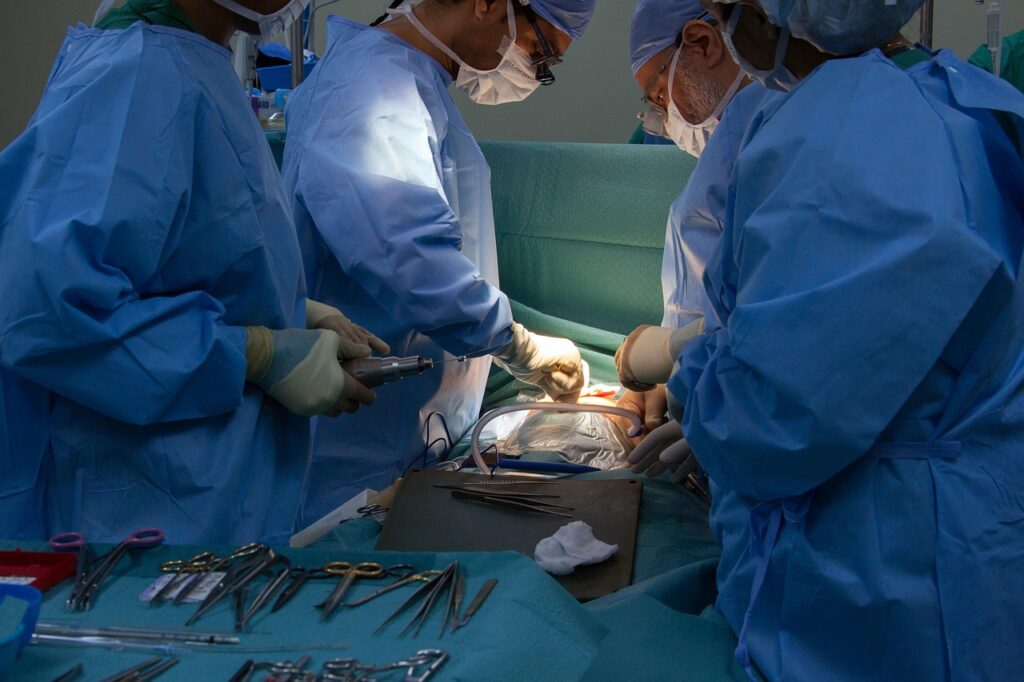
The standard surgical treatment for scoliosis is posterior spinal fusion with instrumentation. The surgeon straightens the curve as much as safely possible, then fuses multiple vertebrae together using titanium rods, screws, hooks, and bone graft material. The procedure typically takes 4 to 8 hours and requires a hospital stay of about 3 to 7 days.
Because scoliosis correction usually involves fusing 8 to 14 vertebral levels, it is a far more extensive procedure than a typical 1- or 2-level fusion for degenerative disc disease. That length and complexity are the primary reasons the cost is so high. Newer approaches like vertebral body tethering (VBT) and anterior scoliosis correction (ASC) are motion-preserving alternatives for select candidates, though they carry their own pricing and coverage considerations, discussed below.
Scoliosis Surgery Cost Without Insurance
A full spinal fusion for scoliosis typically carries billed charges of roughly $50,000 to $150,000 for adolescent idiopathic scoliosis and $75,000 to $200,000 or more for complex adult or revision cases. These are estimates, and the “cash” or negotiated price a hospital will actually accept can differ substantially from the sticker charge. Here is a rough breakdown of where the money goes:
- Surgeon’s fee: $10,000 to $30,000
- Hospital stay (3-7 days): $20,000 to $70,000
- Anesthesia (4-8 hours): $4,000 to $10,000
- Implant hardware (rods, screws, hooks): $15,000 to $50,000
- Neuromonitoring: $3,000 to $10,000
- Pre-surgical imaging: $1,000 to $5,000
- Post-op physical therapy: $2,000 to $8,000
Intraoperative neuromonitoring, which continuously checks spinal cord function during surgery, is standard for scoliosis correction and adds a significant line item. The neuromonitoring technician and interpreting physician often bill separately from the surgical team, which can catch patients off guard. Under federal price-transparency rules, hospitals are required to post standard charges and offer good-faith estimates; if you are paying cash or want to compare, ask the hospital’s billing office for an itemized estimate in writing before scheduling.
Scoliosis Surgery Cost With Insurance
Most health insurance plans cover scoliosis surgery when it meets medical-necessity criteria – typically a curve at or beyond the surgical threshold in a growing adolescent, or significant progression with pain or pulmonary compromise in adults. With insurance, your out-of-pocket scoliosis surgery cost is generally driven by your plan’s deductible and out-of-pocket maximum rather than the full billed charge.
Given the high total cost, most patients who have this surgery will reach their annual out-of-pocket maximum. For 2026, ACA-compliant marketplace plans cap the out-of-pocket maximum at $10,600 for an individual and $21,200 for a family, according to the CMS / HHS Notice of Benefit and Payment Parameters; many employer-sponsored plans set lower maximums. That cap is the practical ceiling on what most insured patients pay for the covered procedure in a given plan year – but only for in-network, covered care, so the details of your plan matter enormously.
Pre-authorization is almost always required. Insurers may request documentation of curve progression via serial X-rays, a skeletal-maturity assessment, and sometimes an independent review. For adolescent patients, some insurers want evidence that bracing was attempted for curves initially measured in the moderate range. Verify coverage and pre-authorization requirements with your insurer in writing before scheduling.
VBT and ASC: Newer Alternatives and Their Costs
Vertebral body tethering (VBT) is a newer, motion-preserving procedure that received a Humanitarian Device Exemption from the FDA in 2019 for certain skeletally immature adolescent scoliosis patients. Instead of fusing the spine, the surgeon attaches a flexible cord to screws placed in the vertebral bodies, aiming to guide growth and preserve motion. Reported VBT costs run roughly $75,000 to $150,000, comparable to fusion in many cases.
Insurance coverage for VBT is inconsistent. Some insurers still consider it investigational and deny coverage, while others have begun approving it for appropriate candidates. Anterior scoliosis correction (ASC), a related approach, faces similar coverage challenges. If you are considering these options, confirm coverage with your insurer in writing before scheduling, and be prepared to appeal a potential denial. VBT is only appropriate for a narrow group of candidates, so eligibility is a surgical decision.
What Drives the Price Higher
Adult scoliosis surgery costs significantly more than adolescent surgery on average. Adults often have stiffer curves, degenerative changes, and comorbidities that complicate the procedure. Osteotomies (controlled bone cuts to improve correction) add operative time and complexity. Staged procedures, where the correction is performed over two separate operations, can roughly double the facility and anesthesia costs.
Revision surgery for failed previous fusions or hardware complications also costs more – typically 20% to 50% above a primary procedure. The hospital you choose matters: academic medical centers with dedicated scoliosis programs may charge more upfront but often have lower complication rates, which reduces the risk of costly re-operations. Geographic variation follows the same pattern as other surgeries – facilities in the Northeast and West Coast tend to charge the most, while hospitals in the South and Midwest are often 20% to 40% less expensive for comparable care. These are general tendencies, not guarantees; get your own estimates.
How to Save Money on Scoliosis Surgery
The stakes are too high with scoliosis surgery to choose a surgeon based solely on price, but you can still be strategic about costs:
- Verify all providers are in-network. The surgeon, anesthesiologist, neuromonitoring company, and hospital must all be in-network for your insurance to apply in-network rates. One out-of-network provider can add thousands in surprise charges.
- Ask about implant costs. Some surgeons have flexibility in which implant system they use, and costs vary significantly between manufacturers.
- Consolidate care. If additional procedures are needed (pre-surgical testing, post-op imaging), have them done at the same facility or within the same system to maximize your insurance benefits and avoid duplicate facility fees.
- Time the surgery. If you expect to hit your out-of-pocket maximum, scheduling early in your plan year means follow-up care that year is also fully covered.
- Request a good-faith estimate. Ask the billing department for an itemized, written estimate and whether a cash or prompt-pay discount is available if you are uninsured or paying out of pocket.
- Apply for financial assistance. Most hospitals offer charity care or financial assistance for patients below certain income thresholds. Ask the billing department before your procedure.
- Explore nonprofit support. Organizations like the Setting Scoliosis Straight Foundation and Shriners Children’s provide financial assistance or free care for qualifying pediatric patients.
Recovery Costs to Plan For
Post-surgical recovery from scoliosis correction typically takes 3 to 6 months for most activities and up to a year for full clearance. During that period, expect costs for follow-up visits ($150 to $400 each, typically 4 to 6 visits in the first year), X-rays to monitor fusion progress ($100 to $500 each), and physical therapy ($75 to $250 per session). Some patients wear a brace for a period after surgery to help keep the spine stable while the fusion heals.
For adolescent patients, parents often need time off work for caregiving. Adult patients face their own lost wages, typically 4 to 12 weeks depending on the physical demands of the job. These indirect costs, though not part of the medical bill, should be factored into your financial planning.
Frequently Asked Questions
Does insurance cover scoliosis surgery?
Yes, most insurance plans cover scoliosis surgery when medical necessity is documented – typically a curve at or beyond the surgical threshold with progression, pain, or pulmonary compromise. Pre-authorization is required, and the insurer may request documentation of conservative treatment attempts such as bracing for adolescents. Confirm the specifics with your own plan.
How much does scoliosis surgery cost for a child?
Adolescent scoliosis surgery commonly carries billed charges of roughly $50,000 to $150,000 without insurance. With insurance, families usually pay up to their plan’s out-of-pocket maximum. Many children’s hospitals have financial assistance programs, and organizations like Shriners Children’s may provide free care for qualifying families. Verify pricing with the hospital.
Is scoliosis surgery worth it?
For larger curves that are progressing or affecting function, surgery is generally recommended to prevent continued progression that can affect lung function and quality of life. Published spine literature reports high patient-satisfaction rates at long-term follow-up. Whether surgery is right for you is a decision to make with a fellowship-trained spine surgeon after a detailed discussion of the risks and alternatives.
What is the success rate of scoliosis surgery?
Modern scoliosis fusion achieves good correction in the large majority of cases, with serious complication rates reported below about 5% at experienced centers. One of the most important factors in outcomes is choosing a surgeon who performs a high volume of scoliosis corrections annually. Ask about a surgeon’s case volume and complication rates.
How can I verify the price before surgery?
Ask the hospital billing office for an itemized good-faith estimate in writing, confirm which providers are in-network with your insurer, and ask your insurer for a written pre-authorization and an explanation of your expected out-of-pocket cost. Because charges vary widely, do not rely on a single online figure – verify pricing and coverage for your specific case.
The Bottom Line
Scoliosis surgery cost is substantial – often exceeding $100,000 in billed charges and commonly ranging from $50,000 to $200,000 or more without insurance – but it is also one of the procedures where insurance coverage makes the biggest difference, capping most insured patients’ costs at their plan’s out-of-pocket maximum. Focus on confirming all providers are in-network, understanding your out-of-pocket maximum, and planning for the full recovery timeline including physical therapy and follow-up imaging. Do not overlook financial assistance programs, especially for pediatric patients. And remember that whether to observe, brace, or operate – and which procedure to choose – is a medical decision for a qualified spine surgeon, not a price comparison.
Medical disclaimer: This article is general information, not medical or pricing advice. Whether scoliosis should be observed, braced, or surgically corrected – and which procedure is appropriate – is an individualized decision made with a qualified, fellowship-trained spine surgeon. All prices here are estimates that vary widely by hospital, region, insurer, and the complexity of the case; verify actual pricing and coverage with your surgeon, hospital, and insurance company before relying on any figure. Seek prompt medical care for new neurological symptoms (weakness, numbness, or loss of bowel or bladder control), signs of infection, or difficulty breathing after surgery.
Sources
- Scoliosis Research Society (SRS) – scoliosis definition (curves greater than 10 degrees), curve thresholds, treatment options (monitoring, bracing, surgery), and spinal fusion technique
- American Academy of Orthopaedic Surgeons / OrthoInfo – scoliosis diagnosis and treatment overview
- MedlinePlus (U.S. National Library of Medicine) – scoliosis observation, bracing, surgery, and post-operative recovery
- U.S. Food and Drug Administration (FDA) – 2019 Humanitarian Device Exemption for vertebral body tethering (The Tether)
- Centers for Medicare & Medicaid Services (CMS) / HHS Notice of Benefit and Payment Parameters – 2026 maximum annual limitation on cost sharing ($10,600 self-only / $21,200 other-than-self-only)