
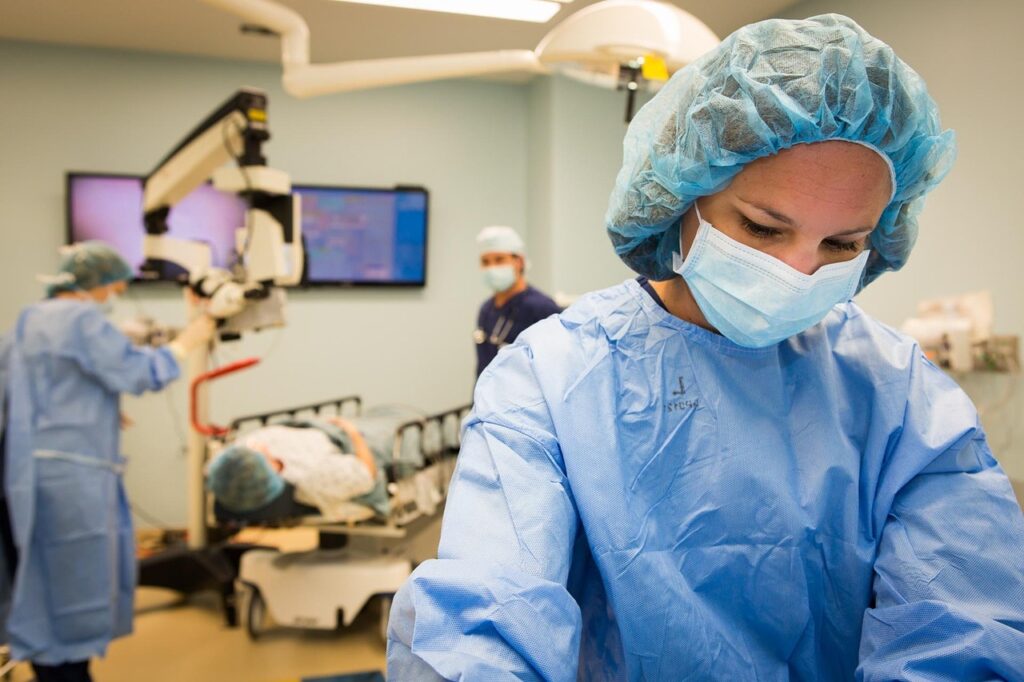
- Plantar fasciitis surgery cost commonly runs an estimated $3,500-$12,000 without insurance and roughly $500-$2,500 with typical coverage, but every figure here is a ballpark, not a quote.
- Surgery is a last resort: only about 1 in 20 patients ultimately needs an operation, because the large majority improve with conservative care over 6 to 12 months.
- The single biggest cost variable is the facility: an ambulatory surgery center often costs far less than a hospital outpatient department for the same procedure.
- Insurers usually require documented failure of several months of conservative treatment before authorizing surgery, so keep records of every therapy you try.
- A sudden pop or sharp tearing pain in the heel can signal a plantar fascia rupture and warrants prompt medical evaluation, not self-treatment.
- This is general cost information, not medical or financial advice; surgical decisions belong with a qualified foot and ankle surgeon.
The plantar fasciitis surgery cost in the United States commonly ranges from an estimated $3,500 to $12,000 without insurance, depending on the surgical technique, the facility where it is performed, and your geographic location. Treat those numbers as ballpark figures rather than quotes — real prices vary widely, so the most useful step you can take is to request an itemized, written estimate from each facility you are considering. Surgery is genuinely a last resort for plantar fasciitis: the American Orthopaedic Foot & Ankle Society and the American Academy of Orthopaedic Surgeons note that only a small minority of patients — often estimated at around 5% — ultimately need an operation, because the large majority respond to conservative treatment within 6 to 12 months. This is educational cost information, not medical or financial advice; treatment decisions belong with a qualified foot and ankle surgeon. For more on procedural pricing across the healthcare system, visit our healthcare costs guide.
TL;DR: Plantar Fasciitis Surgery Cost at a Glance
- Self-pay range: roughly $3,500-$8,000 for minimally invasive endoscopic release and $5,000-$12,000 for open release — all estimates, not guaranteed prices.
- With insurance: typically $500-$2,500 out of pocket once conservative treatment has failed and prior authorization is approved.
- Biggest cost driver: the facility fee. An ambulatory surgery center is often far cheaper than a hospital outpatient department.
- Surgery is a last resort: most people (an estimated 90%-95%) improve with conservative care for a small fraction of the surgical price.
- Get it in writing: ask for an itemized estimate and confirm coverage and prior authorization with your insurer in advance.
This article is general education, not medical or financial advice. Confirm any figure with the facility and your insurer, and make treatment decisions with your own surgeon. Information is current as of 2026.
Plantar Fasciitis Surgery Cost by Technique
Two primary surgical approaches exist for plantar fasciitis, and they carry meaningfully different price tags, recovery timelines, and clinical profiles. Your foot and ankle surgeon or orthopedist will recommend an approach based on the severity and duration of your condition, your anatomy, and whether additional pathology (heel spurs, nerve entrapment) needs to be addressed at the same time. The price bands below are illustrative estimates for 2026, not fixed quotes.
Endoscopic Plantar Fasciotomy
The minimally invasive endoscopic approach uses a small camera and specialized instruments inserted through two tiny incisions (each roughly 5 mm) on either side of the heel. The surgeon visualizes the plantar fascia on a monitor and partially releases the medial band of the fascia — typically cutting about one-third to one-half of its width. This technique costs an estimated $3,500 to $8,000 without insurance. Recovery is generally faster than open surgery: many patients begin bearing weight in a walking boot within a few days and return to regular footwear and full activity in roughly four to six weeks, though individual timelines vary and your surgeon’s protocol takes priority. The shorter operative time (often 30 to 45 minutes), suitability for outpatient ambulatory surgery centers, and reduced post-operative monitoring all tend to contribute to its lower cost compared with open surgery. Studies indexed in journals such as Foot & Ankle International have reported success rates commonly in the range of 80% to 90% for endoscopic fasciotomy in appropriately selected patients, although reported outcomes vary by study and patient selection.
Open Plantar Fascia Release
Traditional open surgery involves a larger incision (about 2 to 4 cm) on the inner side or bottom of the heel, allowing direct visualization and palpation of the plantar fascia. The surgeon releases the fascia under direct vision and can simultaneously remove a heel spur if one is contributing to symptoms. Open release costs an estimated $5,000 to $12,000 without insurance. Recovery is longer and more demanding — often six to ten weeks of limited or non-weight-bearing activity in a cast or boot, followed by a gradual return to full weight-bearing over an additional two to four weeks. The procedure is more likely to be performed in a hospital outpatient setting (with higher facility fees) than in an ASC, partly because the longer recovery and more complex wound care may benefit from hospital-level resources. Open release is often reserved for patients who have heel spurs requiring removal, nerve entrapment requiring decompression, or complex foot anatomy that makes endoscopic visualization difficult.
Gastrocnemius Recession
In patients with tight calf muscles (equinus contracture) contributing to chronic plantar fasciitis that has failed stretching programs, a gastrocnemius recession — a procedure that lengthens the tight gastrocnemius tendon — may be performed alongside or instead of fasciotomy. This typically adds an estimated $2,000 to $5,000 to the surgical cost and extends the recovery timeline by roughly two to four weeks. The additional calf incision, longer operative time, and need for more extensive rehabilitation contribute to the higher total expense. Research in journals such as the Journal of Foot & Ankle Surgery has suggested that gastrocnemius recession can resolve plantar fasciitis symptoms in many patients with documented equinus, potentially avoiding fasciotomy altogether, though the evidence base is still developing and candidacy is individual.
What’s Included in the Surgical Bill
Your total bill aggregates several separately billed components, typically from multiple providers and entities. Treat every band below as an illustrative estimate:
- Surgeon’s fee: roughly $1,500 to $4,000 depending on technique, complexity, and location
- Facility fee: roughly $1,500 to $5,000 at a hospital outpatient department, or roughly $800 to $2,500 at an ambulatory surgery center — this is usually the single largest cost variable
- Anesthesia: roughly $500 to $1,500 for local anesthesia with sedation, an ankle block, or monitored anesthesia care (MAC)
- Post-surgical boot or walking cast: roughly $50 to $200 (often billed through durable medical equipment)
- Post-operative follow-up visits: roughly $100 to $300 per visit, typically two to four visits over the first six to eight weeks
- Pre-operative imaging and evaluation: roughly $100 to $300 for X-rays, and $300 to $700 for an MRI if one is ordered to confirm the diagnosis or rule out other pathology
Physical therapy after surgery — recommended by most surgeons for roughly four to eight weeks of structured rehabilitation — adds an estimated $75 to $200 per session. A typical post-surgical PT course of 8 to 16 sessions can total $600 to $3,200 depending on your insurance coverage, facility, and geographic area. Our guide on physical therapy cost provides a more detailed breakdown. Some surgeons prescribe home exercise programs as a lower-cost alternative to formal PT for patients recovering well.
Plantar Fasciitis Surgery Cost With Insurance vs Without Insurance
Most insurance plans cover plantar fascia release surgery when conservative treatments have failed — typically defined as several months (often 6 to 12) of documented non-surgical therapy including at least two or three of the following: physical therapy, custom or prefabricated orthotics, corticosteroid injections, night splints, stretching programs, and anti-inflammatory medication. With insurance, your out-of-pocket share is usually an estimated $500 to $2,500, depending on your deductible status, coinsurance rate, and out-of-pocket maximum. If the surgery pushes you to your annual out-of-pocket maximum, subsequent covered care for the year (follow-ups, PT, medications) may then be covered at 100%. Prior authorization is commonly required, and your surgeon’s office will typically handle the submission with supporting documentation. Exact coverage rules vary by plan, so confirm the specifics with your insurer before scheduling.
Medicare generally covers medically necessary plantar fasciotomy under Part B for outpatient surgical procedures. Beneficiaries on Original Medicare typically pay 20% coinsurance after the annual Part B deductible is met, resulting in out-of-pocket costs that vary with the total allowed amount. Medicare Advantage plans may have different cost-sharing structures, including flat surgical copays that provide more predictability. Because Medicare deductibles and allowed amounts are updated each year, verify the current figures at Medicare.gov or with your plan.
Without insurance, the full estimated $3,500 to $12,000 range applies. Self-pay patients should negotiate: many facilities offer discounts for upfront cash payment, and ambulatory surgery centers often provide the most competitive all-inclusive pricing. Some ASCs advertise transparent “cash-pay” plantar fasciotomy packages that bundle surgeon, anesthesia, and facility fees into a single price; ask exactly what is and is not included (for example, imaging, the boot, and post-op PT are sometimes separate).
Heel Red Flag: A Sudden Pop Is Not Routine
Plantar fasciitis usually builds gradually. A sudden sharp, tearing pain or an audible “pop” in the heel or arch, especially during a push-off, jump, or sprint, can signal a plantar fascia rupture rather than ordinary fasciitis — particularly if it follows recent corticosteroid injections. This is not something to self-treat or “walk off.” Stop weight-bearing, apply ice, and seek prompt evaluation from a healthcare professional, because management and recovery differ from standard plantar fasciitis. Likewise, heel pain accompanied by fever, redness, warmth, numbness, or an inability to bear weight deserves prompt medical attention.
Conservative Treatment Costs: Worth Exhausting First
Before committing to surgery and its associated costs, remember that the large majority of plantar fasciitis patients — commonly estimated at 90% to 95% — improve with non-surgical approaches. These conservative treatments are far less expensive and carry no surgical risks. The cost ranges below are estimates:
- Custom orthotics: roughly $200 to $600 (often partially covered by insurance, typically lasting 2 to 5 years)
- Over-the-counter arch supports: roughly $20 to $60 (a reasonable first step before investing in custom devices)
- Physical therapy: roughly $75 to $200 per session, typically 6 to 12 sessions over 4 to 8 weeks
- Corticosteroid (cortisone) injections: roughly $100 to $300 per injection (see our detailed cortisone injection cost guide); these are usually limited in number because repeated injections may weaken the fascia
- Extracorporeal shockwave therapy (ESWT): roughly $300 to $500 per session, usually 3 to 5 sessions — evidence supports its use for chronic cases resistant to other conservative measures, though coverage is inconsistent
- PRP (platelet-rich plasma) injections: roughly $500 to $2,000 per treatment (see our PRP injection cost breakdown) — emerging evidence suggests possible benefit for chronic plantar fasciitis, but it is often not covered by insurance
- Night splints: roughly $20 to $50 — maintain a dorsiflexion stretch on the fascia during sleep
- Walking boot or cam walker for acute flares: roughly $50 to $200 — provides temporary immobilization and offloading
The total cost of a comprehensive conservative treatment course — say, orthotics plus 8 PT sessions plus one injection plus a night splint — commonly comes to an estimated $800 to $2,500. That is substantially less than surgery, avoids operative risks entirely (including potential complications such as lateral column overload, nerve injury, and wound infection), and resolves symptoms in the vast majority of patients. Surgery should genuinely be the last option after a thorough and persistent conservative effort supervised by a clinician.
How to Save Money on Plantar Fasciitis Surgery
Choose an ambulatory surgery center when appropriate. Endoscopic plantar fasciotomy is well suited to ASC settings — the procedure is short, generally low-risk, and does not require overnight monitoring. ASCs commonly charge substantially less than hospital outpatient departments for the same surgery. Ask your surgeon which ASCs they operate at and request a cost comparison between the ASC and hospital options.
Opt for endoscopic over open surgery when clinically appropriate. Beyond its faster recovery, the endoscopic approach typically costs less due to shorter operating-room time, lower facility charges, and less post-operative care. Discuss with your surgeon whether your specific anatomy, symptom pattern, and imaging findings allow for the minimally invasive option. Not all surgeons are trained in endoscopic fasciotomy, so you may need to seek a provider who offers this technique if it interests you. The right approach for you is a clinical decision, not just a financial one.
Bundle physical therapy into your treatment plan. Some orthopedic practices offer post-surgical PT packages at a discounted group rate. If not, compare pricing at freestanding PT clinics versus hospital-based rehabilitation departments — the price difference can be meaningful for the same quality of care, and location convenience matters during weeks of twice-weekly appointments.
Time surgery strategically with your deductible. If you have already accumulated significant medical expenses during the calendar year and are close to your deductible or out-of-pocket maximum, scheduling surgery in the same year can maximize your insurance benefit. Conversely, if you are starting the year fresh, scheduling surgery early allows follow-up visits and PT costs to count toward the same deductible period rather than splitting expenses across two calendar years.
Complete conservative treatment thoroughly before surgery. Beyond being sound medical practice, documented completion of a full conservative regimen — including physical therapy, at least one injection where appropriate, and orthotic use — strengthens your case for insurance pre-authorization. Incomplete conservative-treatment documentation is one of the most common reasons for surgical authorization denial, which can leave you paying the full bill while you appeal.
Ask for cash-pay and financial-assistance options. If you are uninsured or underinsured, ask each facility about cash-pay pricing, financial hardship programs, and interest-free payment plans. Prices are often negotiable, and the sticker figure is rarely the final figure for a motivated self-pay patient.
Frequently Asked Questions
Is plantar fasciitis surgery worth the cost?
For the small share of patients — often estimated at roughly 5% to 10% — who have failed a comprehensive course of conservative treatment lasting many months, surgery provides significant pain relief in a majority of cases, with commonly cited success figures in the range of 75% to 90% in systematic reviews. However, results are not guaranteed: some patients report incomplete symptom resolution, and a small percentage develop new problems such as lateral column pain or arch flattening. Surgery is worth considering only after exhausting non-surgical options thoroughly, and expectations should be realistic — improvement, not necessarily perfection. Whether it is worth it for you is a decision to make with your surgeon.
How long is recovery from plantar fasciitis surgery?
Timelines vary by procedure and patient, and your surgeon’s protocol takes priority. In general, endoscopic fasciotomy allows protected weight-bearing in a boot within a few days, transition to regular footwear at roughly two to three weeks, and return to full activity including exercise at about four to six weeks. Open release commonly requires six to ten weeks of restricted weight-bearing, followed by a gradual return to full activity over an additional two to four weeks. Regardless of technique, full resolution of pain and return to pain-free running or high-impact sport may take three to six months. Physical therapy during recovery can help you progress safely.
Does insurance cover plantar fasciitis surgery?
Usually, yes — when it is medically necessary and after documented failure of conservative treatments. Most insurers require evidence of several months of non-surgical therapy (often including physical therapy, orthotics, and at least one injection) before authorizing surgery. Your surgeon’s office will typically compile the necessary documentation for prior authorization. Without adequate documentation of conservative-treatment failure, authorization may be denied, so keep records of every treatment attempt throughout your care journey. Because plan rules differ, confirm coverage and any cost-sharing with your own insurer before scheduling.
Can plantar fasciitis come back after surgery?
Recurrence after surgical fascial release is uncommon, reported in a modest percentage of cases in long-term follow-up studies. More often discussed than recurrence is the development of lateral column overload — pain on the outer edge of the foot — which can occur in a minority of patients after fascial release, potentially because the released fascia no longer supports the arch as effectively. Wearing supportive footwear, using orthotics, maintaining calf flexibility through daily stretching, and strengthening the intrinsic foot muscles after surgery all help minimize both recurrence and compensatory problems.
What is the cheapest way to treat plantar fasciitis?
For most people, the cheapest and most effective path is conservative care done consistently: calf and plantar fascia stretching, supportive shoes or over-the-counter inserts, activity modification, and a night splint, escalating to physical therapy or an injection if needed. These measures cost far less than surgery and resolve symptoms in the large majority of patients. Because plantar fasciitis usually improves over 6 to 12 months, patience with a structured conservative program is often the highest-value “treatment” of all.
The Bottom Line
Plantar fasciitis surgery can be effective but is an expensive last resort, costing an estimated $3,500 to $12,000 without insurance and roughly $500 to $2,500 with typical coverage — all figures being ballparks rather than quotes. The good news is that most patients never need it: conservative treatments resolve symptoms in an estimated 90% to 95% of cases for a fraction of the surgical price. If surgery does become necessary, choosing an ambulatory surgery center, opting for the endoscopic technique when your surgeon deems it appropriate, timing the procedure around your insurance deductible, and completing thorough conservative-treatment documentation for authorization are the most impactful ways to reduce your out-of-pocket expense. Work closely with your foot and ankle surgeon to confirm you have truly exhausted non-surgical options before committing to the operating room — your foot and your finances will both benefit from that diligence.
This article is for general education and is not a substitute for professional medical or financial advice. Prices are estimates that vary by facility, region, and insurer; confirm any figure directly. Information is current as of 2026.
Sources
- American Academy of Orthopaedic Surgeons (OrthoInfo): Plantar Fasciitis and Heel Pain
- American Orthopaedic Foot & Ankle Society (FootCareMD): Plantar Fasciitis diagnosis and treatment
- MedlinePlus (U.S. National Library of Medicine): Plantar Fasciitis; Plantar Fascia Release
- Mayo Clinic: Plantar Fasciitis — Diagnosis and Treatment
- CMS / Medicare (Medicare.gov): Outpatient surgery payment and beneficiary cost-sharing