
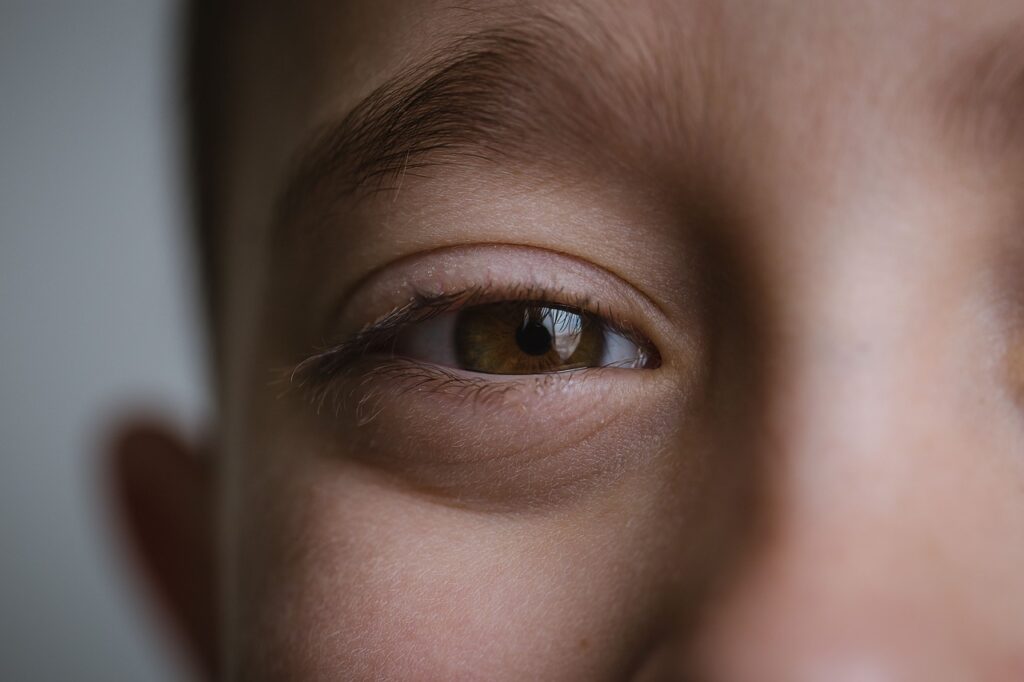
Pink eye is one of the most common reasons for unscheduled pediatric visits. Pink eye in children, known clinically as conjunctivitis, is rarely serious, but distinguishing the main types matters because contagion, school-return rules, and whether any medication is needed can differ. The reassuring headline: most conjunctivitis is viral and self-limited, meaning it tends to run its course and improve on its own. The job for parents is to soothe the irritation, limit spread, and recognize the smaller number of situations that genuinely warrant a call to the pediatrician or a same-day visit. This guide is general educational information, not a substitute for individual medical advice from your child’s clinician.
What Conjunctivitis Is
The conjunctiva is the thin, transparent membrane that covers the white of the eye and lines the inside of the eyelid. When it becomes inflamed, blood vessels dilate and produce the classic red or pink appearance, along with discharge, itch, or irritation. Conjunctivitis is not the same as keratitis (inflammation of the cornea), iritis, or an eyelid infection — though these can look similar in the early stages, which is one reason a clinician’s exam is valuable when the picture is unclear.
According to the CDC, the three main causes in children are viral, bacterial, and allergic, with viral generally most common in school-age kids and bacterial relatively more common in younger children and infants.
Viral Conjunctivitis: The Most Common Type
Most viral pink eye is caused by adenovirus, often as part of an upper respiratory infection. Symptoms typically start in one eye and may spread to the other within a day or two. Discharge is usually watery rather than thick, the eye feels gritty, and there are often cold-like symptoms — runny nose, sore throat, or mild fever. A tender bump in front of the ear (a swollen lymph node) can occur.
Viral conjunctivitis is contagious, often for one to two weeks, but it resolves on its own without antibiotics. Care is supportive: cool compresses, preservative-free artificial tears, and meticulous hand hygiene. The American Academy of Ophthalmology emphasizes that antibiotic drops do not help viral cases and can cause side effects or delay a correct diagnosis.
Bacterial Conjunctivitis
Bacterial pink eye in children is often caused by organisms such as Streptococcus pneumoniae, nontypeable Haemophilus influenzae, or Staphylococcus aureus. A common feature is thicker, yellow or green discharge that can crust the eyelashes, sometimes gluing them shut after sleep. In young children, conjunctivitis and an ear infection can occur together (the so-called conjunctivitis-otitis pattern).
Importantly, most uncomplicated bacterial conjunctivitis also improves on its own over about a week. The American Academy of Pediatrics, in its 2025 Pediatrics in Review guidance, notes that topical antibiotics are rarely necessary for pediatric conjunctivitis and that their role is often unclear — antibiotic drops may shorten the course modestly and reduce contagion in selected cases, but many children do fine with supportive care and watchful waiting. Whether an antibiotic is appropriate, and which one, is a decision for a prescriber who has examined your child; it is not something to self-treat. The AAP’s HealthyChildren.org explains when antibiotics are reasonable and when watchful waiting makes sense.
Allergic Conjunctivitis
Allergic pink eye is non-infectious and caused by exposure to allergens — pollen, pet dander, dust mites, or mold. Both eyes are typically affected from the start. The dominant symptom is itch; discharge is stringy and clear, and many children have associated nasal symptoms (sneezing, runny nose). Small “cobblestone” bumps may be visible on the inner eyelid.
Management focuses on avoidance, cool compresses, artificial tears, and antihistamine or mast-cell-stabilizer drops such as olopatadine or ketotifen, used as directed. For families managing multiple allergic conditions, our childhood allergies guide covers broader environmental strategies. Check with your pediatrician or pharmacist before starting a new eye drop in a young child, and follow the product’s age guidance.
Newborn Conjunctivitis (Ophthalmia Neonatorum)
Conjunctivitis in the first month of life is a different, more urgent category. Causes include chemical irritation (from newborn eye prophylaxis), Chlamydia trachomatis (often 5 to 12 days after birth), and Neisseria gonorrhoeae (often 2 to 7 days, with copious purulent discharge — a sight-threatening emergency). Erythromycin ointment is commonly given at birth as gonococcal prophylaxis, but cases still occur.
Any conjunctivitis in a baby under about 4 weeks old warrants same-day pediatric evaluation. Herpes simplex virus conjunctivitis can also occur in this age group and requires urgent ophthalmologic referral because of the risk of corneal involvement. When in doubt about a newborn’s eye, call your pediatrician promptly rather than waiting to see if it improves.
Diagnosis: Clinical, With a Few Caveats
For most cases, diagnosis is clinical, based on history (one eye vs both, sick contacts, allergies, recent cold) and exam findings (discharge type, eyelid involvement, vision, pain). Lab testing is rarely needed except in newborns, severe cases, or infections that do not respond to initial care. It is worth being honest with yourself about the limits of home guessing: no single symptom or sign reliably separates viral from bacterial conjunctivitis, which is exactly why clinicians sometimes favor supportive care and reassessment rather than reflexively prescribing drops.
Contact lens wearers are a special case. A serious corneal infection (bacterial keratitis) from contact lens use can mimic conjunctivitis but threatens vision. Any contact-lens-wearing child with a red, painful eye should remove the lenses immediately and see an eye care provider promptly — not be treated with over-the-counter remedies.
School and Daycare Return
Policies vary, but the AAP and CDC generally do not recommend keeping children with conjunctivitis home if they are otherwise well. Many daycare and school policies still ask for 24 hours of antibiotic treatment for bacterial conjunctivitis before return — check your local rules, since these are set by schools and health departments, not by a single national standard.
Hand hygiene matters more than exclusion. Viral and bacterial conjunctivitis spread by direct or indirect contact with eye discharge. Frequent handwashing, avoiding eye-rubbing, not sharing pillows, washcloths, towels, or eye makeup, and proper contact lens hygiene all reduce spread. Discard any contact lens solution and case in use during the infection, and wash pillowcases and towels.
A Note on Eye Drops and Home Remedies
Two safety points are easy to overlook. First, do not use old or leftover eye drops, and never put someone else’s prescription drops into your child’s eye — the diagnosis may be different, the drops may be expired or contaminated, and the wrong medication can cause harm or mask a serious problem. If a clinician prescribes drops, use only what was prescribed for this child, for this episode. Second, avoid putting unsterile home remedies into the eye. The AAP and AAO advise against instilling substances like breast milk or other folk remedies; cool compresses, preservative-free artificial tears, and good hand hygiene are the safe at-home options.
When to Call the Pediatrician
Most pink eye in older children resolves uneventfully, so routine cases usually do not need a visit. Call your pediatrician if any of the following apply: your child is a newborn or infant under about 4 weeks with any eye redness or discharge (this is urgent); there is significant eye pain, vision changes, or sensitivity to light; there is a large amount of discharge, marked swelling, or a fever that concerns you; your child wears contact lenses and has a red, painful eye; symptoms are getting worse rather than better, or are not improving after about 7 to 10 days; or you are simply unsure which type your child has. Our broader medical conditions overview covers other common pediatric ailments to help you sort routine from concerning.
When to seek urgent or emergency care: Seek same-day care, or go to the nearest emergency room or a pediatric ophthalmologist, for a newborn or infant under about 4 weeks with any eye redness or discharge; severe eye pain; vision changes; marked light sensitivity (photophobia); severe redness with a cloudy-looking cornea; a red, painful eye in a contact lens wearer; recent eye trauma or a chemical splash; or conjunctivitis accompanied by high fever with confusion or a stiff neck. When you are unsure, call your pediatrician or a nurse line rather than waiting.
Frequently Asked Questions
How long is pink eye contagious?
Viral conjunctivitis is generally contagious while symptoms last — often one to two weeks. Bacterial conjunctivitis is usually considered contagious until discharge resolves, or until roughly 24 hours after starting prescribed antibiotic drops. Allergic conjunctivitis is not contagious at all. When in doubt about returning to school or daycare, check your program’s policy and ask your clinician.
Do antibiotic drops always help?
No. Antibiotics only target bacterial infections, and even then the benefit is often modest because many bacterial cases resolve on their own. They do nothing for viral or allergic conjunctivitis and can cause side effects or contribute to antibiotic resistance. Whether drops are worthwhile is a judgment call for your child’s clinician.
Can I use breast milk or home remedies?
The AAP and AAO advise against putting unsterile substances into a child’s eye. Cool compresses, preservative-free artificial tears, and good hand hygiene are the safe at-home options. If you think your child needs medication, contact your pediatrician.
How can I tell if it is bacterial or viral?
You often cannot tell for certain at home, and no single sign is reliable. As a rough guide, thick discolored discharge with crusting can point toward bacterial, watery discharge with cold symptoms toward viral, and itchy, both-eyes-from-day-one symptoms toward allergic — but these overlap. A pediatrician can usually assess it from a brief exam and advise whether any treatment is needed.
Can I use leftover eye drops from a previous infection?
No. Old or leftover drops may be expired or contaminated, and the current problem may be a different condition entirely. Do not use another person’s prescription drops in your child’s eye. Ask your pediatrician before using any medicated eye drop.
The Bottom Line
Pink eye in children is usually a self-limited annoyance, not a medical emergency. Most cases are viral and improve on their own, so the mainstays are soothing the irritation and preventing spread through diligent handwashing. Skip the guesswork on antibiotics — that decision belongs to a clinician who has examined your child — and never reach for old or borrowed eye drops. Save the urgent visits for newborns and young infants, contact lens wearers, severe pain, vision changes, or light sensitivity, where the consequences of missing something serious are highest.
Sources
- CDC — About Conjunctivitis (Pink Eye)
- American Academy of Ophthalmology — Conjunctivitis / Pink Eye and the Conjunctivitis Preferred Practice Pattern
- American Academy of Pediatrics — Conjunctivitis (Pediatrics in Review, 2025) and HealthyChildren.org
- MedlinePlus (NIH) — Pink Eye