
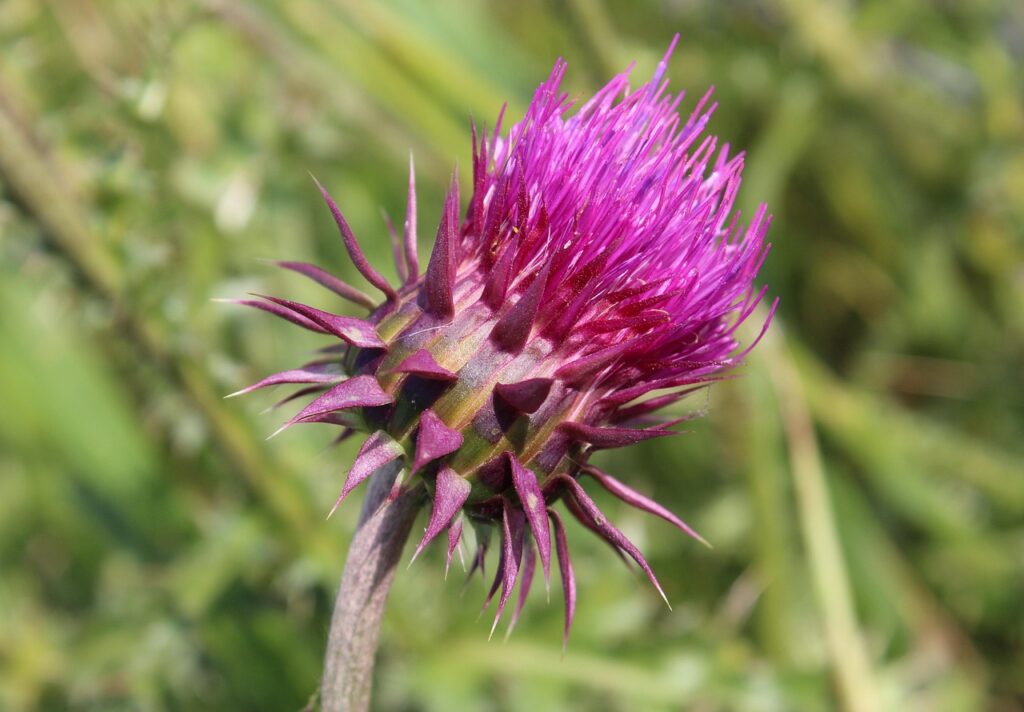
- Milk thistle's active complex, silymarin, has antioxidant properties and is best known as a "liver support" herb.
- Evidence for liver disease is mixed and generally weak; high-quality reviews have not confirmed clear benefit for hepatitis or cirrhosis.
- It is not a treatment for acute poisoning, fatty liver, or any liver disease and should not replace medical care.
- Doses studied in research often ranged from about 140 to 600 mg of silymarin daily, usually in divided doses.
- Milk thistle can interact with some medications and may cause mild digestive upset; talk to your doctor or pharmacist first.
Milk thistle is one of the oldest herbal remedies still in wide use, traditionally taken for liver and gallbladder complaints. Modern supplements are marketed heavily for “liver detox” and “liver support.” The plant does contain genuinely interesting antioxidant compounds, but the human evidence is more modest and more mixed than the packaging implies. Here is an honest look at what milk thistle is, what research shows, and where the limits are.
What is milk thistle?
Milk thistle (Silybum marianum) is a flowering plant whose seeds contain a group of compounds collectively called silymarin, with silybin (silibinin) as a key component. Silymarin acts as an antioxidant in the body and appears, in laboratory studies, to protect liver cells from certain toxins and to influence inflammation. Supplements are usually standardized to a percentage of silymarin and sold as capsules, tablets, or liquid extracts.
The antioxidant biology is real and is the reason milk thistle has been studied for the liver. As with many botanicals, though, promising lab findings have not translated into strong, consistent results in people.
What the evidence actually shows
Liver disease. This is milk thistle’s headline use. Researchers have studied it for hepatitis C, alcohol-related liver disease, and cirrhosis. High-quality systematic reviews, including work summarized by Cochrane and NCCIH, have generally found the evidence weak and inconsistent, without clear proof that milk thistle improves liver disease or survival. It may be well tolerated, but “well tolerated” is not the same as “effective.”
Fatty liver and metabolic markers. Some smaller studies suggest silymarin might modestly affect liver enzymes or metabolic measures in conditions like non-alcoholic fatty liver disease, but results are mixed and the studies are often small or short. It is not an established treatment.
Mushroom poisoning. You may see claims that milk thistle treats Amanita mushroom poisoning. An intravenous silybin product has been studied in that emergency setting under medical supervision. That is a hospital treatment, not a reason to take over-the-counter capsules, which should never be used to self-treat any poisoning.
Other uses. Milk thistle has been explored for blood sugar, cholesterol, and skin conditions, but the evidence is preliminary. For the bigger picture on evaluating any supplement, see our wellness and supplement guides.
Doses studied in research
The figures below describe ranges used in studies, not a personal recommendation. Product potency varies widely, so talk to your doctor or pharmacist before starting.
| Context | Silymarin range in research | Notes |
|---|---|---|
| General use | ~140–420 mg/day | Often split into two or three doses |
| Liver-focused studies | ~420–600 mg/day | Higher end used in some trials |
| Standardization | ~70–80% silymarin | Look for the standardized percentage on the label |
Because “milk thistle” products differ in how much silymarin they actually contain, two bottles at the same milligram count are not necessarily equivalent.
Safety & who should avoid it
Dietary supplements are not evaluated by the FDA and are not intended to diagnose, treat, cure, or prevent any disease. Milk thistle is generally considered well tolerated by mouth for most adults. The most common side effects are mild digestive complaints such as nausea, bloating, or loose stools. Because it comes from the same plant family as ragweed, people with related plant allergies can occasionally react to it.
Use extra caution, and check with a clinician first, if you:
- Take medications processed by the liver, including some cholesterol drugs, blood thinners, or diabetes medications, since milk thistle may affect how they are metabolized.
- Have a hormone-sensitive condition, because some milk thistle preparations may have weak estrogen-like effects in lab studies.
- Are pregnant or breastfeeding, where safety data are insufficient.
- Have any diagnosed liver disease, in which case milk thistle should complement, never replace, care from your medical team.
If you are comparing antioxidant-type supplements, you may also want to read about quercetin and CoQ10, which are studied for different purposes.
Frequently asked questions
Does milk thistle “detox” or cleanse the liver? Your liver and kidneys already handle detoxification. There is no strong evidence that milk thistle “cleanses” the liver, and “detox” is a marketing term rather than a medical one.
Can it reverse liver damage? No supplement has been proven to reverse liver damage. High-quality reviews have not confirmed that milk thistle changes the course of liver disease.
Is it safe to drink alcohol if I take milk thistle? Milk thistle does not protect against alcohol, and taking it is not a reason to drink more. Reducing alcohol is far more important for liver health.
How long before I notice anything? Because clear benefits are not well established, there is no reliable timeline, and you may not notice a specific effect.
Can I take it with my prescriptions? Possibly, but interactions exist. Have your pharmacist review your full medication list first.
Is a higher silymarin percentage better? A higher standardized percentage means more active compound per dose, but more is not automatically safer or more effective. Ask a clinician about what is appropriate for you.
This article is for general education and is not medical advice. Supplements and therapies affect people differently and can interact with medications or conditions. Talk to your doctor, pharmacist, or a licensed clinician before making changes to your health routine.
Sources
- National Center for Complementary and Integrative Health (NCCIH) — milk thistle
- NIH Office of Dietary Supplements — botanical supplement information
- MedlinePlus — milk thistle (silymarin) overview and interactions
- Mayo Clinic — patient guidance on herbal supplements and liver health
- Cochrane — systematic reviews of milk thistle for liver disease