
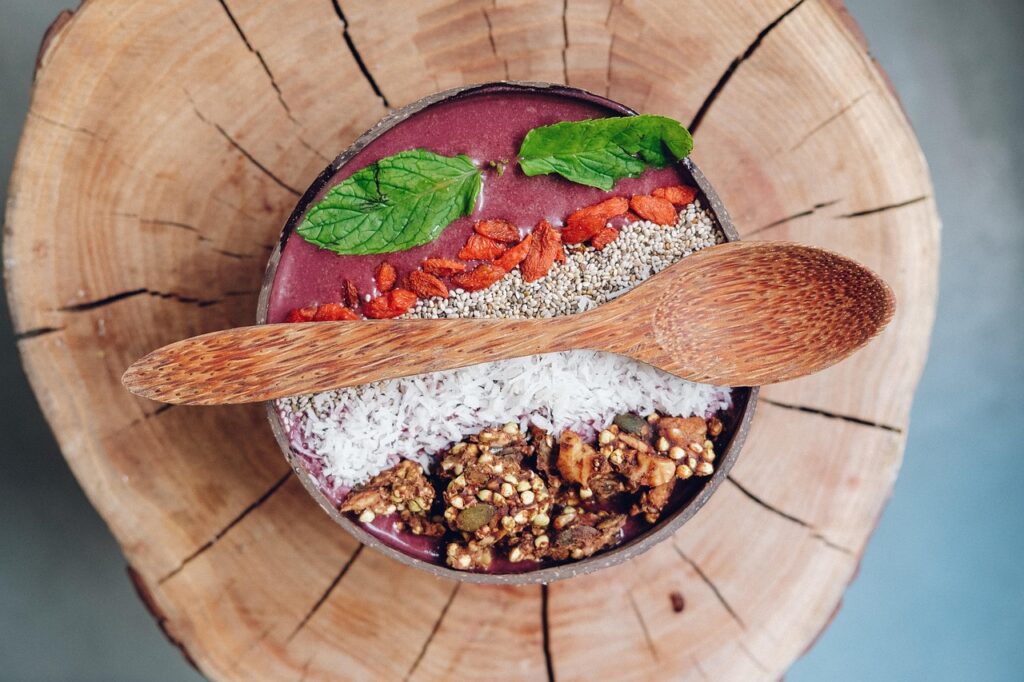
Acai bowls have become a staple of wellness culture, with Instagram-worthy purple smoothie bowls commanding $12 to $16 at juice bars across the country. The acai berry has been marketed as a “superfood” with claims ranging from weight loss to anti-aging to cancer prevention. But strip away the marketing, and a straightforward question remains: is acai healthy, and does the science actually support the hype? The short answer is yes, acai is genuinely nutritious, but with some important caveats about how most Americans consume it. This article is general nutrition information, not medical advice.
Acai Nutrition Facts: What’s Actually in the Berry
The acai berry (pronounced ah-sah-EE) is a small, dark purple fruit that grows on acai palm trees in the floodplains and rainforests of Central and South America, especially the Brazilian Amazon. Because fresh acai berries are highly perishable and begin to spoil within about 24 hours of harvesting, they are almost always sold in the United States as frozen puree, freeze-dried powder, or juice rather than as fresh fruit.
A 100-gram serving of unsweetened frozen acai puree typically contains roughly 70 calories, about 5 grams of fat (mostly heart-healthy monounsaturated and polyunsaturated fats), around 4 grams of carbohydrates, about 2 grams of fiber, and only a couple of grams of naturally occurring sugar. Per the USDA FoodData Central database, acai products also provide modest amounts of calcium, iron, and vitamin A. Exact numbers vary by brand, ripeness, and processing, so read the label of the specific product you buy and treat any single figure as a typical value rather than a guarantee.
| Per ~100 g, unsweetened acai puree (typical) | Approximate amount |
|---|---|
| Calories | ~70 kcal |
| Total fat (mostly mono/polyunsaturated) | ~5 g |
| Carbohydrate | ~4 g |
| Fiber | ~2 g |
| Naturally occurring sugar | ~2 g |
| Notable micronutrients | Calcium, iron, vitamin A (modest) |
What makes acai nutritionally distinctive is its fat profile and antioxidant content. Unlike most berries, acai contains meaningful amounts of oleic acid, the same heart-healthy monounsaturated fat found in olive oil. Its deep purple color comes from anthocyanins, plant pigments in the flavonoid family that act as antioxidants and have been linked, as a class, to cardiovascular and cognitive benefits in a broad body of research.
The Antioxidant Advantage: What’s Real
Acai berries have an exceptionally high ORAC (Oxygen Radical Absorbance Capacity) score, a laboratory measure of antioxidant activity. Analyses have found acai contains more anthocyanins per gram than blueberries, strawberries, or red grapes. This is not marketing spin about the raw fruit; it has been documented by laboratory analysis published in the Journal of Agricultural and Food Chemistry. It is worth noting that the USDA itself withdrew its official ORAC database in 2012, cautioning that a high antioxidant score in a test tube does not automatically translate into a health benefit in the body.
Anthocyanins have demonstrated anti-inflammatory, neuroprotective, and cardioprotective properties in laboratory and some human studies. According to MedlinePlus, antioxidants from a varied diet of fruits and vegetables are associated with better health, though supplements have not shown the same benefits. Research on anthocyanins suggests they may help reduce LDL cholesterol oxidation, support blood vessel function, and protect cells from oxidative damage. These are meaningful, but they apply to anthocyanin-rich foods in general, not exclusively to acai.
The practical antioxidant impact also depends heavily on how much acai you actually consume and how it is prepared. A tablespoon of acai powder in a smoothie bowl provides less antioxidant benefit than eating a full cup of blueberries. The form, dose, and what you eat it alongside matter as much as the concentration on a spec sheet.
“Superfood” and the Claims That Don’t Hold Up
Start with the word itself: “superfood” is a marketing term. It is not defined or regulated by the U.S. Food and Drug Administration, and no food has to meet any standard to be labeled one. That matters, because the acai industry has been plagued by exaggerated claims, several of which have drawn scrutiny from the Federal Trade Commission. Claims that acai promotes rapid weight loss have no reliable scientific support; the FTC has taken action against companies marketing acai-based “weight-loss” and “colon-cleanse” products with deceptive claims and unauthorized billing. No clinical trial has demonstrated that acai supplementation alone leads to meaningful weight reduction. Similarly, claims that acai “detoxifies” the body are not supported by evidence — your liver and kidneys handle detoxification, and no berry replaces their function.
Cancer prevention is another area where claims have outpaced the science. While acai extracts have shown effects on cancer cells in test-tube studies, that is true of many plant compounds and does not translate to “acai prevents cancer” in living humans. The National Center for Complementary and Integrative Health (NCCIH) is blunt on this point: there is not enough reliable information to say whether acai is helpful for any health-related purpose, and studies in people supporting the popular claims are lacking.
This does not mean acai isn’t healthy. It means the benefits come from its genuine nutritional properties — antioxidants, healthy fats, and fiber — rather than from any magical superfood status. It is one nutritious option among many, not a miracle food.
The Acai Bowl Problem
Here is where the health story gets complicated. Pure, unsweetened acai is relatively low in sugar and calories. But the typical acai bowl sold at a juice bar, or made from a pre-sweetened packet, is a very different nutritional proposition.
A standard acai bowl can contain 500 to 900 calories and 50 to 90 grams of sugar once you factor in the sweetened acai base, banana, granola, honey drizzle, sweetened coconut, and other toppings. That is more sugar than two cans of Coca-Cola and more calories than many full meals. For context, the federal Dietary Guidelines for Americans recommend keeping added sugars under 10% of daily calories — roughly 50 grams on a 2,000-calorie diet — so a single loaded bowl can meet or exceed a full day’s allowance. The acai itself may represent only a fraction of the bowl’s total content.
If you want the benefits of acai without the caloric excess, use unsweetened acai puree or powder, limit high-sugar toppings, and be mindful of portion sizes. A small smoothie made with unsweetened acai, a handful of spinach, half a banana, and unsweetened almond milk delivers the antioxidant benefits at a fraction of the sugar and calories of a loaded bowl.
How Acai Compares to Other Berries
Acai is often positioned as superior to other berries, but a head-to-head comparison tells a more nuanced story. Blueberries provide more vitamin K and manganese than acai and have the most robust body of human clinical research supporting cognitive and cardiovascular benefits. Strawberries offer far more vitamin C per serving. Blackberries deliver more fiber per cup than acai. And all of these are typically far cheaper and easier to find.
Where acai genuinely stands out is in its unique combination of healthy fats and anthocyanins. No other common berry provides the monounsaturated fatty acid content that acai does. That makes it a complement to other berries rather than a replacement. Variety in your berry intake — acai, blueberries, raspberries, blackberries, and strawberries — provides a broader spectrum of nutrients and antioxidants than relying on any single type.
For a similar evidence-based look at other trending health foods, see our analysis of whether bone broth is healthy and whether coconut water is healthy.
Practical Tips for Adding Acai to Your Diet
Choose unsweetened frozen acai puree packets or unsweetened freeze-dried powder. These products contain acai in its most nutritionally intact form without added sugars. Brand labels vary widely, so read ingredient lists carefully — ideally the only ingredient is acai or acai puree.
Use acai as an ingredient, not the star of a sugar-heavy bowl. Blend a packet with leafy greens and low-sugar fruits for a nutrient-dense smoothie. Stir acai powder into oatmeal or plain yogurt for an antioxidant boost. If you do make an acai bowl, top it with nuts, seeds, and fresh berries rather than granola and honey, and keep the portion reasonable.
Acai juice is generally the least nutritious option, because juicing removes fiber and many brands add sugar. If you choose juice, look for 100% acai juice with no added sweeteners, and treat it as a small addition to your diet rather than a beverage you drink by the glass. Visit our wellness guide for more strategies on building a nutrient-dense diet.
Is Acai Safe? A Few Practical Cautions
For most people, acai eaten as a commercially processed food is considered safe, and acai pulp has been used safely in clinical research for up to about three months. There are, however, a few points worth knowing. NCCIH notes that raw or unpasteurized acai has been linked to foodborne illness outbreaks in South America (including transmission of the parasite that causes Chagas disease), so commercially pasteurized products are the safer choice. Acai may affect blood glucose levels, which is relevant if you have diabetes or take glucose-lowering medication, and it may interfere with the results of certain MRI scans. Safety during pregnancy and breastfeeding has not been well studied. If you are pregnant, managing a chronic condition, or taking medications, talk with your clinician before adding concentrated acai supplements to your routine.
Frequently Asked Questions
Is acai good for weight loss?
Acai itself does not promote weight loss. Unsweetened acai is relatively low in calories and can fit into a weight-loss diet, but it has no special fat-burning properties, and the FTC has acted against companies making acai weight-loss claims. Acai bowls with sweetened bases and high-calorie toppings can actually contribute to weight gain if consumed frequently without accounting for the calories.
Is acai better than blueberries?
Acai has a higher anthocyanin concentration and contains unique healthy fats that blueberries do not. However, blueberries have more human clinical research behind them, provide more vitamin K and manganese, and are significantly more affordable and accessible. Both are excellent choices, and eating a variety of berries is ideal.
How much acai should you eat per day?
There is no official recommended intake for acai. One packet of unsweetened frozen acai puree (about 100 grams) or one to two tablespoons of acai powder per day is a reasonable amount that provides antioxidant benefits without excessive calories. More is not necessarily better.
Are acai supplements worth it?
Acai capsules and supplements are generally less beneficial than whole acai puree or powder because they may lack the fiber, healthy fats, and full spectrum of compounds found in the whole fruit. Dietary supplements are not reviewed by the FDA for effectiveness before sale, and quality control varies, so if you choose supplements, look for third-party-tested products from reputable brands and tell your clinician you are taking them.
Is “superfood” an official health designation?
No. “Superfood” is a marketing term with no legal or regulatory definition in the United States. A food being called a superfood tells you about its advertising, not about proven health effects. Judge acai on its actual nutrients and on how you consume it.
TL;DR: Unsweetened acai is a legitimately nutritious berry — rich in antioxidant anthocyanins and heart-healthy fats, low in natural sugar. But “superfood” is marketing, not proof: no berry cures disease, burns fat, or detoxes you. The real pitfall is the sweetened, topping-loaded acai bowl, which can pack 50-90 g of sugar. Choose unsweetened puree or powder, go easy on sugary toppings, and eat a variety of berries.
This article is general educational information, not medical or dietary advice. It does not diagnose, treat, or cure any condition. Talk to a doctor or registered dietitian before making major diet changes or using concentrated supplements, especially if you are pregnant, breastfeeding, managing diabetes, or taking medication.
The Bottom Line
So, is acai healthy? Yes — when consumed in its unsweetened form, acai is a genuinely nutritious food with impressive antioxidant content and a unique healthy-fat profile. It is not, however, a miracle food that will cure diseases, melt fat, or reverse aging, and the science does not support those claims. The biggest risk with acai is not the berry itself but how it is typically served: loaded with sugar, granola, and high-calorie toppings that turn a healthy fruit into a dessert. Stick with unsweetened acai as part of a varied, balanced diet, and you will get real benefits without paying the hype tax.
Sources
- USDA FoodData Central — nutrient data for acai puree/products.
- MedlinePlus (U.S. National Library of Medicine) — antioxidants and healthy eating.
- National Center for Complementary and Integrative Health (NCCIH) — “Acai” fact sheet: evidence, raw-acai foodborne risk, glucose and MRI notes, and safety.
- U.S. Federal Trade Commission — enforcement actions against deceptive acai weight-loss and “detox” marketing.
- Journal of Agricultural and Food Chemistry (2008) — analysis of acai anthocyanin content and antioxidant capacity.
- U.S. Dietary Guidelines for Americans — added-sugar recommendations.