
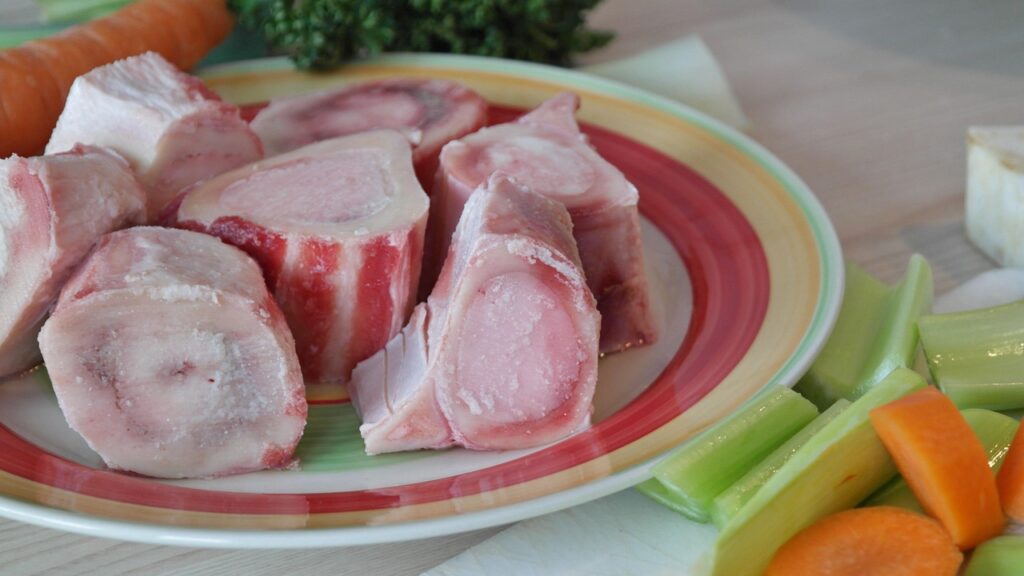
- Bone broth is bones simmered for many hours; its real value is collagen-derived amino acids like glycine and proline, plus easily digestible protein and warmth — not minerals, which are surprisingly low.
- Popular "heals leaky gut," joint, and skin claims are largely marketing: most supporting studies used concentrated collagen supplements, not broth, and direct clinical evidence for broth is limited.
- Commercial bone broth can carry 400–800+ mg of sodium per cup, which adds up fast for anyone managing blood pressure or heart disease.
- Bones can release lead, so a small amount may end up in broth; the evidence is mixed and levels are usually low, but variety and quality sourcing are sensible, especially for children and during pregnancy.
- Bone broth is an incomplete protein and too low in calories to replace a meal — use it as a complement, not a cure-all.
- For a standardized joint or skin dose, a collagen peptide supplement has better evidence than broth; discuss supplements with your clinician.
Bone broth has surged from a humble kitchen staple to a wellness phenomenon, marketed everywhere from cafes to supplement aisles. Health influencers credit it with everything from reversing joint pain to healing “leaky gut,” but what does the science actually say? Is bone broth healthy, or is the hype outpacing the evidence? The honest answer is nuanced: bone broth does contain beneficial nutrients, but several popular claims overstate what it can realistically do. Understanding both the genuine benefits and the limitations helps you decide whether it deserves a regular place in your diet. This article is general education, not medical advice.
For more evidence-based nutrition analysis, explore our wellness guide, which covers a range of foods and supplements.
What Is Bone Broth, Exactly?
Bone broth is made by simmering animal bones — typically beef, chicken, turkey, or pork — in water for an extended period, usually 12 to 48 hours. The long cooking time extracts minerals, collagen, amino acids, and other compounds from the bones and connective tissue. Vinegar or another acidic ingredient is often added to help draw out minerals. This distinguishes bone broth from regular stock (simmered 2 to 4 hours) and from broth (made mainly from meat, not bones).
The nutritional content varies considerably depending on the bones used, cooking time, and additional ingredients. This variability is one reason scientific claims about bone broth are difficult to pin down — the carton you buy at a store may have a very different nutrient profile from what you make at home, and even two homemade batches can differ.
Bone Broth Nutrition Per Serving
A typical 1-cup (240 ml) serving of chicken bone broth provides approximately the following. Treat these as ranges rather than precise values, since products differ widely:
| Nutrient | Amount (approx.) | % Daily Value |
|---|---|---|
| Calories | 30–50 | — |
| Protein | 5–10 g | 10–20% |
| Fat | 0.5–2 g | 1–3% |
| Sodium | 400–600 mg | 17–26% |
| Calcium | 10–20 mg | 1–2% |
| Magnesium | 5–15 mg | 1–4% |
| Phosphorus | 30–70 mg | 2–6% |
| Collagen/Gelatin | 3–9 g | — |
| Glycine | 1–3 g | — |
| Proline | 0.5–2 g | — |
One notable finding: bone broth is not the mineral powerhouse many people assume. A study published in Food and Nutrition Research found the calcium and magnesium content of bone broth to be surprisingly low — far less than a glass of milk or a serving of leafy greens. The more meaningful nutritional value of bone broth lies in its collagen-derived amino acids, particularly glycine and proline, and in the easily digestible protein it provides.
Evidence-Based Health Benefits
Joint and Skin: Collagen in Context
The most-marketed bone broth benefits — smoother skin and healthier joints — rest on its collagen content, and this is where it pays to separate evidence from advertising. When you eat collagen, it is broken down into amino acids and small peptides that may support the body’s own collagen production. A review in the British Journal of Sports Medicine found that collagen peptide supplementation (roughly 5 to 15 g daily) reduced joint pain in some athletes and improved symptoms in people with osteoarthritis. The catch is significant: nearly all of these studies used isolated, standardized collagen supplements, not bone broth. Because a cup of broth typically supplies only 3 to 9 g of collagen and that amount varies batch to batch, there is no good evidence that broth delivers the same benefit. Treat the joint and skin claims as plausible but unproven for broth specifically — largely a marketing extension of the supplement research.
Gut Health
Glycine and glutamine, both present in bone broth, play roles in maintaining the intestinal lining. Glutamine is a key fuel source for the cells lining the intestine, and glycine has anti-inflammatory properties. Some preliminary research suggests these amino acids may help support the gut barrier. However, the widely repeated “bone broth heals leaky gut” claim lacks direct clinical evidence: no controlled human trials have shown that bone broth specifically repairs intestinal permeability. It may be a soothing, easily tolerated food when your gut is unsettled, but that is not the same as a cure.
Hydration and Recovery
Bone broth is a warm, hydrating liquid that provides electrolytes (mainly sodium and some potassium) along with easily digestible protein. This makes it genuinely useful during illness, post-surgery recovery, or any time appetite is reduced. Its palatability and low residue make it a practical food when solid meals are hard to tolerate — one of the least controversial reasons to keep it on hand.
Glycine and Sleep
Glycine, which bone broth contains in meaningful amounts, has been studied as a sleep aid. Research published in Neuropsychopharmacology found that 3 grams of glycine before bed improved subjective sleep quality and reduced daytime sleepiness in a small study. A cup or two of bone broth in the evening could provide part of that glycine, though a supplement delivers a more consistent, measured dose if that is your goal.
Potential Downsides and Concerns
Lead Contamination: A Hedged Concern
Bones store lead, and prolonged cooking can extract some of it into the broth. A frequently cited study in Medical Hypotheses found that broth made from organic chicken bones contained lead concentrations several times higher than the tap water used to make it. It is important to keep this in perspective: the absolute levels were still relatively low (roughly single-digit micrograms per liter), the study was small, and subsequent analyses have been mixed, with some finding little cause for concern. No amount of lead is considered beneficial, however, so the sensible response is moderation and variety rather than alarm — vary your protein sources, use good-quality bones, and be a little more cautious with heavy daily consumption for young children and during pregnancy.
Sodium Content
Commercial bone broths often contain 400 to 600 mg of sodium per cup, and some exceed 800 mg. For anyone managing high blood pressure or heart disease, that can add up quickly, especially with multiple cups a day. Making broth at home lets you control the salt, and choosing low-sodium store brands is advisable for those watching their intake.
Incomplete Protein
While bone broth provides protein, it is not a complete protein source. Its amino acid profile is dominated by glycine, proline, and hydroxyproline — collagen amino acids — while being low in essential amino acids such as tryptophan, methionine, and histidine. Bone broth should complement, not replace, complete protein sources like meat, fish, eggs, dairy, or legumes.
Not a Cure-All
Perhaps the most important caveat is one of expectations. Bone broth is a food, not a medicine. It will not detoxify your body, reverse aging, or cure a chronic condition, and the strongest claims made for it are not supported by controlled human trials. Enjoy it for what it reliably is — a comforting, protein-containing, hydrating liquid — rather than what the marketing promises.
Bone Broth vs Alternatives
How does bone broth compare to similar products? Regular chicken or beef stock provides fewer collagen-derived amino acids because of shorter cooking times but is otherwise nutritionally similar. Collagen powder supplements deliver a more concentrated and consistent dose of collagen peptides (typically 10 to 20 g per serving versus 3 to 9 g in broth) without the sodium or lead considerations. For joint or skin goals specifically, collagen supplements have better supporting evidence simply because they deliver standardized doses — though supplements are their own decision to discuss with a clinician. For more comparisons of popular health foods, see our articles on sauerkraut and Greek yogurt.
Frequently Asked Questions
How much bone broth should I drink daily?
There is no established recommended intake. Most enthusiasts drink one to two cups (240 to 480 ml) per day, which provides a reasonable amount of collagen-derived amino acids without excessive sodium. If you are drinking it for a possible joint benefit, consistent daily use over several weeks is more plausible than occasional use — though remember the joint evidence for broth itself is limited.
Is store-bought bone broth as good as homemade?
It varies widely by brand. Some commercial broths have a protein content (a rough proxy for collagen extraction) comparable to homemade, while others are essentially glorified stock with minimal collagen. Look for brands with at least 8 to 10 grams of protein per cup and short ingredient lists. Homemade broth lets you control quality, cooking time, and sodium.
Can bone broth replace a meal?
No. Bone broth is too low in calories, essential amino acids, and micronutrients to serve as a complete meal replacement. At 30 to 50 calories per cup, it is better as a snack, a cooking liquid, or a complement to a balanced meal. Using it as a base for soups with added vegetables and a complete protein creates a much more nutritious option.
Is bone broth safe during pregnancy?
The lead consideration makes this worth discussing with your OB-GYN. Moderate consumption (a few cups per week) of high-quality, homemade bone broth is likely fine for most pregnant people, but heavy daily consumption may be worth avoiding given the potential for lead accumulation. The American College of Obstetricians and Gynecologists recommends a varied diet during pregnancy rather than relying heavily on any single food.
Does bone broth really heal leaky gut?
There is no controlled human trial showing that bone broth repairs intestinal permeability. Some of its amino acids support gut-lining cells in principle, and it is easy to tolerate when your stomach is upset, but “healing leaky gut” is a marketing claim rather than an established medical effect. If you have persistent digestive symptoms, see a clinician rather than self-treating with broth.
The Bottom Line
So, is bone broth healthy? Yes, but with caveats. It is a nutrient-containing, low-calorie food that provides collagen-derived amino acids, some minerals, and easily digestible protein, and it is genuinely useful during illness, recovery, and as a warming, hydrating drink. It is not, however, the mineral-rich superfood it is often marketed as; the gut-healing and skin-and-joint claims outrun the evidence for broth specifically; sodium can be high; and the lead question, while usually small, warrants moderation. Enjoy bone broth as part of a varied diet rather than treating it as a cure-all, and you will get its genuine benefits without buying the hype.
This article is general nutrition education and is not medical advice. Your needs depend on your health conditions, medications, pregnancy status, and sodium or protein goals. Talk with a qualified clinician or registered dietitian before making bone broth or collagen supplements a major part of your diet, especially during pregnancy or for young children.
Sources
- MedlinePlus (U.S. National Library of Medicine) — general guidance on protein, sodium, and dietary variety
- Food and Nutrition Research — mineral (calcium, magnesium) content of bone broth
- British Journal of Sports Medicine — review of collagen peptide supplementation for joint pain and osteoarthritis
- Medical Hypotheses — lead concentrations in bone broth (small study; later evidence mixed)
- Neuropsychopharmacology — glycine before bed and subjective sleep quality
- American College of Obstetricians and Gynecologists (ACOG) — dietary variety during pregnancy