
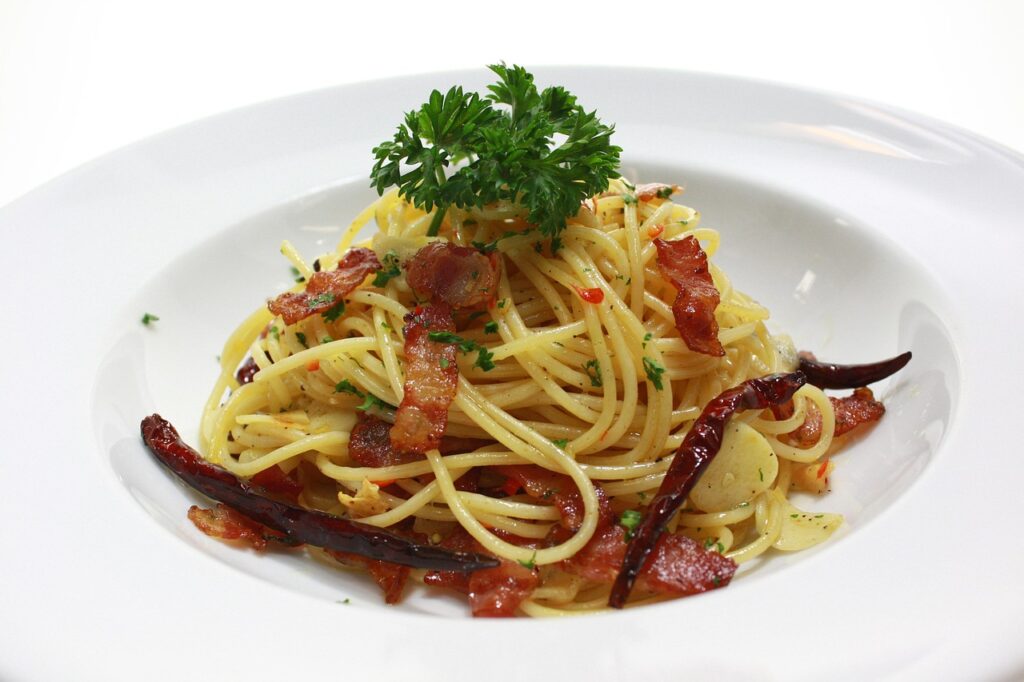
- Turkey bacon is modestly lower in calories, total fat, and saturated fat than pork bacon, but the differences per serving are smaller than the "healthy" label implies.
- Sodium is the weak spot: turkey bacon is often as salty as pork bacon, and some brands are saltier — neither is a low-sodium food.
- Both are processed meats, which the World Health Organization's IARC classified as a Group 1 carcinogen in 2015 (linked to colorectal cancer); switching from pork to turkey does not change that.
- "Uncured" or "no nitrates added" bacon still contains nitrites, just from celery-based sources — it is largely a marketing distinction, not a meaningful health advantage.
- Turkey bacon is not a health food; it is a somewhat less unhealthy version of an indulgent food, best eaten in moderation as part of a diet rich in vegetables, fruit, and whole grains.
- For the biggest benefit, cut back on processed meat overall rather than simply swapping one type for another.
Turkey bacon has positioned itself as the guilt-free alternative to traditional pork bacon — a swap millions of Americans make every week in the name of health. But is turkey bacon healthy, or does the “healthy” label obscure some inconvenient nutritional truths? A closer comparison reveals that turkey bacon does have advantages over pork bacon, but the gap is narrower than most people assume, and turkey bacon carries trade-offs of its own worth understanding. The honest answer is that it is a marginally better choice, not a health food. For more evidence-based nutrition guidance, visit our wellness guide.
Turkey Bacon vs. Pork Bacon: Nutrition Comparison
Two slices of each tell the story. The figures below are approximate ranges based on data from the USDA FoodData Central database; exact numbers vary considerably by brand, slice thickness, and how the bacon is cooked, so always check the label on the product you actually buy.
Turkey bacon (2 slices, about 30 grams cooked):
- Calories: 60 to 70
- Total fat: 4 to 5 grams
- Saturated fat: 1 to 1.5 grams
- Protein: 4 to 5 grams
- Sodium: 320 to 380 mg (some brands higher)
- Cholesterol: 25 to 30 mg
Pork bacon (2 slices, about 16 grams cooked):
- Calories: 80 to 90
- Total fat: 6 to 7 grams
- Saturated fat: 2 to 2.5 grams
- Protein: 6 to 7 grams
- Sodium: 350 to 400 mg
- Cholesterol: 25 to 30 mg
Turkey bacon saves you roughly 20 calories and 2 grams of fat per two-slice serving, plus about 1 gram less saturated fat. Those differences are real but modest — especially considering that pork bacon delivers more protein per serving. One caveat when comparing labels: a “serving” of pork bacon and turkey bacon may not weigh the same, so a gram-for-gram comparison sometimes narrows the gap further. Read the serving size, not just the per-serving numbers.
The Sodium Issue
Sodium is where the “healthy alternative” narrative runs into trouble. Turkey bacon contains nearly as much sodium as pork bacon — sometimes more, depending on the brand. Some turkey bacon products pack 450 mg or more of sodium per two-slice serving, approaching 20% of the American Heart Association’s recommended daily upper limit of 2,300 mg (with an ideal target of 1,500 mg for most adults).
Both types of bacon are cured with salt and sodium nitrite, which are responsible for the characteristic color, flavor, and preservation. Turkey bacon often requires additional sodium-based seasonings and flavorings to approximate the taste of pork bacon, which is part of why it does not come out ahead on salt. If you are watching sodium for blood pressure management, neither product is a low-sodium food, and a single serving can be a meaningful chunk of your daily budget before you have eaten anything else.
Processing and Ingredients
Both turkey bacon and pork bacon are processed meats. Turkey bacon is made from ground dark and light turkey meat that is seasoned, pressed into a bacon-like shape, and cured. Pork bacon comes from the belly of the pig, cured and smoked.
The World Health Organization’s International Agency for Research on Cancer (IARC) classified processed meat as a Group 1 carcinogen in 2015, meaning there is sufficient evidence that it causes colorectal cancer. This classification applies to all processed meat, including turkey bacon. The IARC review reported that eating 50 grams of processed meat daily — roughly 3 to 4 slices of bacon — was associated with about an 18% higher risk of colorectal cancer. It is worth keeping perspective on what that means: an 18% relative increase applied to an individual’s absolute lifetime risk is a smaller change than the headline number suggests, but the direction is clear, and switching from pork to turkey does not remove processed meat from the equation.
Many turkey bacon products also contain added sugars, natural flavors, and smoke flavoring to compensate for the milder taste of turkey. Reading the ingredient label matters — simpler ingredient lists generally indicate a less processed product.
Saturated Fat and Heart Health
Turkey bacon’s lower saturated fat content is its most meaningful nutritional advantage. The American Heart Association recommends limiting saturated fat to 5% to 6% of total daily calories — about 13 grams on a 2,000-calorie diet. Two slices of turkey bacon contribute roughly 1 to 1.5 grams versus 2 to 2.5 grams for pork bacon.
Over time, small differences in saturated fat intake can add up. If you eat bacon several times a week, choosing turkey bacon could reduce your weekly saturated fat intake by a few grams. Whether that difference produces measurable health outcomes depends on the rest of your diet, but for someone already near the recommended limit, it is a meaningful margin. Just remember that saturated fat is only one piece of the picture — the sodium and processed-meat concerns apply to both products regardless of the fat difference.
Taste, Texture, and Practical Considerations
Turkey bacon crisps differently than pork bacon. Its lower fat content means it tends to become dry and brittle rather than achieving the chewy-crispy texture of pork. Baking turkey bacon at 375 degrees Fahrenheit for 12 to 15 minutes generally produces better results than pan-frying.
In terms of versatility, turkey bacon works well in sandwiches, salads, and wraps. It is less suited to recipes that rely on bacon fat for flavor — since turkey bacon renders very little fat, it cannot replace pork bacon in dishes like carbonara or bacon-wrapped proteins without significant adjustments.
Nitrates, Nitrites, and the “Uncured” Label
Both pork and turkey bacon are typically cured with sodium nitrite, a preservative that prevents bacterial growth (including Clostridium botulinum) and gives bacon its pink color. Nitrites can form compounds called nitrosamines during high-heat cooking, and some nitrosamines are classified as probable carcinogens by the National Cancer Institute.
Products labeled “uncured” or “no nitrates added” are not truly nitrate-free. They use celery powder or celery juice as a natural source of nitrates, which convert to the same nitrites during processing. The end product contains similar levels of nitrite as conventionally cured bacon. The “uncured” label is more of a marketing distinction than a meaningful health advantage. If minimizing nitrosamine exposure is a priority, cooking bacon at lower temperatures and avoiding charring reduces nitrosamine formation regardless of how the product was cured.
Healthier Alternatives to Both
If you are looking for the health benefits of cutting back on processed meat, consider these options that deliver savory, umami-rich flavor without the same processing concerns:
- Canadian bacon or back bacon: Lower in fat than strip bacon, with roughly 45 calories and around 200 mg sodium per slice — though it is still a cured, processed meat
- Smoked salmon: High in omega-3 fatty acids, though still high in sodium
- Eggs: A whole egg provides about 6 grams of protein and 70 calories with no processing
- Avocado on toast: Delivers healthy monounsaturated fats and fiber without sodium concerns
- Sauteed mushrooms or roasted tomatoes: Naturally umami-rich, they add a savory hit to breakfast plates with no cured meat at all
Frequently Asked Questions
Is turkey bacon healthy for people with high cholesterol?
Turkey bacon contains slightly less saturated fat than pork bacon, which can help with cholesterol management. Dietary cholesterol appears to have a smaller impact on blood cholesterol for most people than once believed, so the bigger heart-health concerns are the saturated fat, the sodium, and the processed nature of both products. Limiting total processed-meat intake tends to be more impactful than switching types. If you have high cholesterol or heart disease, talk with your clinician about what fits your overall diet.
Is turkey bacon considered processed meat?
Yes. Any meat that has been salted, cured, smoked, or treated with preservatives is classified as processed meat by the WHO. Turkey bacon undergoes curing and typically contains sodium nitrite, placing it in the same category as pork bacon, hot dogs, and deli meats.
How often can you eat turkey bacon and still be healthy?
The World Cancer Research Fund recommends eating little, if any, processed meat. If you choose to include turkey bacon, limiting it to a few times per week in small portions (about 2 slices) and balancing it with plenty of fruits, vegetables, and whole grains is a practical, moderate approach.
Is turkey bacon better for weight loss?
It has slightly fewer calories and less fat per serving, so it can shave a small amount off your daily total if you would otherwise eat pork bacon. But it is not a weight-loss food, and its high sodium can promote water retention. Portion size and overall diet matter far more than which type of bacon you choose.
How to Choose a Better Turkey Bacon Product
If you decide turkey bacon fits your diet, a few label-reading strategies help you select a better product. Look for options with fewer than 300 mg of sodium per two-slice serving — some brands manage 200 to 250 mg, which is a meaningful reduction. Choose products with a short ingredient list: turkey, salt, and seasonings are all that are strictly necessary. Avoid products with added sugars (dextrose, brown sugar), artificial flavors, or sodium phosphates, which are added to retain moisture but push sodium higher.
Cooking method also matters for health impact. Baking turkey bacon on a rack allows fat to drip away, reducing the final fat content. Pan-frying in additional oil adds unnecessary calories. Microwaving is the fastest method and produces acceptable results with minimal added fat. Regardless of cooking method, avoid charring or burning, which can produce harmful compounds.
The Bottom Line
Turkey bacon is a marginally better choice than pork bacon — lower in calories, total fat, and saturated fat. But the differences are modest, and turkey bacon shares the same fundamental concerns as all processed meats: high sodium, curing preservatives, and a WHO cancer classification. It is not a health food. It is a slightly less unhealthy version of an indulgent food. If you enjoy it, eating it in moderation a few times a week is unlikely to harm an otherwise balanced diet. But if your goal is genuinely healthier eating, reducing processed meat overall — rather than simply swapping one type for another — delivers the most meaningful benefit.
This article is general nutrition education, not medical or dietary advice. Nutrient values are approximate and vary by brand, slice size, and cooking method — check the label on the product you buy. If you have high blood pressure, heart disease, high cholesterol, kidney disease, or another condition affected by sodium or saturated fat, talk with a qualified clinician or registered dietitian about what is right for you.
Sources
- USDA FoodData Central — nutrient data for turkey bacon and pork bacon (values vary by product and brand)
- MedlinePlus (U.S. National Library of Medicine) — dietary sodium, saturated fat, and heart-health guidance
- World Health Organization / International Agency for Research on Cancer (IARC) — 2015 evaluation classifying processed meat as a Group 1 carcinogen (colorectal cancer; ~18% increased risk per 50 g/day)
- American Heart Association — sodium recommendations (2,300 mg/day upper limit; 1,500 mg ideal) and saturated-fat guidance
- World Cancer Research Fund / American Institute for Cancer Research — recommendation to eat little, if any, processed meat
- National Cancer Institute — nitrites, nitrosamines, and high-heat cooking