
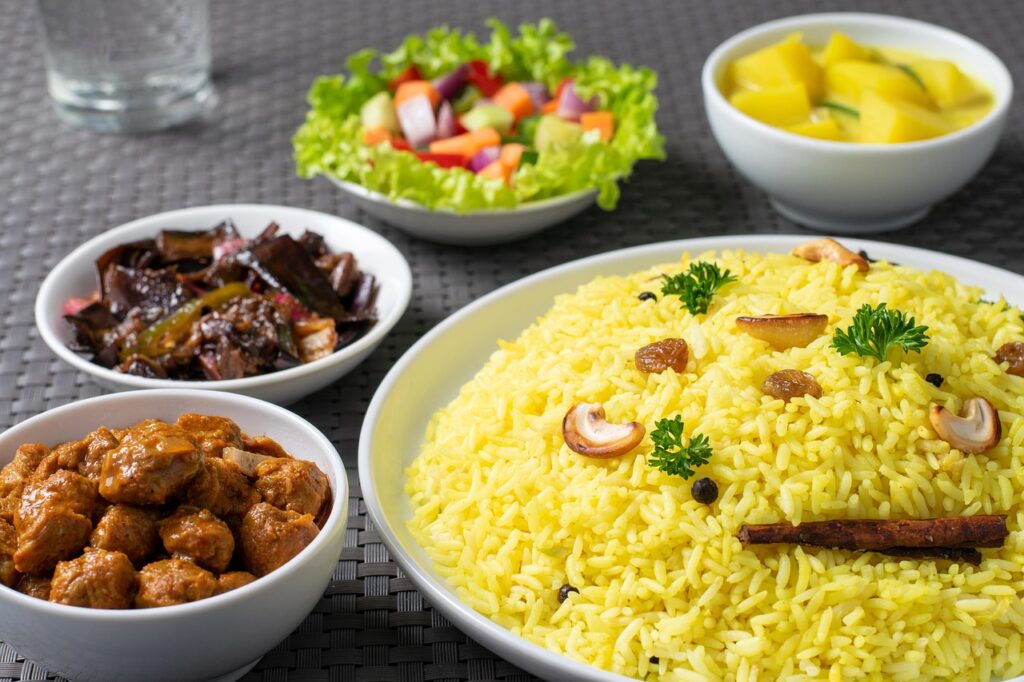
- Whether fried rice is "healthy" depends mostly on how it's made — restaurant portions can pack 500 to 750+ calories and a day's worth of sodium, while a homemade version can be a balanced meal.
- The main pitfalls are large portions, heavy oil, and sodium-rich seasonings like soy sauce and oyster sauce — not the rice or the stir-frying itself.
- Made with plenty of vegetables, eggs, and a lean protein, fried rice can deliver a reasonably balanced mix of protein, fiber, and micronutrients.
- Simple swaps help: less oil, brown or cauliflower rice, low-sodium soy sauce, and a 1:1-or-better ratio of vegetables to rice.
- Food safety matters: cooked rice can harbor Bacillus cereus ("fried rice syndrome"), so refrigerate leftovers promptly (within about 2 hours) and don't keep them more than a few days.
- This is general nutrition information, not personalized advice — talk to a clinician or registered dietitian about your own diet and any conditions.
Fried rice is comfort food at its finest — savory, satisfying, and endlessly customizable. But is fried rice healthy? The answer depends almost entirely on how it is prepared. A restaurant serving can pack well over 1,000 calories and a full day’s worth of sodium, while a homemade version can be a balanced, nutrient-dense meal. Let us break down the numbers, add a food-safety note most articles skip, and show you how to make fried rice work for your diet. This is general nutrition information, not personalized advice.
Fried Rice Nutrition Facts
Nutrition varies widely depending on the recipe, but here is what a typical 1-cup serving (about 200 grams) of restaurant-style vegetable fried rice tends to contain, based on USDA FoodData Central estimates:
Calories: roughly 235 to 260. Protein: 5 to 8 grams. Total fat: 8 to 12 grams. Saturated fat: 1.5 to 3 grams. Total carbohydrates: 34 to 40 grams. Dietary fiber: 1 to 2 grams. Sugar: 2 to 4 grams. Sodium: 550 to 800 milligrams. (Exact values depend heavily on the recipe.)
The problem is that most restaurant portions are 2 to 3 cups, not 1 cup. A typical takeout container of fried rice can contain 500 to 750 calories, 1,200 to 2,400 milligrams of sodium, and 20 to 35 grams of fat. Add chicken, shrimp, or pork, and the calories climb further. When fried rice is a side dish alongside other saucy entrees, the meal totals can add up quickly.
What Makes Fried Rice Unhealthy
The base ingredient — white rice — is not inherently problematic in moderation, but it is a refined carbohydrate with minimal fiber. The issues compound from there. Restaurant fried rice is typically cooked with generous amounts of vegetable oil or butter — often 2 to 4 tablespoons per batch. Soy sauce adds roughly 800 to 1,000 milligrams of sodium per tablespoon. Many recipes also include MSG or oyster sauce, which further increase sodium content.
The cooking method itself — stir-frying at high heat — is actually one of the healthier aspects, since it cooks food quickly and helps preserve nutrients in the vegetables. The real culprits are portion size, oil quantity, and sodium-heavy seasonings. A home cook who controls these variables can make a version that is genuinely nutritious.
The Nutritional Upside
Fried rice is not all bad news. When made with vegetables, eggs, and a lean protein, it can deliver a reasonably balanced macronutrient profile. Eggs provide high-quality protein and choline. Vegetables like peas, carrots, bell peppers, and scallions add vitamins A and C, fiber, and antioxidants. Garlic and ginger — common fried rice aromatics — contain bioactive compounds that research has linked to potential anti-inflammatory and other benefits, according to studies reviewed by the National Library of Medicine, though the amounts used in cooking are modest.
Rice itself provides energy-sustaining carbohydrates, some B vitamins, and small amounts of minerals. Brown rice, when used as a substitute, adds roughly 3 grams of fiber per cup and retains more nutrients than white rice because the bran layer is left intact.
A Food-Safety Note: “Fried Rice Syndrome”
One risk that has little to do with calories deserves a mention: leftover rice can cause food poisoning if it is handled poorly. Uncooked rice can carry spores of a bacterium called Bacillus cereus. When cooked rice is left at room temperature for too long, those spores can grow and produce toxins — and here is the catch that gives “fried rice syndrome” its name: the toxins and spores can survive ordinary reheating, so tossing old rice back into a hot wok does not necessarily make it safe. Symptoms are usually vomiting and/or diarrhea that come on within a few hours; most cases are mild and self-limited, but severe illness has occasionally been reported.
The fix is simple. Per general FDA/USDA and Cleveland Clinic food-safety guidance: serve rice hot, don’t leave cooked rice (or finished fried rice) sitting out — refrigerate leftovers promptly, within about two hours (sooner in a hot kitchen), spreading a large batch into shallow containers so it cools fast. Keep leftovers refrigerated and use them within a few days, and when you do reheat, heat thoroughly. If rice has been left out overnight, throw it out rather than risk it.
Healthier Ways to Enjoy Fried Rice
Asking is fried rice healthy becomes much easier to answer when you control the preparation. Here are specific swaps that make a real difference.
Use Less Oil
Traditional recipes call for 3 to 4 tablespoons of oil. You can get excellent results with 1 to 1.5 tablespoons of a high-smoke-point oil like avocado oil (or a smaller finishing drizzle of sesame oil for flavor). Using a well-seasoned wok or nonstick pan helps prevent sticking with less fat. This single change can cut roughly 100 to 200 calories per serving.
Swap White Rice for Brown Rice or Cauliflower Rice
Brown rice adds fiber and nutrients. For a lower-carb option, use riced cauliflower for half or all of the rice. Cauliflower rice has about 25 calories per cup compared with roughly 200 calories for cooked white rice. The texture is different, but seasoned well and mixed with vegetables and protein, it works surprisingly well in a stir-fry.
Reduce Sodium Without Sacrificing Flavor
Use low-sodium soy sauce (roughly 575 milligrams per tablespoon versus about 900 milligrams for regular). Build flavor through garlic, ginger, rice vinegar, a little sesame oil, and white pepper instead of relying solely on soy sauce. A squeeze of lime juice at the end adds brightness without sodium.
Load Up on Vegetables and Protein
Aim for a ratio of at least 1:1 vegetables to rice. Add 3 to 4 ounces of lean protein — chicken breast, shrimp, tofu, or edamame. Two scrambled eggs mixed in provide around 12 grams of protein. The more nutrient-dense ingredients you add, the more balanced the meal becomes.
For additional healthy meal ideas, explore our wellness guide and see how other staple foods like oatmeal and pita bread compare nutritionally.
Restaurant Fried Rice: How to Order Smarter
When eating out, a few ordering strategies can help. Ask for steamed rice on the side and a smaller portion of fried rice. Request light oil and light soy sauce — most kitchens can accommodate this. Choose vegetable or chicken fried rice over pork or beef versions, which tend to be fattier. Skip the combo plates that pair fried rice with other fried items like egg rolls or sweet-and-sour dishes.
Consider splitting a fried rice dish with someone at the table, or boxing half for tomorrow’s lunch (and refrigerating it promptly, per the food-safety note above). Restaurant portions in the U.S. are often 2 to 3 times a standard serving size, and the “clean your plate” instinct is hard to override once the food is in front of you.
Frequently Asked Questions
Is fried rice healthier than white rice?
Plain steamed white rice is lower in calories, fat, and sodium than fried rice. However, fried rice made with vegetables, eggs, and lean protein is more nutritionally complete — it provides more protein, vitamins, and minerals per serving. The most balanced option is generally homemade fried rice with controlled oil and sodium, using brown rice as the base.
Is fried rice okay for weight loss?
Homemade fried rice in a controlled portion (about 1 to 1.5 cups) can fit into a weight-loss plan, especially if made with cauliflower rice or brown rice, minimal oil, and plenty of vegetables and protein. Restaurant fried rice, with its large portions and heavy oil use, is harder to fit into a calorie deficit.
How many calories are in a typical takeout fried rice?
A standard takeout container of fried rice (about 2 to 3 cups) typically contains 500 to 750 calories, though specialty versions with extra meat or egg can exceed 900 calories. The sodium content is often 1,500 to 2,400 milligrams — close to or above the American Heart Association’s recommended upper limit of 2,300 milligrams a day (with an ideal target closer to 1,500 mg for most adults).
Is egg fried rice healthier than chicken fried rice?
Egg fried rice is often lower in calories because it uses less protein overall. However, chicken fried rice usually provides more protein per serving (about 20 to 25 grams versus 10 to 14 grams for egg fried rice), which promotes greater satiety. If you are trying to increase protein intake, chicken is often the better choice; if you are watching calories, egg fried rice with extra vegetables is lighter.
Can people with diabetes eat fried rice?
Fried rice made with white rice can raise blood sugar substantially because of its refined carbohydrate content. Many people with diabetes can still enjoy fried rice by using brown rice or cauliflower rice, keeping portions to about 1 cup or less, and adding plenty of protein and fiber-rich vegetables to slow carbohydrate absorption. Individual tolerance varies, so checking your own blood sugar after eating and working with your care team or a registered dietitian is the best guide.
Fried rice can be healthy or unhealthy depending on how it’s made: the pitfalls are big portions, heavy oil, and sodium-rich sauces, while vegetables, eggs, and lean protein make it more balanced. Use less oil, try brown or cauliflower rice, and cut sodium — and handle leftover rice safely by refrigerating it promptly to avoid “fried rice syndrome” (Bacillus cereus). This is general information, not personalized dietary or medical advice; talk to a clinician or registered dietitian about your own diet, weight, or conditions such as diabetes.
Sources
- USDA FoodData Central — fried rice and rice nutrition estimates
- American Heart Association — recommended daily sodium limits (ideal ~1,500 mg; upper limit 2,300 mg)
- U.S. FDA / USDA and CDC food-safety guidance — Bacillus cereus, leftover rice, the “2-hour rule,” and the 40–140°F danger zone
- Cleveland Clinic — “fried rice syndrome” (Bacillus cereus) prevention
- National Library of Medicine (PMC) — reviews of garlic and ginger bioactive compounds