
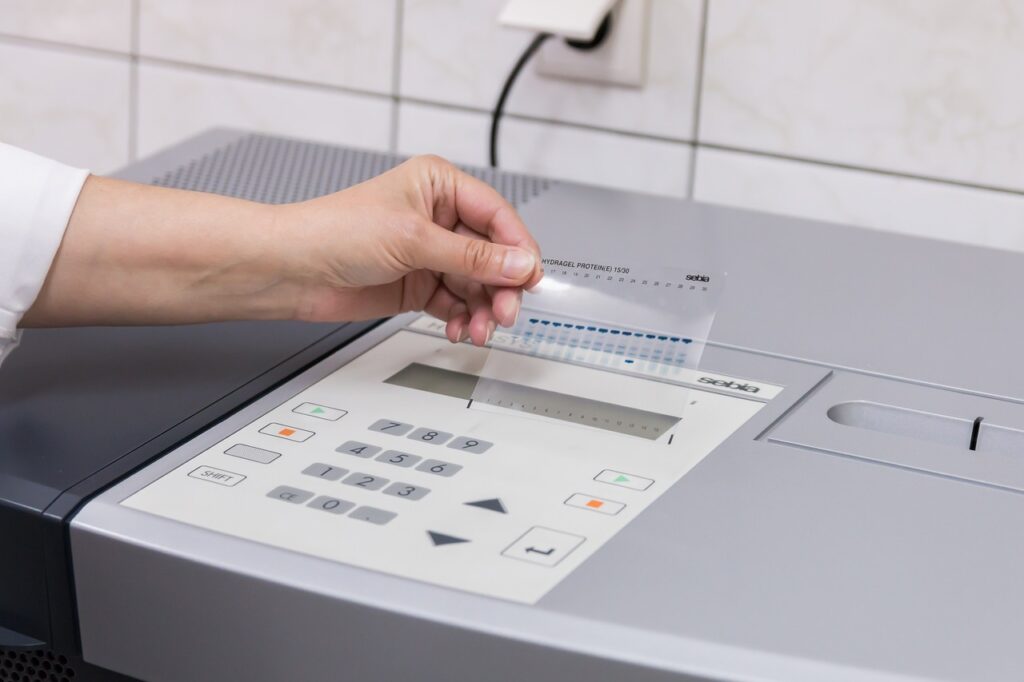
- An insulin test measures the level of insulin, the hormone that helps move glucose from blood into cells, in your blood.
- It is often ordered with a glucose test, because insulin and blood sugar are interpreted together.
- Reference ranges and units vary by lab, so your own report's range and your clinician's interpretation are what count.
- High fasting insulin may relate to insulin resistance; low insulin can occur in type 1 diabetes and other situations.
- An insulin test is not a routine screening test for most people; it is used in specific clinical situations.
- Do not change your diet, supplements, or any diabetes medication based on one result; discuss next steps with your clinician.
An insulin test is a blood test that measures the level of insulin, the hormone your pancreas makes to help move glucose (sugar) out of the bloodstream and into your cells for energy. It is a more specialized test than a routine glucose or HbA1c check, and it is usually ordered in specific situations rather than as general screening. This guide explains what the test measures, when a clinician might order it, how results are generally read, and why interpretation belongs with a clinician rather than a lab printout alone.
What the test measures
Insulin allows your body to use and store glucose. After you eat, blood sugar rises, and the pancreas releases insulin to help bring it back down. An insulin blood test captures how much insulin is circulating at the moment the sample is drawn. Because insulin and glucose work as a pair, an insulin level means little on its own; it is almost always interpreted alongside a blood glucose measurement taken at the same time, and sometimes as part of calculated indices your clinician may use.
When a doctor might order it
- To help evaluate unexplained low blood sugar (hypoglycemia), sometimes with related tests such as C-peptide.
- To investigate insulin resistance in certain situations, for example in some assessments related to metabolic health or PCOS.
- To help characterize diabetes in specific, less typical cases where distinguishing patterns matters.
- To assess a rare insulin-producing tumor (insulinoma), usually in a carefully supervised setting.
For most people, routine diabetes screening relies on glucose and HbA1c rather than insulin levels. If you are comparing common blood-sugar tests, see our explainer on HbA1c vs fasting glucose.
Typical ranges and units (they vary)
Insulin is commonly reported in microunits per milliliter (µIU/mL) or in picomoles per liter (pmol/L). Laboratories set their own reference ranges, and what counts as “normal,” “high,” or “low” can differ from one lab to another depending on the method used. Whether you were fasting, what you ate recently, and the exact assay all influence the number. Because of this variation, you should not compare your result to a range you found online or to a friend’s result from a different lab. The result that matters is the one your clinician interprets against your glucose level, your history, and any other tests.
| Pattern (interpreted with glucose) | What it may suggest |
|---|---|
| High fasting insulin with normal or high glucose | May relate to insulin resistance; interpreted in context |
| Low insulin with high glucose | Can occur when the body makes little insulin, as in type 1 diabetes |
| Low glucose with inappropriately high insulin | May prompt evaluation for causes of hypoglycemia |
| Results affected by timing or diet | Recent food and fasting status change the number |
These are general patterns only, not a diagnosis. Insulin results are interpreted as part of a set.
What high or low results may suggest
A high fasting insulin level can be associated with insulin resistance, in which the body’s cells respond less effectively to insulin so the pancreas makes more to compensate. This is one input clinicians may consider, but it is not a stand-alone diagnosis. A low insulin level alongside high glucose can occur when the body produces little insulin, as in type 1 diabetes, where insulin treatment is essential. Because research in this area is active, some people follow clinical trials for type 1 diabetes to learn about new approaches, though trials are research, not guaranteed treatment.
What to do with your result
The safest approach is to bring your result to the clinician who ordered it. Do not change your diet dramatically, start supplements, or adjust any diabetes medication, especially insulin, based on one number. An insulin value only makes sense next to your glucose level and your overall clinical picture. If your clinician is evaluating insulin resistance or blood sugar, they may combine several tests and your history to decide on next steps. For more careful, evidence-based context on lab testing and metabolic health, visit our evidence-first wellness guides.
Frequently asked questions
What is an insulin test used for? It helps evaluate low blood sugar, assess insulin resistance in certain cases, and characterize some forms of diabetes, always alongside glucose.
What is a normal insulin level? Ranges and units vary by laboratory and depend on fasting status. Your own lab’s range and your clinician’s interpretation are what count.
Do I need to fast before the test? Often yes, since fasting insulin is interpreted with fasting glucose, but follow the specific instructions from the lab or clinician.
Is an insulin test used to screen for diabetes? Not usually. Routine screening relies on glucose and HbA1c; insulin is used in specific situations.
Does high insulin mean I have diabetes? Not on its own. High fasting insulin may relate to insulin resistance, but it is interpreted with glucose and other information.
Should I change my medication based on this test? Never adjust diabetes medication yourself. Any change should be guided by the clinician managing your care.
This article is for general education and is not medical advice. Supplements and therapies affect people differently and can interact with medications or conditions. Talk to your doctor, pharmacist, or a licensed clinician before making changes to your health routine.
Sources
- MedlinePlus — Insulin in Blood
- Mayo Clinic — Insulin and blood sugar testing
- National Institute of Diabetes and Digestive and Kidney Diseases (NIDDK) — Insulin resistance and diabetes tests
- American Diabetes Association (ADA) — Understanding diabetes diagnosis and testing