
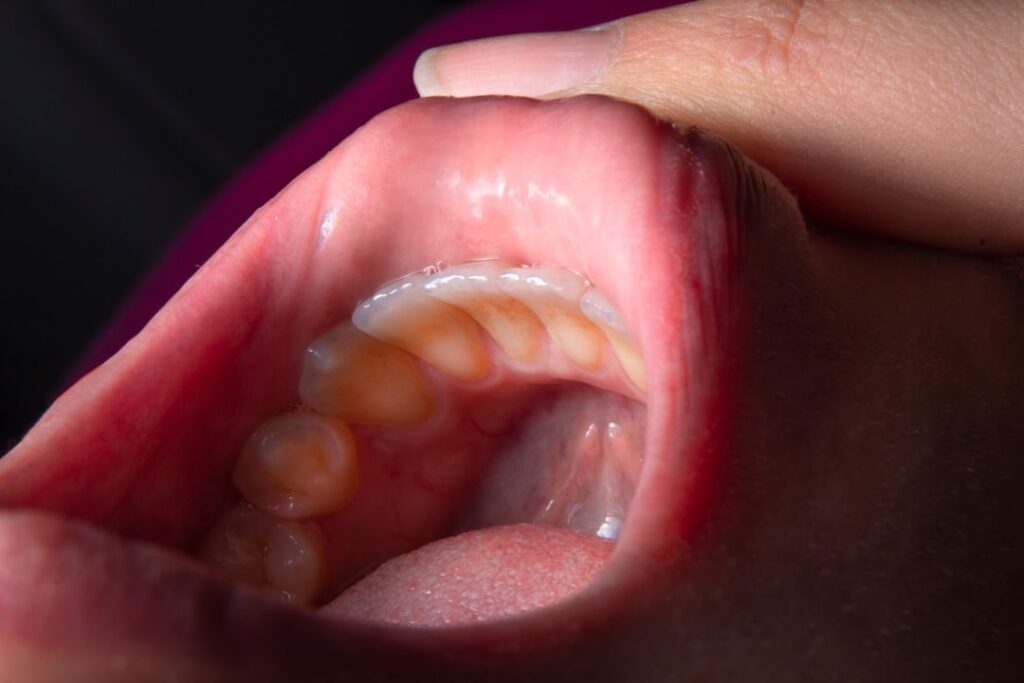
- Most canker sores (aphthous ulcers) are harmless and heal on their own in about 1-2 weeks; treatment mainly eases pain and may speed healing.
- Canker sores are inside the mouth and not contagious; cold sores are on the lips, caused by herpes simplex virus, and are contagious — the two are different.
- For fast pain relief, OTC topical benzocaine and protective pastes work quickly; salt-water and baking-soda rinses are simple home options.
- Do not use OTC benzocaine oral products in children under 2 — the FDA warns of a rare but serious blood disorder (methemoglobinemia).
- See a doctor or dentist if a sore is larger than about 1 cm, lasts longer than 3 weeks, recurs often, comes with fever, or doesn't look like a typical canker sore.
- A mouth sore that won't heal is not something to self-diagnose — persistent lesions need a professional exam because, rarely, they can be oral cancer.
Canker sores (aphthous ulcers) are small, painful lesions that develop inside the mouth, and while they are usually harmless, the discomfort they cause while eating, drinking, and talking can be miserable. About one in five people gets recurrent canker sores, and knowing how to treat canker sores can ease pain and keep you comfortable while they heal. Most canker sores heal on their own within 1-2 weeks, but the right approach can reduce pain within hours. Here is what works, what does not, and — just as important — when a mouth sore signals something that needs a professional look. For more health information, see our medical conditions guide.
Understanding Canker Sores
Canker sores are not the same as cold sores. Cold sores (caused by the herpes simplex virus) appear on the outside of the lips, are contagious, and form fluid-filled blisters. Canker sores appear inside the mouth — on the inner cheeks, lips, tongue, gums, or soft palate — are not contagious, and are not caused by a virus. According to the Mayo Clinic and MedlinePlus, the exact cause is not fully understood, but triggers include minor mouth injuries (biting your cheek, aggressive brushing, dental work), stress, acidic or spicy foods, sodium lauryl sulfate in toothpaste, nutritional deficiencies (B12, iron, folate, zinc), hormonal changes, food sensitivities, and problems with the immune system.
| Canker sore | Cold sore | |
|---|---|---|
| Location | Inside the mouth | Outer lip / around the mouth |
| Cause | Not a virus (many triggers) | Herpes simplex virus |
| Contagious? | No | Yes |
| Appearance | Round ulcer, white/yellow center, red rim | Fluid-filled blisters that crust over |
There are three types: minor canker sores (most common, under 1 cm, heal in 1-2 weeks), major canker sores (larger than 1 cm, deeper, may take several weeks to heal and can scar), and herpetiform canker sores (clusters of tiny sores that merge — despite the name, these are not caused by herpes).
OTC Treatments That Work
Topical Benzocaine (Orajel, Anbesol)
Benzocaine is a local anesthetic that numbs the sore on contact. Apply a small amount directly to the canker sore with a clean cotton swab, following the label. Relief is quick and typically lasts 15-30 minutes, which makes it useful right before a meal. Important safety note: the U.S. FDA warns that OTC benzocaine oral products should not be used in children under 2 years old because of a rare but serious condition called methemoglobinemia, which reduces the blood’s ability to carry oxygen. Use benzocaine only as directed, and ask a pharmacist or dentist if you’re unsure.
Protective Pastes (Orabase, Canker Cover)
These products form a physical barrier over the canker sore, protecting it from irritation by food, beverages, and tooth surfaces. Some contain a mild corticosteroid that reduces inflammation. Apply to a dry sore for best adhesion. They work particularly well for sores in high-friction areas like the inner lips. Follow the package directions and don’t exceed the recommended frequency.
Antiseptic and Peroxide Rinses
A diluted hydrogen peroxide rinse (equal parts 3% hydrogen peroxide and water) can be dabbed on the sore with a cotton swab or used as a brief rinse to help clean the ulcer and reduce bacteria. Some commercial mouth-sore rinses combine hydrogen peroxide with an anesthetic for dual action. Do not swallow the rinse, and don’t use peroxide rinses for prolonged periods.
Amlexanox (Aphthasol)
Amlexanox 5% paste is a prescription topical developed specifically for canker sores, with anti-inflammatory properties that can reduce pain and healing time when applied as directed. Its availability has varied in recent years, but it remains an option worth discussing with your doctor or dentist for troublesome, recurrent canker sores.
Home Remedies for Canker Sores
Salt-Water Rinse
A warm salt-water rinse (about 1/2 teaspoon of salt in 8 ounces of warm water) is the simplest and most widely recommended home remedy. Swish for 30-60 seconds, then spit — 2-4 times a day. The salt helps reduce swelling and discourages bacterial growth. It stings briefly on contact but tends to feel better afterward.
Baking-Soda Rinse
Dissolve about 1 teaspoon of baking soda in half a cup of warm water and swish for 30 seconds. Baking soda helps neutralize mouth acids that can irritate a canker sore. You can alternate between salt-water and baking-soda rinses through the day.
Honey
Applying a small amount of honey to a canker sore is a traditional remedy, and some small studies suggest it may help with pain and healing thanks to honey’s mild antimicrobial and anti-inflammatory properties. Evidence is limited, so treat it as a gentle comfort measure rather than a cure. (Do not give honey to infants under 12 months, because of the risk of infant botulism.)
Milk of Magnesia
Dabbing a small amount of milk of magnesia on the canker sore a few times a day can provide a soothing, acid-neutralizing coating. Some people alternate dabbing milk of magnesia with a baking-soda rinse. It’s a gentle option, but as with any remedy, stop if it seems to irritate the sore.
What to Avoid
Certain habits can worsen canker sores or delay healing. Avoid acidic foods and beverages (citrus, tomatoes, vinegar, coffee) that sting the ulcer, and steer clear of spicy, salty, or very crunchy foods while it heals. Consider switching to a toothpaste without sodium lauryl sulfate (SLS), a foaming agent that has been linked to more frequent canker sores in some susceptible people; brands such as Sensodyne and Biotene offer SLS-free options. Don’t poke, pick, or repeatedly rub the sore with your tongue — extra irritation only slows healing.
When to See a Doctor or Dentist
Most canker sores do not require medical attention. However, contact a doctor or dentist if a sore is unusually large (over about 1 cm), lasts longer than 3 weeks, spreads or recurs frequently (more than a few times a year), comes with fever, causes difficulty swallowing or drinking, or is extremely painful and not responding to self-care. Also seek care if the lesion simply doesn’t look like a typical canker sore — for example, if it’s hard, fixed, painless, or unusually discolored.
This matters because a mouth sore that will not heal is not something to self-diagnose. Persistent or atypical lesions occasionally turn out to be something other than a canker sore, and — though rare — a non-healing mouth ulcer can be a sign of oral cancer, which is far more treatable when caught early. Recurrent severe canker sores can also point to an underlying condition such as celiac disease, Crohn’s disease, Behçet’s disease, or a nutritional deficiency. Your clinician may order blood tests to check B12, folate, iron, and zinc levels, or refer you for a biopsy if a lesion looks suspicious. For urgent dental concerns, see our emergency dental care resource.
Preventing Canker Sores
If you’re prone to recurrent canker sores, a few strategies can reduce how often they show up. Use SLS-free toothpaste and a soft-bristled toothbrush, and practice gentle, consistent oral hygiene. Keep a food diary to identify and then avoid your personal triggers. Manage stress through exercise, sleep, and relaxation techniques, since stress is a common trigger. If your clinician identifies a deficiency, they may recommend supplementing B-complex vitamins, iron, or zinc. And if sharp orthodontic brackets or a rough tooth edge keep catching your cheek, orthodontic wax or a dental visit can remove that source of injury.
Frequently Asked Questions
How long do canker sores last?
Minor canker sores typically last 1-2 weeks and heal without scarring; MedlinePlus notes the pain often eases within a few days. Major canker sores can take several weeks and may leave a scar. Pain is usually worst in the first few days and gradually decreases as the sore heals.
Are canker sores contagious?
No. Unlike cold sores, canker sores are not caused by a virus and cannot be spread through kissing, sharing utensils, or any other kind of contact.
Does putting salt directly on a canker sore help?
Applying dry salt directly to a canker sore is extremely painful and not recommended. Use a salt-water rinse instead, which offers the soothing benefit without the intense burning.
Can stress cause canker sores?
Stress is one of the most commonly reported triggers. Many people notice more canker sores during exams, deadlines, or major life events, likely because of stress-related changes in the immune system. Managing stress through exercise, adequate sleep, and relaxation techniques can help reduce how often they recur.
How can I tell a canker sore from something more serious?
Typical canker sores are painful, round, have a white or yellow center with a red rim, and heal within a couple of weeks. Be cautious with any sore that is painless, hard, doesn’t heal after 3 weeks, keeps coming back in the same spot, or looks unusual — have a dentist or doctor examine it rather than trying to diagnose it yourself.
Medical disclaimer: This article is for general education only and is not medical or dental advice, and it is not a tool for self-diagnosing a mouth sore. Most canker sores are harmless and heal within about 1-2 weeks, but a sore that is larger than ~1 cm, lasts longer than 3 weeks, recurs often, comes with fever, or doesn’t look typical should be examined by a doctor or dentist — persistent mouth lesions occasionally need further evaluation. Do not use OTC benzocaine oral products in children under 2. Follow product labels and your clinician’s guidance.
The Bottom Line
Knowing how to treat canker sores effectively combines immediate pain relief with steps that keep you comfortable while the sore heals. For quick relief, topical benzocaine and protective pastes work fast; for everyday care, salt-water and baking-soda rinses and avoiding irritants help. Most canker sores resolve within 1-2 weeks regardless of what you do, but the right approach makes those days far more bearable. If you get canker sores frequently, look for triggers, switch to SLS-free toothpaste, and ask your doctor about checking for nutritional deficiencies — and never ignore a mouth sore that refuses to heal.
Sources
- MedlinePlus (U.S. National Library of Medicine) — Canker sores / mouth ulcers: medlineplus.gov/cankersore.html
- Mayo Clinic — Canker sore (symptoms, causes, treatment, when to see a doctor): mayoclinic.org
- American Dental Association (MouthHealthy) — canker sores vs cold sores: mouthhealthy.org
- U.S. Food & Drug Administration — safety warning on OTC benzocaine oral products (methemoglobinemia): fda.gov/drugs