
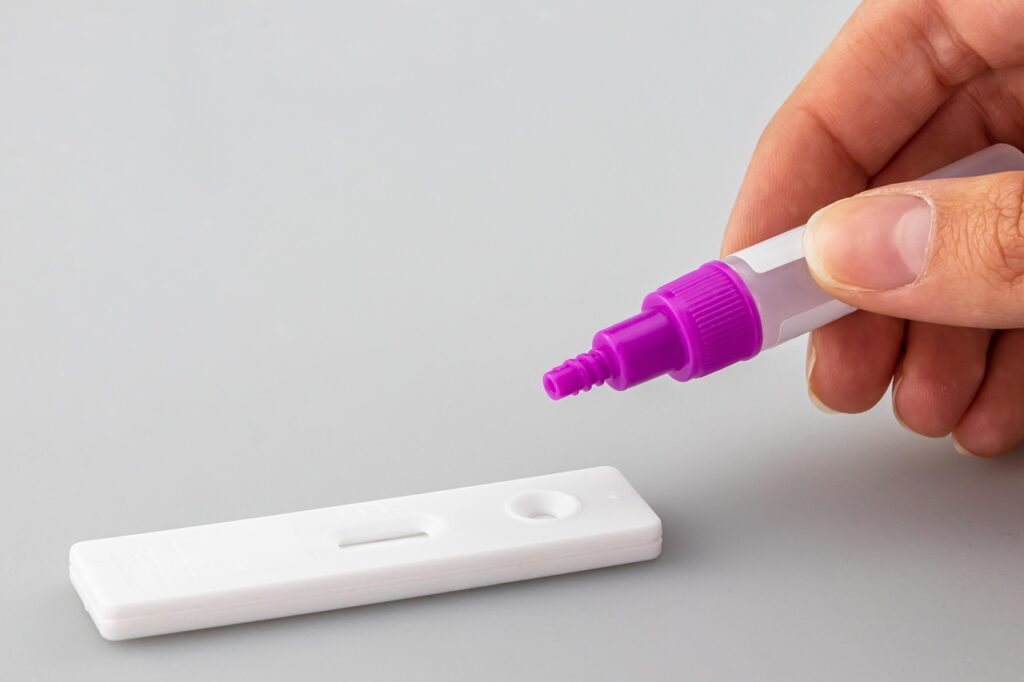
- Hemoglobin is the protein in red blood cells that carries oxygen; the test measures how much is in your blood.
- It is usually part of a complete blood count (CBC) and helps check for anemia or other conditions.
- Reference ranges differ by age, sex, and laboratory, so read your result against your own report.
- A low result may suggest anemia; a high result can relate to dehydration, smoking, altitude, or other causes.
- Many factors, including hydration and pregnancy, can affect hemoglobin readings.
- Only a clinician can interpret your hemoglobin result and decide on any next steps.
A hemoglobin test measures the amount of hemoglobin in your blood. Hemoglobin is the iron-containing protein inside red blood cells that carries oxygen from your lungs to the rest of your body and helps return carbon dioxide back. Because oxygen delivery is so fundamental, hemoglobin is one of the most commonly measured lab values. This guide explains what the test measures, why it is ordered, and how results are generally understood. It is educational only and does not replace advice from your own clinician.
Why a hemoglobin test is ordered
Hemoglobin is usually measured as part of a complete blood count (CBC), a broad blood test that looks at red cells, white cells, and platelets. According to MedlinePlus and Mayo Clinic, a clinician may check hemoglobin during a routine checkup, when someone has symptoms such as fatigue, weakness, shortness of breath, dizziness, or pale skin, to screen for or monitor anemia, before certain procedures, or to keep an eye on a known condition or its treatment.
Because a hemoglobin value fits within the larger CBC, clinicians often look at it together with related measures such as hematocrit, red blood cell count, and red cell indices. Together these help distinguish between different causes of an abnormal result.
Normal ranges vary
Hemoglobin is typically reported in grams per deciliter (g/dL) or grams per liter (g/L). Ranges are not one-size-fits-all: they differ by age and sex, and each laboratory sets its own reference range based on the population it serves and the equipment it uses. Lab Tests Online (ADLM) emphasizes that you should compare your value to the range on your own report rather than to a general figure.
| Group (illustrative only) | General direction of typical ranges |
|---|---|
| Adult men | Typically higher reference range |
| Adult women | Typically somewhat lower than men |
| Children | Varies notably by age |
| Pregnancy | Often runs lower due to normal blood volume changes |
The table shows general directions, not exact cutoffs. Your report’s printed range is what matters, and your clinician interprets your value against it and against your overall health.
What high or low results may suggest
A low hemoglobin result may suggest anemia — meaning fewer healthy red blood cells or less hemoglobin than expected. Anemia has many possible causes, including iron deficiency, blood loss, certain vitamin deficiencies (such as low B12 or folate), chronic conditions, and more. Because of this variety, a low hemoglobin usually prompts follow-up rather than an immediate answer. When a vitamin-related cause is suspected, clinicians may add tests such as a vitamin B12 test and iron studies.
A high hemoglobin result can relate to dehydration (which concentrates the blood), living at high altitude, smoking, lung or heart conditions, or, less commonly, a bone marrow disorder. As with a low value, the meaning depends heavily on context. Inflammation and chronic illness can also influence blood counts, so results are sometimes reviewed alongside inflammation blood tests.
How the test is done
A hemoglobin test is a routine blood draw, usually from a vein in the arm, and it is often collected at the same time as the rest of a complete blood count. In some settings a fingerstick sample can be used for a quick screening estimate. The procedure is brief, and most people can return to normal activity immediately afterward. Your results are then reported with your lab’s reference range so your clinician can compare your value against the expected range for your age and sex.
Things that can affect your result
Hydration status is a big one — being dehydrated can make hemoglobin look higher, while being over-hydrated can dilute it. Pregnancy, recent blood donation, high altitude, smoking, and certain medications can all shift the numbers. Even the position you were in when blood was drawn can have a small effect. Tell your clinician about your circumstances and anything you take so your result can be read accurately.
Frequently asked questions
Do I need to fast before a hemoglobin test?
Usually no, since hemoglobin is part of a CBC that does not require fasting. However, if it is drawn with other tests that do require fasting, follow your clinician’s or lab’s instructions.
Does a low hemoglobin always mean iron deficiency?
No. Iron deficiency is one common cause of low hemoglobin, but there are many others, including vitamin deficiencies, blood loss, and chronic conditions. Your clinician determines the cause with additional testing if needed.
Should I take iron supplements if my hemoglobin is low?
Not on your own. Taking iron when you do not need it can be harmful, and the right treatment depends on the cause. Talk to your doctor or pharmacist before starting any supplement.
Why is my hemoglobin lower during pregnancy?
Blood volume normally increases in pregnancy, which can dilute hemoglobin and make the number look lower. This is expected, though your clinician still monitors it and may check for anemia.
Is a high hemoglobin dangerous?
It depends on the cause. Dehydration is a common and reversible reason, while other causes need evaluation. A high value should be interpreted by your clinician rather than assumed to be harmful or harmless.
Where can I read about related tests?
Visit our wellness guide hub for more explainers, including the vitamin B12 test, which is often checked when anemia is being investigated.
This article is for general education and is not medical advice. Hemoglobin results can be affected by hydration, pregnancy, altitude, and other factors, and reference ranges vary by age, sex, and laboratory. Only a licensed clinician can interpret your result in context. Talk to your doctor before starting supplements or changing your health routine.
Sources
- MedlinePlus (U.S. National Library of Medicine) — Hemoglobin test and complete blood count
- Mayo Clinic — Hemoglobin test and anemia information
- Lab Tests Online / ADLM (Association for Diagnostics & Laboratory Medicine) — Hemoglobin and CBC reference ranges
- NIH — National Heart, Lung, and Blood Institute — Anemia overview