
Amlodipine is one of the most commonly prescribed blood pressure medications in the United States, with tens of millions of prescriptions filled each year. As a calcium channel blocker, it works differently from many other hypertension drugs, and patients often want to know how long does amlodipine take to work after their first dose. The short answer is that amlodipine begins lowering blood pressure relatively quickly — within hours — but reaching its full, steady effect takes patience, usually a week or more. This article is general education, not medical advice, and it deliberately contains no dosing or titration instructions: your dose is set and adjusted by your prescriber.
How Amlodipine Works
Amlodipine belongs to the dihydropyridine class of calcium channel blockers. It works by relaxing the smooth muscle in the walls of your blood vessels, allowing the vessels to widen. When blood vessels are more relaxed and open, blood flows through them more easily, which lowers the pressure against the vessel walls.
Unlike some blood pressure medicines that act through the kidneys or the nervous system, amlodipine acts directly on the vascular smooth muscle. This mechanism makes it effective for many patients and allows it to be combined safely with several other classes of blood pressure medication when a prescriber decides that is appropriate. The American Heart Association recognizes calcium channel blockers as one of the primary classes of medications used to treat hypertension.
Amlodipine also has a notably long half-life — commonly cited as around 30 to 50 hours — which means it stays in your system far longer than many blood pressure medications. That long duration is why it is generally taken just once a day and why it provides fairly stable, around-the-clock blood pressure control, smoothing out the peaks and dips that can occur with shorter-acting drugs.
Timeline: How Long Does Amlodipine Take to Work?
Amlodipine begins lowering blood pressure within a few hours of the first dose. Many patients show a measurable reduction within the first day or two. However, that early effect does not represent the medication’s full potential.
Because of amlodipine’s long half-life, it takes roughly a week of daily dosing to approach steady-state blood levels — the point at which the amount of drug entering your body each day roughly equals the amount being eliminated. At steady state, amlodipine delivers its most consistent blood-pressure reduction.
The full therapeutic effect typically develops over about one to two weeks, and clinicians commonly allow up to four weeks before deciding whether the overall regimen is working as intended. Waiting that full window matters, because judging effectiveness too early can give a misleading picture. Any decision about whether to continue, adjust, or add to your treatment is one your prescriber makes based on your readings and your overall health.
Why You Should Judge It by Readings, Not Feelings
This is one of the most important points about amlodipine — and about blood pressure treatment in general. High blood pressure is usually symptomless. Most people cannot feel whether their blood pressure is high, low, or well controlled, which is exactly why hypertension is often called a “silent” condition. You therefore should not judge whether amlodipine is “working” by how you feel.
Instead, the medication’s effect is assessed through actual blood pressure measurements over time, ideally including validated home readings (more on how to take those below). Feeling no different after starting amlodipine does not mean it is failing; conversely, feeling “fine” is not evidence that your blood pressure is controlled. The numbers are what count, and they should be interpreted together with your clinician.
What to Expect After Starting
Amlodipine is taken once daily, with or without food. MedlinePlus advises patients to “take amlodipine exactly as directed” and to take it at about the same time each day. Consistency is the single most useful habit: taking it at the same time daily helps maintain steady drug levels and the most even blood-pressure control. If you miss a dose, general guidance is to take it when you remember unless it is nearly time for the next dose — in that case skip the missed one rather than doubling up, and ask your pharmacist if you are unsure.
Your prescriber determines your dose, decides whether and when it should be adjusted, and selects the strength that fits your situation. Amlodipine is manufactured in more than one strength, but which one is right for you — and whether it should ever change — is a clinical decision, not something to work out from an article. For that reason, this guide intentionally provides no starting dose, no titration steps, and no maximum figure. If you have any question about the amount you are taking, ask your prescriber or pharmacist.
Common side effects, especially early on, include swelling in the ankles and feet (peripheral edema), headache, flushing, and dizziness. Ankle swelling is one of the more frequent reasons people ask about stopping amlodipine, and it tends to be more common at higher doses. Most of these effects are not dangerous, but they are worth reporting to your clinician, who can decide whether an adjustment is warranted.
Factors That Affect How Quickly Amlodipine Works
Several factors influence how long amlodipine takes to work in your particular case. Your starting blood pressure matters: someone with markedly elevated readings may notice a larger initial drop, while someone with mildly elevated readings may see subtler changes that are best detected through consistent home monitoring.
Age affects the drug’s pharmacokinetics. Older adults tend to have higher blood levels of amlodipine because they clear it more slowly, which can mean the effect is reached somewhat sooner but also that side effects are more likely. Liver function is another factor, since amlodipine is metabolized by the liver and reduced liver function prolongs its activity. These are among the reasons dosing is individualized by a prescriber rather than standardized.
Diet and lifestyle play a supporting role. A high-sodium diet can blunt amlodipine’s effect, while reducing sodium, maintaining a healthy weight, being physically active, and limiting alcohol can enhance blood-pressure control. The DASH eating pattern (Dietary Approaches to Stop Hypertension) is particularly effective alongside medication.
What to Do If Amlodipine Does Not Seem to Be Working
If your home readings remain above your target after several weeks, schedule a follow-up with your prescriber. Do not increase your dose on your own, and do not stop taking the medication abruptly. Stopping a blood pressure medicine without medical guidance can allow your blood pressure to climb again.
Your clinician has several options and will choose based on your situation — for example, adjusting the regimen, adding a medication from a different class (such as an ACE inhibitor, ARB, or diuretic), or investigating secondary causes of hypertension. Combining medications from different classes often controls blood pressure better than pushing a single drug to its limit. Before concluding that amlodipine “isn’t working,” it is also worth checking whether you are taking it consistently, whether your home readings are being measured correctly, and whether factors like high sodium intake, stress, or alcohol are contributing. “White coat” hypertension — readings that are high in a clinic but normal at home — can also create a misleading impression.
For more on managing chronic conditions, see our medical conditions guide. If you are comparing blood pressure options, our article on lisinopril vs losartan looks at two common alternatives, and how long metformin takes to work may help if you also manage blood sugar.
Do Not Stop Amlodipine on Your Own
MedlinePlus is explicit that amlodipine “helps to control” blood pressure, angina, and coronary artery disease but “does not cure” them, and that you should continue taking it and “not stop taking amlodipine without talking to your doctor,” even if you feel well. Because the condition is symptomless, feeling fine is not a reason to stop — the medicine may be the very thing keeping your readings down. If discontinuation is ever appropriate, it should be done gradually under your prescriber’s direction, not by simply stopping.
When to Seek Medical Attention
Contact your clinician promptly if you develop severe or worsening swelling, marked dizziness, or fainting, and seek urgent care for symptoms such as worsening or new chest pain, a very fast or irregular heartbeat, or fainting spells, which MedlinePlus lists among the more serious effects to report. If you or someone else may have taken too much amlodipine, contact Poison Control at 1-800-222-1222 (free, confidential, 24/7); call 911 for collapse, severe difficulty breathing, or unresponsiveness.
Monitoring Your Blood Pressure at Home
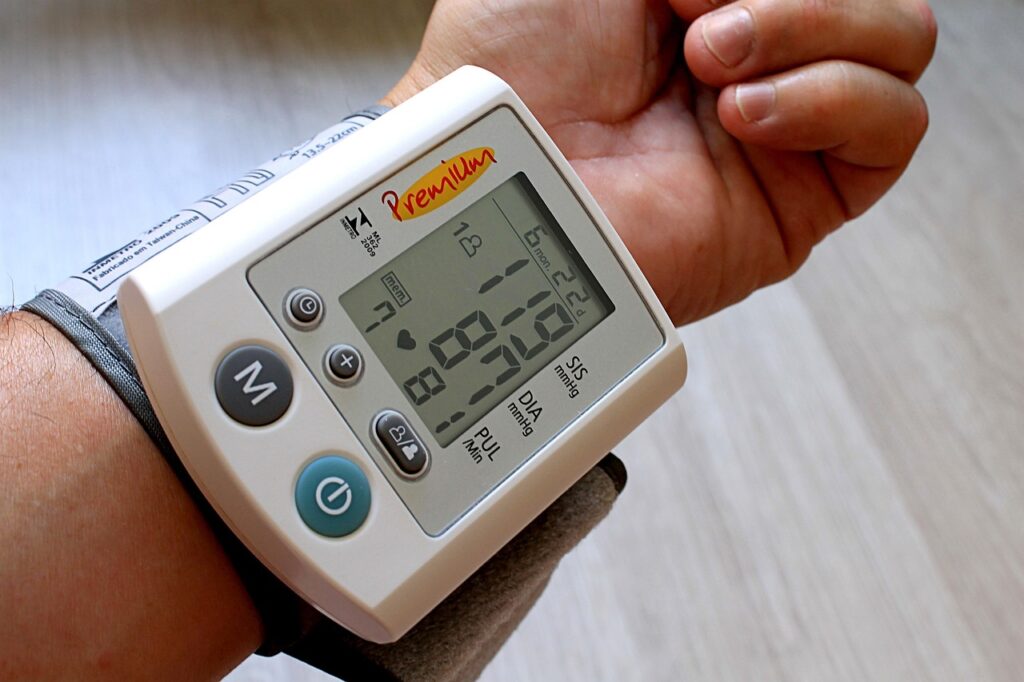
Home blood pressure monitoring is one of the most valuable tools for tracking amlodipine’s effect. Use a validated, automatic upper-arm cuff monitor. Measure at the same times each day, sit quietly for about five minutes beforehand with your back supported and feet flat, rest your arm at heart level, and avoid caffeine, exercise, and smoking in the half hour before a reading. Taking two readings a minute apart and recording the average is a common approach.
Keep your readings in a log or app and bring them to appointments; home readings are often more representative of your true blood pressure than a single office measurement. Your prescriber will set the target that is right for you based on your age and overall risk, so use your individual goal rather than a generic number when interpreting your readings.
Frequently Asked Questions
Can amlodipine lower blood pressure immediately?
Amlodipine begins to lower blood pressure within hours of the first dose, but the initial drop is modest, and the full effect develops over roughly one to two weeks (with clinicians often waiting up to four weeks before judging the regimen). Do not expect a dramatic change from a single dose, and remember that blood pressure is symptomless — track it with readings, not feelings.
Is it better to take amlodipine in the morning or at night?
Because its long half-life provides fairly consistent 24-hour coverage, amlodipine can generally be taken at any time of day. Some clinicians suggest morning dosing and others evening; the most important thing is taking it at the same time every day. Follow whatever your prescriber recommends for you.
What foods should you avoid while taking amlodipine?
Grapefruit and grapefruit juice can raise amlodipine levels and may intensify side effects; the interaction is generally less pronounced than with some other calcium channel blockers, but limiting grapefruit is a reasonable precaution — ask your pharmacist. A high-sodium diet can also reduce the medication’s effectiveness.
Can you stop taking amlodipine suddenly?
You should not stop on your own. While amlodipine may not cause rebound as dramatically as some other blood pressure drugs, stopping any antihypertensive abruptly can allow blood pressure to rise. If discontinuation is planned, do it gradually under your prescriber’s supervision.
The Bottom Line
How long amlodipine takes to work depends on which timeline you mean: blood pressure starts dropping within hours to days, but the full effect develops over about one to two weeks, and clinicians often allow up to four weeks before making changes. Because high blood pressure is symptomless, judge the medication by consistent home readings rather than by how you feel, take it exactly as prescribed, and never start, change, or stop it on your own. Mild ankle swelling is common, but report severe swelling, marked dizziness, or fainting. If your readings stay above your target after a few weeks, work with your prescriber to optimize your regimen.
TL;DR: Amlodipine begins lowering blood pressure within hours, but the full effect develops over about 1 to 2 weeks, and clinicians often wait up to 4 weeks before adjusting the regimen. High blood pressure is symptomless, so judge amlodipine by validated home readings, not by how you feel. Your dose is set and adjusted only by your prescriber — this article gives no dosing or titration schedule — and you should never start, change, or stop amlodipine on your own. Mild ankle swelling is common; report severe swelling, marked dizziness, fainting, worsening chest pain, or an irregular heartbeat.
Medical disclaimer: This article is general education, not medical advice, and provides no dosing instructions. Only your prescriber can determine and adjust your dose. Take amlodipine exactly as prescribed, do not stop it without medical guidance, and verify current guidance with your clinician or pharmacist. In an emergency, call 911; for a suspected overdose, call Poison Control at 1-800-222-1222.
Sources
- MedlinePlus — Amlodipine (medlineplus.gov)
- FDA / DailyMed — Amlodipine prescribing information (dailymed.nlm.nih.gov)
- American Heart Association — High blood pressure and medications (heart.org)
- Mayo Clinic — Amlodipine (oral route) (mayoclinic.org)