
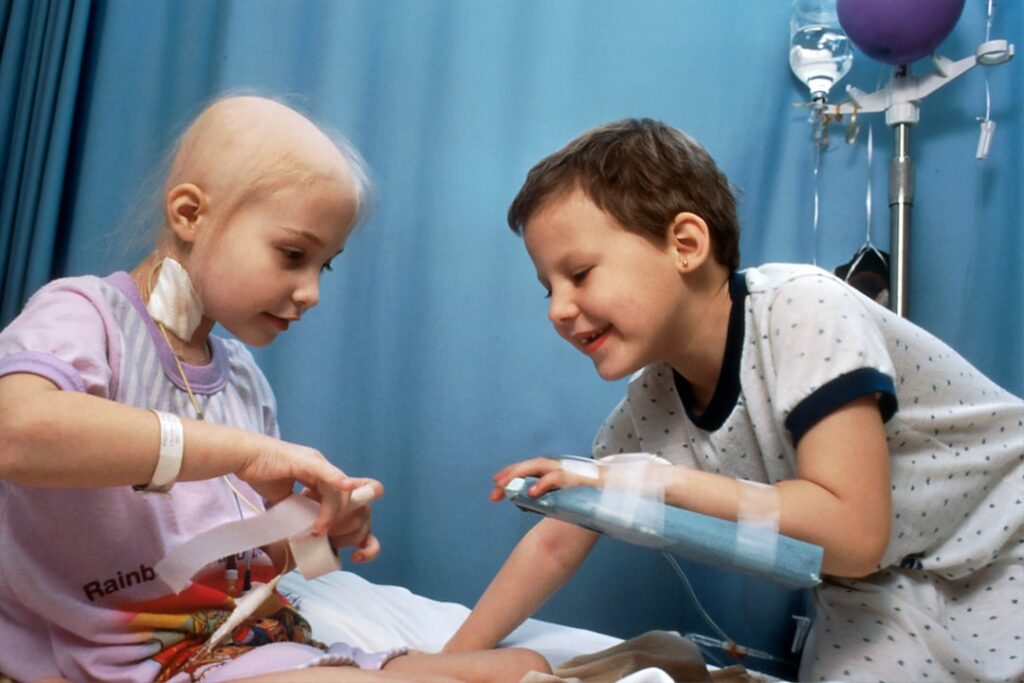
Recognizing the symptoms of leukemia in children early can lead to faster diagnosis and better treatment. Leukemia is the most common cancer in children and teens, yet the symptoms of leukemia in children often mimic everyday childhood illnesses, which makes early detection genuinely difficult for parents. The goal of this guide is not to alarm you — most children with these symptoms do not have leukemia — but to help you know which patterns deserve a prompt medical check.
According to the American Cancer Society (Cancer Facts & Figures 2025), several thousand children in the United States are diagnosed with leukemia each year, and about 3 in 4 of these are acute lymphoblastic leukemia (ALL). The encouraging news is that survival has improved dramatically: ALL, the most common type in children, now has a five-year survival rate exceeding 90 percent. This guide covers the key symptoms, how to tell them apart from common illnesses, and when to see a doctor. For more on health conditions, visit our medical conditions guide.
TL;DR for parents: Leukemia’s early signs — tiredness, paleness, easy bruising, tiny red or purple dots (petechiae), frequent fevers, and bone pain — are common and usually caused by ordinary illnesses. What raises concern is a pattern that is persistent, worsening, or clustered together. If your child develops petechiae or unexplained bleeding along with a fever, looks very unwell, has trouble breathing, or has severe bone pain that stops them walking, seek urgent or emergency care today. Otherwise, a same-week pediatric visit and a simple blood test can provide answers. This article is educational and does not replace evaluation by your child’s doctor.
Understanding Childhood Leukemia
Leukemia is a cancer of the blood-forming cells in the bone marrow. In healthy children, the bone marrow produces a balanced mix of red blood cells, white blood cells, and platelets. In leukemia, the marrow produces large numbers of abnormal white blood cells that do not work properly and crowd out healthy cells.
The two main types of childhood leukemia are:
Acute lymphoblastic leukemia (ALL): Accounts for about three-quarters of childhood leukemia cases. It affects lymphocytes and progresses rapidly. The peak age of diagnosis is roughly 2 to 5 years old.
Acute myeloid leukemia (AML): Makes up most of the remaining cases. It affects myeloid cells and is also aggressive. AML is more evenly distributed across age groups in children.
Chronic leukemias are far less common in children than in adults. Because leukemia disrupts the production of all three major blood-cell types, its symptoms fall into recognizable categories tied to a shortage of each cell type — which is why the same signs tend to appear again and again.
Fatigue and Weakness
Persistent, unexplained fatigue is one of the most common early symptoms of leukemia in children. It results from anemia, which occurs when leukemia cells crowd out the red blood cells that carry oxygen throughout the body.
A child with leukemia-related fatigue may seem unusually tired even after a full night of sleep, have less energy for play and activities they normally enjoy, become short of breath during ordinary exertion such as climbing stairs, and look paler than usual — particularly in the face, lips, nail beds, and the inner surfaces of the lower eyelids.
All children have tired days, so tiredness alone is rarely a cause for alarm. What stands out with leukemia-related fatigue is that it is persistent and progressive: it does not resolve with rest and tends to worsen over weeks. If your child’s energy has noticeably declined and does not bounce back, it is reasonable to ask for a medical evaluation.
Easy Bruising and Bleeding
Leukemia suppresses platelet production, and platelets are the cells responsible for clotting. Low platelet counts (thrombocytopenia) lead to several visible symptoms.
Unexplained bruises: Bruises that appear without a clear cause or after very minor bumps, especially in unusual places like the back, chest, or abdomen rather than the knees and shins typical of active children.
Petechiae: Tiny, flat, red or purple dots caused by bleeding under the skin’s surface. They do not blanch (turn white) when pressed and often appear in clusters. Petechiae are a hallmark sign of low platelets and should always be taken seriously.
Frequent or prolonged nosebleeds: Nosebleeds that are unusually frequent, hard to stop, or last more than 10 to 15 minutes.
Bleeding gums: Gums that bleed during or after brushing, or that bleed on their own.
The Mayo Clinic emphasizes that while occasional bruising is normal for active children, a pattern of easy bruising combined with petechiae or unusual bleeding should prompt a visit to the pediatrician. And when petechiae or unexplained bleeding appear alongside a fever or a child who looks unwell, that combination should be treated as an urgent, same-day concern.
Frequent Infections and Fevers
Although leukemia causes an overproduction of white blood cells, these cells are abnormal and cannot fight infection effectively. This leaves children vulnerable to frequent and sometimes severe infections.
Children with leukemia may have recurrent fevers without an obvious source, infections that linger longer than expected or keep coming back, a poor response to antibiotics that would normally clear an infection, and cuts or sores that are slow to heal.
Fever is present in many children at the time of leukemia diagnosis. A fever that persists for more than a few days without a clear cause, or frequent fevers separated by short intervals, is worth investigating with blood work — particularly if it comes with other signs on this list.
Bone and Joint Pain
Bone pain is a particularly important symptom of leukemia in children because, when taken seriously, it can lead to earlier diagnosis. The pain is caused by leukemia cells building up inside the bone marrow, creating pressure within the bones.
Children may complain of pain in the legs, arms, back, or ribs. They might limp or refuse to walk. Younger children who cannot describe their pain may become irritable, resist being held, or cry when their arms or legs are moved. The pain is sometimes mistaken for growing pains, but there are key differences.
Growing pains typically affect both legs, occur in the evening or at night, and resolve by morning. Leukemia bone pain may focus on one specific area, persist throughout the day, and progressively worsen; it does not come and go in a predictable pattern. If your child’s bone or joint pain is persistent, localized, or interferes with normal activity, a complete blood count (CBC) is warranted. For more on bone-related cancer symptoms, see our guide on the symptoms of bone cancer.
Swollen Lymph Nodes and Abdominal Swelling
Leukemia cells can accumulate in the lymph nodes, spleen, and liver, causing visible or palpable swelling.
Lymph node enlargement: Swollen lymph nodes may be noticed in the neck, armpits, or groin. They are usually painless, firm, and may feel like small marbles under the skin. Swollen lymph nodes are extremely common in children (most often from ordinary viral infections), but nodes that stay enlarged for more than 2 to 3 weeks, keep growing, feel hard and fixed, or appear in unusual locations deserve evaluation.
Abdominal swelling: An enlarged spleen (splenomegaly) or liver (hepatomegaly) can make the abdomen look distended or full. Parents may notice the child’s belly looks fuller than usual, that waistbands feel tight, or that the child says they feel full after eating only a little.
The National Cancer Institute lists lymph node enlargement and an enlarged liver and spleen among the key clinical findings in pediatric leukemia.
Other Symptoms to Watch For
Several additional symptoms may appear, depending on the type and extent of the disease.
Headaches, vomiting, and seizures: If leukemia cells spread to the central nervous system, symptoms can include persistent headaches, vomiting (especially in the morning), vision changes, and seizures.
Swelling in the chest (swollen thymus): In some forms of ALL, a mass in the chest can cause coughing, trouble breathing, or swelling of the face, neck, and arms. Breathing difficulty or facial swelling is a medical emergency requiring immediate care.
Loss of appetite and weight loss: Many children with leukemia eat less than usual, partly from the illness itself and partly from an enlarged spleen pressing on the stomach.
Skin changes: Rarely, leukemia cells in the skin (leukemia cutis) can cause dark spots or firm bumps; this is more common in AML than ALL.
Warning Signs at a Glance
| Symptom pattern | Why it happens | Suggested action |
|---|---|---|
| Persistent tiredness and paleness | Low red blood cells (anemia) | Book a pediatric visit if it lasts and worsens |
| Easy bruising, petechiae, bleeding gums | Low platelets | See a doctor promptly; urgent if with fever |
| Recurrent or lingering fevers/infections | Abnormal white blood cells | Evaluate with blood work |
| Persistent, localized bone or joint pain | Marrow crowding | Ask for a CBC |
| Petechiae + fever, or a very unwell child | Possible serious blood problem | Seek same-day or emergency care |
When to See a Doctor
No parent wants to rush to the doctor for every sniffle, and you should not have to. But certain combinations and patterns of symptoms do warrant prompt evaluation.
Schedule an appointment with your pediatrician if your child has persistent unexplained fatigue lasting more than about 2 weeks, easy bruising or petechiae without a clear cause, recurrent fevers without an identifiable infection, persistent bone or joint pain not related to an injury, swollen lymph nodes that persist beyond 2 to 3 weeks and are growing, or unexplained paleness.
Seek immediate (emergency) medical attention if your child develops: difficulty breathing or facial swelling; seizures, or a sudden severe headache with vomiting; a high fever together with looking seriously unwell (very drowsy, floppy, or hard to rouse); uncontrollable bleeding; petechiae or unexplained bruising accompanied by fever; or severe bone pain that prevents walking.
Diagnosis usually begins with a complete blood count (CBC), which can reveal abnormal white blood cell counts, anemia, and low platelets. If the CBC is abnormal, a blood smear and a bone marrow test confirm the diagnosis and identify the specific leukemia type, which guides treatment. For information on other cancer symptoms, see our articles on the symptoms of a brain tumor and the signs of melanoma that has spread.
Frequently Asked Questions
What causes leukemia in children?
In most cases, the cause is unknown. Leukemia results from genetic changes in blood-forming cells, but these changes are almost always acquired randomly rather than inherited. Known risk factors include certain genetic conditions (such as Down syndrome), prior radiation or chemotherapy, and some immune disorders. Everyday environmental exposures and parenting choices do not cause childhood leukemia — this is not something you could have prevented.
How fast does childhood leukemia develop?
Acute leukemia (both ALL and AML) develops quickly. Symptoms may appear over days to weeks, and some parents report their child seemed well only weeks before diagnosis. Because the disease progresses rapidly once symptoms appear, prompt medical evaluation is important.
Can a CBC miss leukemia?
Uncommonly, early leukemia may not produce dramatic changes on a CBC. White blood cell counts can be high, normal, or even low. That is why a blood smear (examining the cells under a microscope) adds important information beyond the automated count. If clinical suspicion remains high despite a normal-appearing CBC, a bone marrow test provides a definitive answer.
What is the survival rate for childhood leukemia?
Survival has improved enormously. The five-year survival rate for ALL, the most common type, now exceeds 90 percent, and AML survival has also risen with modern treatment, though it remains lower than for ALL. Individual outlook depends on the child’s age at diagnosis, the white blood cell count at diagnosis, the leukemia subtype, and the response to initial treatment.
Are petechiae always serious?
Not always — petechiae can appear from forceful coughing or vomiting, or from tight straps. But petechiae that are widespread, keep appearing, or occur together with fever, bruising, paleness, or a child who looks unwell should be evaluated urgently, because they can signal a low platelet count that needs prompt attention.
Medical disclaimer: This article is for general educational purposes and is not a substitute for professional medical advice, diagnosis, or treatment. If you are worried about your child, contact your pediatrician; for emergency signs such as trouble breathing, seizures, or uncontrolled bleeding, seek emergency care right away.
Trust Your Instincts
Parents know their children better than anyone. The symptoms of leukemia in children, while individually common, form a more concerning picture when they cluster: a child who is persistently tired, pale, bruising easily, and having bone pain or recurrent fevers is not simply going through a rough patch. If your child does not seem right and symptoms are not resolving, it is reasonable to ask for a complete blood count. A simple blood test can provide critical answers and, when needed, set the stage for prompt, effective treatment — and far more often, it offers reassurance.
Sources
- American Cancer Society — Key Statistics for Childhood Leukemia; Cancer Facts & Figures 2025
- Mayo Clinic — Childhood leukemia: symptoms and causes
- National Cancer Institute (NCI) — Childhood Acute Lymphoblastic Leukemia Treatment (PDQ)
- St. Jude Children’s Research Hospital — Childhood leukemia signs and diagnosis
- MedlinePlus (U.S. National Library of Medicine) — Childhood leukemia; petechiae; complete blood count