
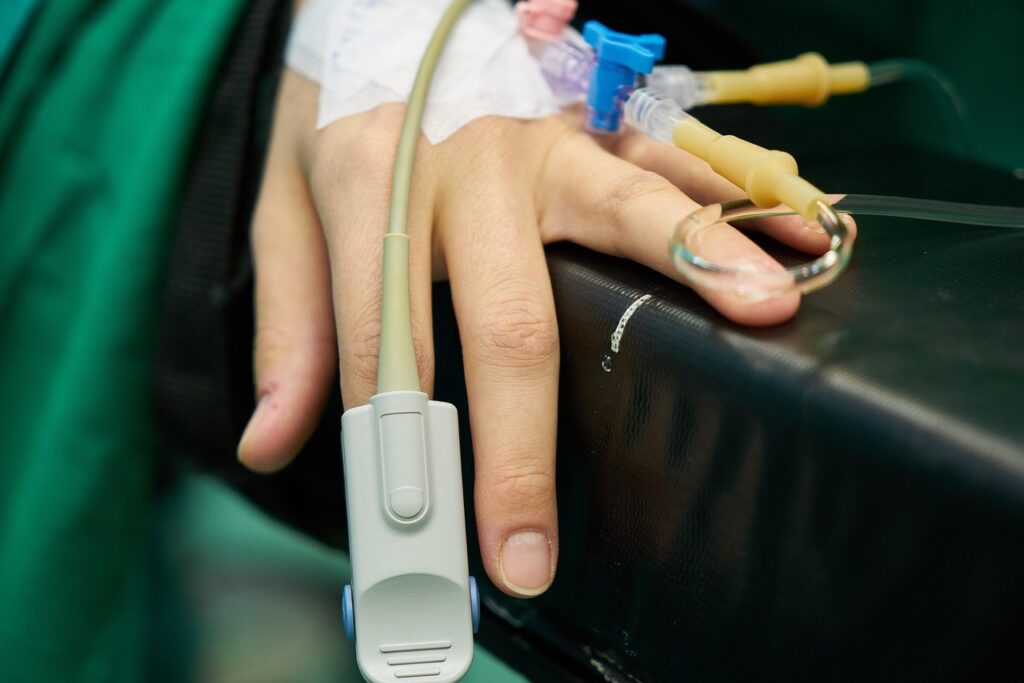
- Hernia repair is one of the most common general surgeries in the U.S. (more than 1 million a year); it closes a weak spot in the abdominal wall, usually reinforced with mesh.
- Common types include inguinal (groin, most common), umbilical (belly button), and hiatal (diaphragm) — each is managed a bit differently.
- Small, symptom-free inguinal hernias in selected men can be watched safely; most other hernias, and any that cannot be pushed back in, eventually need repair — your surgeon decides.
- Open, laparoscopic, and robotic approaches each have trade-offs in recovery and are chosen based on hernia type, size, body habitus, and surgeon expertise.
- A hernia bulge that turns hard, painful, red, or won't push back in — especially with vomiting or fever — can signal strangulation and is a 911/ER emergency.
- Cost estimates vary widely by facility, region, and complexity, so get an itemized, bundled quote; hernia repair is medically necessary and usually covered by insurance.
Hernia repair is one of the most common general surgery operations in the United States, with more than one million cases performed each year, according to the U.S. Food and Drug Administration and surgical societies such as the Society of American Gastrointestinal and Endoscopic Surgeons. Hernia repair surgery closes weakened or torn abdominal wall tissue and, in most modern adult repairs, reinforces the area with synthetic or biologic mesh. The choice between open, laparoscopic, and robotic approaches depends on hernia type, size, body habitus, and surgeon expertise — and can meaningfully affect recovery time and recurrence risk. This guide is general education, not medical advice; the right plan for you is a decision your surgeon makes after examining you.
What Hernia Repair Is and Who Needs It
A hernia is a weakness or defect in the abdominal wall through which intra-abdominal contents can protrude. Common types include inguinal (groin, by far the most common — inguinal repairs make up roughly 800,000 of the yearly U.S. total), umbilical (belly button), femoral (upper thigh, more common in women), incisional or ventral (through prior surgical scars), epigastric (upper midline), and hiatal (where part of the stomach pushes up through the diaphragm).
Surgery is generally recommended for symptomatic hernias — those causing pain, increasing in size, or interfering with daily activity — and for any hernia that cannot be reduced (pushed back in), because of the risk of incarceration and strangulation. Surgical societies support watchful waiting for small, asymptomatic inguinal hernias in selected men, but most other hernias eventually require repair. Whether and when to operate is individualized, so treat these as general patterns rather than rules for your case. Hiatal hernias often coexist with severe reflux and, when repaired, are typically addressed together with an anti-reflux procedure.
How the Procedure Is Performed
Open repair uses an incision directly over the hernia defect. The hernia sac is reduced or excised, and the defect is closed with sutures and reinforced with mesh in most modern adult repairs. Local anesthesia with sedation is feasible for many open inguinal repairs, allowing many patients to go home the same day with minimal restrictions.
Laparoscopic repair uses several small incisions and a camera. The surgeon places mesh either intraperitoneally or in the preperitoneal space (the TEP and TAPP techniques for inguinal hernias). Recovery is often faster with less pain than open repair, particularly for bilateral or recurrent inguinal hernias. Robotic repair offers similar minimally invasive benefits with enhanced visualization and wristed instruments. Across techniques, adding mesh substantially lowers recurrence compared with suture-only repair — older suture-only inguinal repairs recurred in roughly 10–15% of cases, whereas mesh repair brings that down toward the low single digits — which is why mesh is standard for most adult repairs. Your surgeon will recommend the approach and mesh configuration that fit your anatomy.
Preparation and the Day Of
Pre-op assessment includes appropriate blood work, an EKG for older adults or those with cardiac risk, and a physical exam confirming the defect. Smoking cessation for at least four weeks before surgery is strongly recommended because nicotine impairs collagen synthesis and increases recurrence and wound-healing problems. Optimizing weight, blood sugar control, and chronic cough management (asthma, COPD) can improve durability of the repair.
Most hernia repairs are outpatient. Typically you fast from midnight, arrive a few hours early, and go home several hours after surgery. Large or complex ventral and incisional hernias may require an overnight stay for pain management. Patients with concurrent intra-abdominal pathology sometimes have repair combined with another procedure such as gallbladder removal or appendectomy when anatomy and inflammation allow — a judgment your surgical team makes case by case.
Recovery Timeline
Inguinal and small umbilical hernia recovery is usually fast. Walking begins the day of surgery. Desk work often resumes within about 5–10 days for laparoscopic repair and 7–14 days for open repair. Heavy lifting (more than roughly 10–15 pounds) is commonly restricted for 4–6 weeks. Many patients are back to normal activity around 6 weeks, though individual recovery varies with the person and the repair.
Larger ventral and incisional hernias have a longer course. Hospital stays of 1–3 days are common. Desk work often returns at 2–4 weeks, and heavy lifting is restricted for 6–8 weeks or longer. Drains may be in place for 1–2 weeks. Per the Cleveland Clinic, internal mesh integration continues over roughly 8–12 weeks. Sleeping with the head of the bed slightly elevated and using an abdominal binder can aid comfort during recovery. Always follow the specific activity limits your own surgeon gives you.
Risks, Complications, and Outcomes
Modern hernia repair is generally highly successful, but no operation is risk-free. Recurrence after primary inguinal hernia mesh repair typically runs in the low single digits over 5 years; ventral hernia recurrence is higher — often cited around 5–25% — depending on size, technique, and patient factors. Other risks include infection (more common in large ventral repairs than small inguinal ones), hematoma, seroma (fluid collection), chronic groin pain after inguinal repair (often nerve-related), and mesh-related complications such as infection or migration (uncommon but consequential). Your surgeon can share their own outcome and complication rates, which is a reasonable thing to ask about.
When to seek emergency care: Call 911 or go to the nearest emergency room — before surgery — if a hernia bulge becomes hard, painful, red, or cannot be pushed back in, especially with nausea, vomiting, or fever. These can be signs of strangulation, in which blood supply to trapped bowel is cut off; it is a surgical emergency that can become life-threatening within hours. After surgery, seek care for severe or worsening abdominal pain, fever above about 101.5°F, increasing wound redness or drainage, or signs of bowel obstruction such as persistent vomiting and no passage of gas or stool.
Alternatives and Watchful Waiting
Small, asymptomatic inguinal hernias in men can sometimes be observed safely. The landmark Watchful Waiting trial (Fitzgibbons et al., JAMA 2006) found that acute incarceration was rare (well under 1% per year) in men with minimally symptomatic inguinal hernias, supporting observation as a reasonable initial strategy when symptoms are minimal. Over time, however, most watched patients develop symptoms — the NIDDK notes roughly 70% cross over to surgery within about five years — so watchful waiting delays rather than avoids repair for many men. Trusses and abdominal binders provide symptomatic relief but do not heal hernias. Hiatal hernia symptoms often respond to acid suppression and lifestyle changes; surgery is generally reserved for severe reflux unresponsive to medication, large paraesophageal hernias, or volvulus risk. Whether observation is safe in your case is a conversation to have with your surgeon.
Reviewing related digestive issues alongside surgical planning — for example, exploring our conditions reference library — can help you understand whether a hernia is the dominant problem or whether coexisting reflux, IBS, or pelvic floor dysfunction is contributing to your discomfort.
Cost Considerations
Hernia repair is medically necessary and is covered by Medicare and most commercial insurance. Cash-pay figures vary widely by region, facility, surgeon, and complexity, so treat these as rough estimates only. Without insurance, outpatient laparoscopic inguinal repair often runs on the order of $4,000 to $8,000; laparoscopic umbilical or ventral repair frequently $6,000 to $12,000; and complex incisional repair requiring abdominal wall reconstruction can reach $15,000 to $50,000 or more. Some surgical centers offer cash-pay bundled programs for straightforward laparoscopic inguinal repair, sometimes advertised in the mid-$3,000s, and a robotic approach can add several thousand dollars. Always request an itemized, bundled quote covering facility, surgeon, and anesthesia. The healthcare costs guide covers strategies for comparing those bundles.
Frequently Asked Questions
Can a hernia heal without surgery?
In adults, no — hernias are mechanical defects that do not close on their own. Symptoms can sometimes be managed temporarily with activity modification, but the defect persists and may enlarge over time. Repair is the definitive treatment; whether and when you need it is a decision for your surgeon.
What is mesh and is it safe?
Mesh is a synthetic or biologic material that reinforces the repaired tissue and substantially reduces recurrence. Modern mesh products have a generally strong safety record, and they are standard in most adult repairs. A small percentage of patients develop chronic pain or a mesh-related complication, which is a worthwhile topic to discuss with your surgeon, including what product and configuration they plan to use.
How long after surgery can I exercise?
Walking is encouraged immediately. Light cardio such as a stationary bike or easy walking often resumes at 1–2 weeks. Strength training and impact exercise are typically restricted until about 6 weeks for small repairs and 8–12 weeks for larger ones. Follow the specific timeline your surgeon gives you rather than a general rule.
Will I be able to feel the mesh?
Most patients do not feel the mesh once healing is complete. Mild pulling or tightness for a few months is normal as the mesh integrates with surrounding tissue. A persistent foreign-body sensation is uncommon with modern lightweight meshes but should be reported to your surgeon if it occurs.
The Bottom Line
Hernia repair has matured into a highly successful operation when matched well to the patient and the defect — but the details are individual, and your surgeon decides the approach, mesh, and timing that fit your anatomy. Reasonable questions to ask include how many similar hernias they repair each year, which approach (open, laparoscopic, or robotic) they recommend for you and why, what mesh product and configuration they use, and what their recurrence and chronic-pain rates are. Optimizing weight, quitting smoking, and managing a chronic cough before surgery can substantially improve the long-term durability of the repair. And remember: a bulge that becomes hard, painful, or stuck — especially with vomiting or fever — is an emergency, not something to watch at home.
This article is general educational information about hernia repair and does not replace evaluation, diagnosis, or treatment by a qualified surgeon. Whether surgery is appropriate, which approach is best, and what recovery looks like depend on your individual anatomy, hernia type, and overall health — your surgeon decides that with you. Costs, recurrence rates, and recovery times vary and are estimates only. If a hernia bulge becomes hard, very painful, red, or cannot be pushed back in — especially with vomiting or fever — seek emergency care immediately, as this can signal strangulation.
Sources
- Society of American Gastrointestinal and Endoscopic Surgeons (SAGES) — patient information on inguinal hernia repair and watchful waiting
- U.S. Food and Drug Administration — hernia surgical mesh patient information (more than 1 million repairs per year; mesh considerations)
- National Institute of Diabetes and Digestive and Kidney Diseases (NIDDK, NIH) — inguinal hernia and crossover to surgery during watchful waiting
- Fitzgibbons et al., JAMA 2006 — Watchful Waiting vs. Repair for minimally symptomatic inguinal hernia
- Cleveland Clinic — hernia repair surgery (approaches, recovery, mesh integration)