
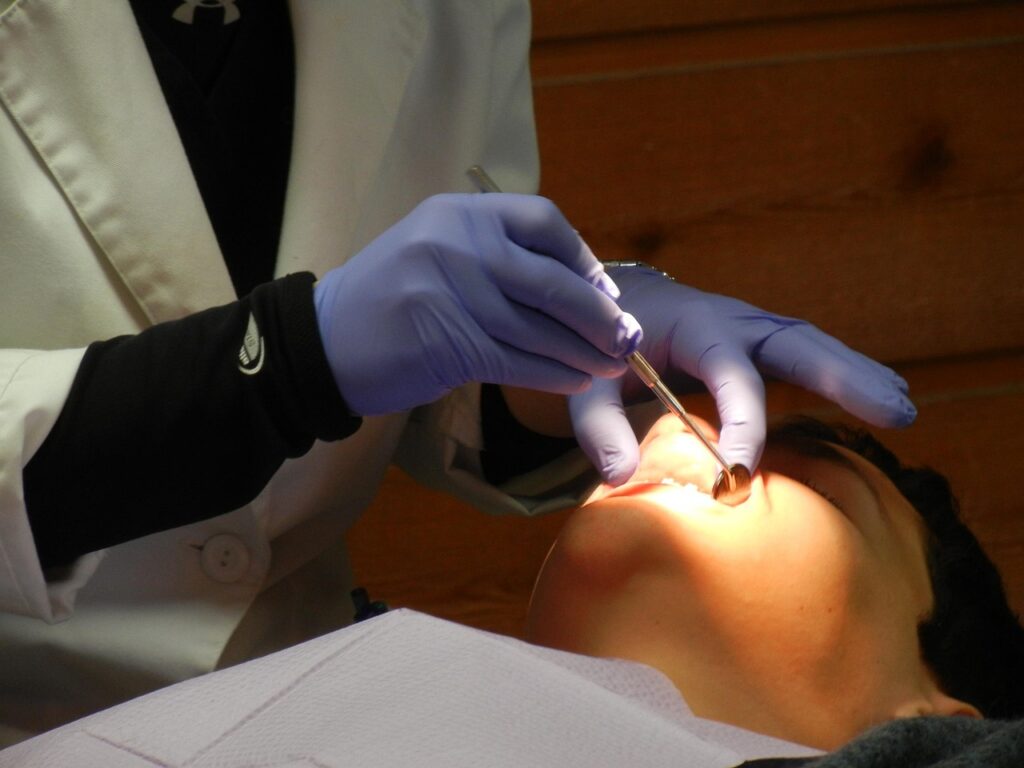
If you are searching for an orthodontist near me, the question is often as much about who should do the treatment as what type of treatment to get. Most general dentists now offer clear aligner therapy, while orthodontists complete an additional 2 to 3 years of accredited residency training focused on tooth movement, jaw growth, and bite correction. The choice between general-dentist aligner therapy, an orthodontist, or a direct-to-consumer aligner service has real implications for outcomes, especially in moderate to complex cases. Knowing the credentialing landscape and typical pricing will help you choose well.
The short version: An orthodontist is a dental specialist with 2 to 3 years of residency beyond dental school. As of early 2026, braces or clear aligners in an orthodontic office typically cost about $3,000 to $8,000, with complex cases more. Verify credentials through the American Association of Orthodontists (AAO), and be cautious with remote/DIY aligner kits, which the ADA and AAO warn about, especially after SmileDirectClub’s 2023 shutdown left customers stranded.
This is general information, not dental or medical advice. Prices are early-2026 estimates that vary by region, case complexity, and practice; confirm quotes locally. Discuss your specific case with a licensed provider.
What an Orthodontist Is and What They Do
Orthodontists are dentists (DDS or DMD) who completed an additional 2- to 3-year accredited residency in orthodontics and dentofacial orthopedics. Board certification is offered through the American Board of Orthodontics (ABO), which is distinct from the American Board of Orthopaedic Surgery despite the similar name. ABO certification is voluntary, requires written and clinical examination, and is held by a portion of practicing orthodontists.
Orthodontists treat malocclusion (bad bite), crowding, spacing, overbite, underbite, crossbite, open bite, jaw discrepancies, impacted teeth, and cases where teeth must be positioned for restorative work; they also handle orthodontic preparation for orthognathic (jaw) surgery. Treatment options include traditional metal braces, ceramic (clear) braces, lingual (behind-the-teeth) braces, clear aligners (Invisalign and similar systems), retainers, expanders, and various functional appliances. Many orthodontists treat both children and adults, and some focus on early intervention for children with growing jaws.
When to See an Orthodontist
The American Association of Orthodontists recommends a first orthodontic evaluation by around age 7 to identify problems early, even though active treatment usually starts later. Common reasons in children include crowded or crooked teeth, effects of persistent thumb-sucking, crossbites, and jaw-growth concerns. In adolescents, full braces or aligner therapy is most common for crowding, bite correction, and pre-restorative alignment.
Adult orthodontics is a growing share of practice volume, with many adults pursuing aligner therapy for cosmetic improvement or to address bite issues missed earlier in life. Adults considering implants, crowns, or veneers often see an orthodontist first to align teeth into ideal positions before restorative work, coordinated with their general dentist. Children with special considerations often start with a pediatric dentist who refers to orthodontics when appropriate.
How to Find an Orthodontist Near You
The American Association of Orthodontists “Find an Orthodontist” tool at aaoinfo.org lists AAO-member orthodontists by ZIP code. AAO membership requires completion of an accredited orthodontic residency, which is the credential to confirm. The American Board of Orthodontics directory at americanboardortho.com lists ABO-certified orthodontists.
Many orthodontic practices offer free initial consultations, which makes comparison shopping practical. Asking three practices for evaluations and treatment plans gives you a sense of variability in approach, treatment duration, and cost. Practices vary in technology (3D scanning versus traditional impressions, advanced imaging) and in office culture, both of which matter over a 12- to 30-month treatment.
How to Verify Credentials
Verify the DDS or DMD degree and state dental license through your state dental board. Confirm completion of an accredited orthodontic residency through the American Dental Association’s Commission on Dental Accreditation (CODA) or the AAO directory. ABO board certification at americanboardortho.com is an additional credential signaling a voluntary commitment to standards beyond the minimum requirements.
Ask whether the office is staffed by an orthodontic specialist or by a general dentist. Many practices that market “orthodontics,” including some in retail or dental-service-organization chains, are general dentists offering aligner therapy. Both can produce acceptable results in straightforward cases, but for moderate to complex problems (severe crowding, significant bite issues, jaw discrepancies, impacted canines, multiple missing teeth), specialist training meaningfully matters.
Treatment Options Compared
Traditional metal braces remain among the most predictable options for complex cases involving rotations, vertical movement, and significant bite correction. Modern self-ligating brackets reduce friction and may lengthen visit intervals. Ceramic (clear or tooth-colored) braces offer a more discreet appearance with similar mechanics, though they are slightly more fragile and can be more stain-prone. Lingual braces (placed behind the teeth) are nearly invisible from the front but cost more, take longer to adjust to, and are not appropriate for every case.
Clear aligners (Invisalign, Spark, ClearCorrect, and others) work well for mild to moderate alignment issues and certain bite corrections. They are removable, which improves oral hygiene and dietary flexibility but requires patient discipline; aligners must generally be worn 20 to 22 hours per day to track properly. Aligner technology has expanded substantially, and skilled providers can now treat a wider range of cases than early systems handled. For complex tooth movements (significant rotations, large vertical changes, severe overbites or underbites), aligners often require attachments and elastics, or hybrid treatment with brief use of braces.
For children with growing jaws, early-phase orthodontics may include palatal expanders, functional appliances, and partial braces to guide jaw development before adult teeth fully erupt. This first phase typically lasts 6 to 12 months and is followed by a resting period before comprehensive treatment in adolescence. Surgical orthodontics, where orthognathic surgery is combined with orthodontic alignment, addresses severe skeletal discrepancies that braces or aligners alone cannot correct and is performed by oral and maxillofacial surgeons working alongside the orthodontist.
Orthodontist vs At-Home (DIY) Aligner Kits
Direct-to-consumer aligner services market lower prices and the convenience of skipping in-office visits, but major dental organizations urge caution. The American Dental Association and the American Association of Orthodontists have warned that moving teeth without an in-person examination and hands-on supervision by a licensed dentist or orthodontist can carry risks, because a remote provider cannot fully evaluate gum health, bone support, or hidden problems the way an in-person exam can. Orthodontic treatment moves the roots of living teeth through bone, and problems such as root resorption or worsening gum disease may not be caught without appropriate monitoring.
The most cited cautionary example is SmileDirectClub, once the largest at-home aligner company. It filed for Chapter 11 bankruptcy in 2023 and wound down its operations, ceasing to provide treatment and support and leaving many customers mid-treatment without a clear path to finish care or obtain refunds. That episode illustrates a broader risk of the DIY model: limited recourse if the company fails or if treatment goes wrong. Other mail-order aligner companies have also faced regulatory scrutiny and business disruption. Details of any individual company’s status change over time, so verify a provider’s current standing before paying, and treat the general caution, in-person supervision matters, as the durable takeaway.
If cost is the main draw of a DIY kit, compare it against a supervised limited-treatment plan from an orthodontist or general dentist, which may cost more upfront but includes in-person oversight and accountability.
Costs and Insurance Considerations
As of early 2026, average orthodontic treatment costs in the U.S. generally run about $3,000 to $7,000 for traditional metal or ceramic braces and roughly $3,000 to $8,000 for Invisalign or other clear-aligner therapy in an orthodontic office. Limited treatment for minor cosmetic correction may run about $1,500 to $3,500. Lingual (behind-the-teeth) braces and complex multi-phase treatment can run higher, often $8,000 to $13,000 or more. General-dentist aligner therapy, when offered, often costs less than orthodontist-supervised aligner treatment, sometimes around $2,000 to $5,000 for limited cases. These are estimates; your quote depends on case complexity, region, and provider.
Direct-to-consumer aligner services have advertised lower prices (often around $1,500 to $2,500) but with significantly less in-person evaluation and supervision; as noted above, outcomes and consumer-protection issues have been mixed. Dental insurance often includes a separate orthodontic benefit, typically a lifetime maximum in the range of $1,000 to $3,000, sometimes with an age cutoff (adult coverage is increasingly available but not universal). HSA and FSA funds can generally be used for orthodontics as a qualified medical expense (see IRS Publication 502). Many practices also offer in-house monthly payment plans, sometimes interest-free, so ask about financing when you compare quotes. Our healthcare costs guide covers how dental and medical insurance differ.
Telehealth Options for Orthodontics
Orthodontics integrates telehealth more heavily than most dental specialties. Many practices use apps and photo monitoring (for example Dental Monitoring or Invisalign Virtual Care) for routine check-ins between in-office visits, which can reduce the number of in-person appointments without compromising care quality. Initial consultations can begin by video for some patients, with in-person follow-up for scanning and bonding.
Crucially, this kind of telehealth supplements an in-person orthodontic relationship rather than replacing it. Bonding brackets, bonding aligner attachments, taking 3D scans, and many adjustments still happen in person. Direct-to-consumer aligner services, by contrast, replace most in-person care with remote monitoring, which may work for some simple cases but has been associated with treatment problems in moderate to complex cases. Our telehealth guide covers what to expect from virtual care and where its limits sit.
Adult Orthodontics Considerations
Adult orthodontic patients make up a substantial and growing share of practice volume. The biology differs from adolescent treatment in important ways. Adult bone is denser and tooth movement is somewhat slower, which often extends treatment time by a few months relative to a teen with similar alignment needs. Adults are more likely to have existing restorations (crowns, bridges, implants), gum disease, or worn teeth that require coordination with the general dentist before, during, and after orthodontics.
Periodontal health is particularly important. Active periodontal disease should be controlled before orthodontic forces are applied; otherwise, tooth movement can accelerate bone loss. Many adult orthodontic plans include a periodontal cleaning before treatment starts and regular cleanings during treatment to manage plaque around brackets or aligner attachments. Adults considering implants often see an orthodontist first to align teeth into ideal positions before implant placement.
For adults with significant skeletal discrepancies (severe overbite, underbite, or asymmetry), orthognathic surgery combined with orthodontics offers correction that orthodontics alone cannot achieve. The timeline typically involves 12 to 18 months of pre-surgical orthodontics, jaw surgery, and several months of post-surgical refinement. The combined approach is significant but produces durable results in carefully selected patients.
What to Bring to Your First Visit
Bring prior dental records, X-rays, and any orthodontic history. List current medications and medical conditions; certain medications (such as bisphosphonates and some immunosuppressants) and uncontrolled diabetes can affect orthodontic treatment. Note any history of TMJ/jaw pain, sleep apnea, or jaw surgery.
Be ready to discuss treatment goals concretely. “I want straighter teeth” is harder to plan around than “I want to fix my front-tooth crowding and the gap on the right side.” Ask the orthodontist for a written treatment plan covering options, estimated duration, total cost (including retainers), payment plans, what is included if there are treatment delays or aligner replacements, and what happens if you move or change practices mid-treatment. Plan for retainers; without long-term retention, teeth typically shift back to some degree.
Frequently Asked Questions
Should I see an orthodontist or my general dentist for aligners?
For straightforward cosmetic alignment, both can produce reasonable results. For moderate to complex cases (significant crowding, bite correction, jaw discrepancies, impacted teeth), an orthodontic specialist is generally better equipped. Ask any provider how many similar cases they have completed and who supervises your care.
How long does treatment take?
Most comprehensive orthodontic treatment runs about 18 to 30 months. Limited or cosmetic treatment may run 6 to 12 months. Aligners and braces typically have similar timelines for similar cases, though aligners require strict daily wear (about 20 to 22 hours).
Do braces or aligners hurt?
Both can cause discomfort, especially in the first few days after placement or after each adjustment or new aligner tray. Over-the-counter pain relievers and orthodontic wax can help, and most patients adapt within about a week. Ask your provider before starting any new medication.
Are direct-to-consumer aligners safe?
For very simple cosmetic cases in healthy mouths, they may produce acceptable results at lower cost, but the ADA and AAO caution against moving teeth without an in-person exam and hands-on supervision. The trade-offs include minimal in-person evaluation, no monitoring of root resorption or periodontal effects, and limited recourse if treatment goes wrong, or if the company itself fails, as SmileDirectClub’s 2023 shutdown demonstrated. For anything beyond minor alignment, in-person supervision is safer.
What about retainers?
Retainers are essentially lifelong. Teeth shift naturally over time, and orthodontic correction without long-term retention typically relapses to some degree. Many orthodontists recommend full-time retainer wear for the first several months and nighttime wear indefinitely.
The Bottom Line
An orthodontist near you brings 2 to 3 years of additional residency training in tooth movement and bite correction beyond a dentist’s degree, and for moderate to complex problems that matters meaningfully. Verify completion of an accredited orthodontic residency through AAO membership, look for ABO board certification as added vetting, and compare written treatment plans from multiple practices before committing. As of early 2026, expect braces or clear aligners in an orthodontic office to run roughly $3,000 to $8,000, with complex cases higher; confirm local pricing and ask about payment plans and insurance orthodontic benefits. Direct-to-consumer aligners are tempting on price but carry real risks for anything beyond minor cosmetic alignment, and the SmileDirectClub shutdown is a reminder of what can go wrong without in-person, supervised care.
Sources
- American Association of Orthodontists — Find an Orthodontist and consumer guidance (aaoinfo.org)
- American Board of Orthodontics — board certification directory
- American Dental Association — Commission on Dental Accreditation; consumer guidance on DIY and mail-order aligners
- News reporting on SmileDirectClub’s 2023 Chapter 11 bankruptcy and shutdown
- Internal Revenue Service — Publication 502 (HSA/FSA qualified medical expenses)