
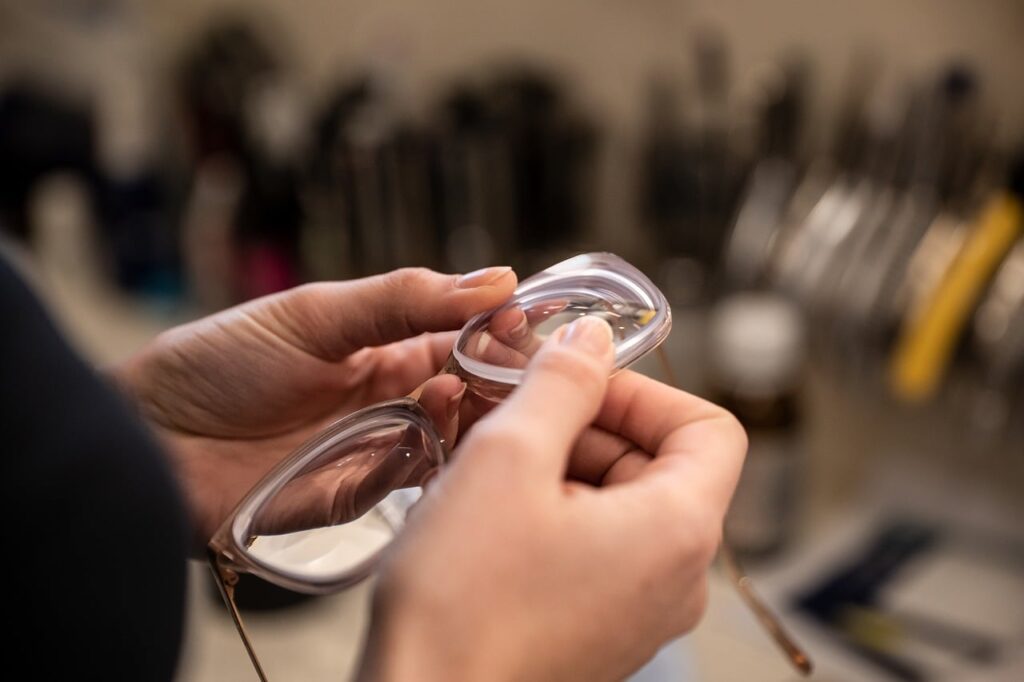
- Without insurance, a complete pair of eyeglasses usually costs $50–$600+, with a national ballpark of $150–$250.
- Online retailers (Zenni, EyeBuyDirect, Warby Parker) are dramatically cheaper than most brick-and-mortar optical shops for the same prescription.
- Lens add-ons — high-index, progressive, anti-reflective, photochromic — often cost more than the frame itself.
- You have a federal right to a copy of your prescription and can buy frames online with it.
- Warehouse clubs, discount chains, and single-vision online glasses can bring a full pair under $50–$80.
Without vision insurance, a complete pair of prescription eyeglasses in the United States typically costs between $50 and $600 or more, with most people paying somewhere around $150 to $250. The exact price swings widely based on two things: where you buy and which lens options you add. The same single-vision prescription can cost $30 online and $350 at a designer optical boutique across the mall.
This guide breaks down real 2026 self-pay prices for retail versus online eyewear, explains what actually drives the cost (hint: it is usually the lenses, not the frames), and walks through concrete ways to pay far less — starting with the fact that you can buy glasses online with your own prescription.
How much do eyeglasses cost without insurance?
For a complete pair of prescription glasses without insurance, expect a self-pay price in the ranges below. These reflect typical 2026 cash prices in the U.S.; your total will vary by retailer, frame brand, and the lens options you choose. The frame and lenses are usually priced separately, so always confirm the all-in price before you pay.
| Scenario | Typical self-pay price (2026) |
|---|---|
| Low end (online, basic single-vision lenses) | $30 – $80 |
| National ballpark (most complete pairs) | $150 – $250 |
| High end (designer frames + premium progressive lenses) | $400 – $600+ |
The single biggest surprise for most people is that the lenses often cost more than the frame once you add a stronger prescription or progressives. To sanity-check any quote against a fair market price, use the free FAIR Health Consumer tool or Healthcare Bluebook.
Eyeglasses cost by retailer
Where you buy changes the price more than almost anything else. Online-first retailers carry far lower overhead than mall optical shops and pass the savings on. These are typical self-pay prices for a complete pair without insurance in 2026:
| Retailer | Typical complete-pair price |
|---|---|
| Zenni Optical (online) | $20 – $80 |
| EyeBuyDirect (online) | $30 – $120 |
| Warby Parker (online + stores) | $95 – $195 (single-vision lenses included) |
| Costco Optical | $120 – $250 |
| Walmart Vision Center | $60 – $180 |
| America’s Best (2-pair packages) | $70 – $150 for two pairs |
| LensCrafters / Pearle Vision / Target Optical | $200 – $600+ |
Note that Warby Parker’s advertised price includes standard single-vision, anti-reflective lenses — a genuinely all-in figure — while traditional optical shops quote frames and lenses separately, so the sticker on the frame is only part of the total. If you also need an eye exam, factor that in separately.
What determines the price of eyeglasses
Five factors explain almost all of the variation you will see between quotes:
1. Where you buy — the biggest lever
This is the single largest driver of price. Online retailers (Zenni, EyeBuyDirect, Warby Parker) carry a fraction of the overhead of a mall storefront and are typically 50–80% cheaper for the same prescription. Brick-and-mortar shops offer in-person fitting and adjustments, which some people value, but you pay for it.
2. Lens type and prescription strength
Lenses are often the largest line item. Single-vision lenses are cheapest; bifocals and especially progressive (no-line multifocal) lenses cost significantly more. A strong prescription also requires thinner high-index material, which adds cost.
3. Lens add-ons and coatings
Optional coatings and treatments stack up fast. Typical online add-on pricing looks like this:
| Lens add-on | Typical added cost (online) |
|---|---|
| Anti-reflective (AR) coating | $5 – $50 |
| Blue-light filtering | $10 – $40 |
| High-index (thinner) lenses | $15 – $80 |
| Progressive (no-line multifocal) | $25 – $150+ |
| Photochromic (light-adaptive, e.g. Transitions) | $40 – $120 |
| Polarized / prescription sunglasses | $20 – $80 |
4. Frame brand
Designer and licensed-brand frames carry a large markup. A generic or house-brand frame of similar quality can cost a fraction of a name-brand one, and online retailers offer hundreds of low-cost frames.
5. Whether you buy online with your own prescription
By federal rule, your eye doctor must give you a copy of your prescription, which you can take anywhere — including to a cheap online retailer. Using it yourself, rather than buying on the spot, is often the single biggest saving available.
Eyeglasses cost: retail store vs. online
Because where you buy is the biggest lever, it is worth seeing side by side. The numbers below are representative of a complete single-vision pair:
| Online retailer | Brick-and-mortar optical shop | |
|---|---|---|
| Typical complete-pair price | $30 – $150 | $200 – $600+ |
| Frame selection | Hundreds of low-cost options | Curated, often brand-name |
| Fitting & adjustments | DIY or local optician for a small fee | Included in person |
| Turnaround | Usually 1–2 weeks by mail | Same day to ~1 week |
| Best for | Budget, backups, simple prescriptions | Complex progressives, hands-on fitting, immediate need |
For a straightforward single-vision prescription, buying online is almost always the better value — and it is easy to order a spare pair too. Consider a brick-and-mortar shop when you have a complicated progressive prescription, need precise measurements, or want in-person fitting and adjustments.
6 ways to pay less for eyeglasses without insurance
- Get a copy of your prescription and buy online. Under the FTC’s Eyeglass Rule, your provider must hand you your prescription after an exam, at no extra charge. Take it to Zenni, EyeBuyDirect, or Warby Parker and order there.
- Know your pupillary distance (PD). Online orders need your PD (the distance between your pupils). Ask for it at your exam, or measure it at home with a ruler — having it lets you order online without a return trip.
- Skip add-ons you do not need. Blue-light coatings and premium tints are often optional upsells. Anti-reflective coating is worth it for most people; decide on the rest deliberately rather than accepting the default package.
- Choose house-brand frames over designer ones. A generic frame of comparable quality can cost 70–90% less than a licensed brand. Online retailers make this easy.
- Use warehouse clubs and 2-pair chain deals. Costco Optical, Walmart, and America’s Best offer competitive complete-pair pricing, and multi-pair packages lower the per-pair cost if you want a backup or sunglasses.
- Pay with pre-tax dollars. Prescription eyeglasses are an eligible HSA and FSA expense, effectively cutting the price by your tax rate. Keep the itemized receipt.
Are cheap online glasses lower quality?
Usually not for a straightforward prescription. Low online prices reflect low overhead and house-brand frames — not inferior optics. Reputable online labs use the same standard lens materials and coatings as retail shops. To make sure your glasses are made correctly wherever you buy, do three things:
- Order from your current, unexpired prescription and enter it exactly, including your PD; an error here, not the price, is the usual cause of glasses that “don’t feel right.”
- Be realistic about strong or complex prescriptions — high powers, strong astigmatism, and progressive lenses are more forgiving when measured and fitted in person, per American Academy of Ophthalmology guidance.
- Have new glasses checked and adjusted — many local opticians will fine-tune the fit of online glasses for a small fee, and it is worth it for comfort.
If the prescription and measurements are right, a $40 online pair corrects your vision as well as a $300 one. The extra money at a boutique buys the frame brand, the in-person service, and the fitting — not sharper vision.
A quick word on getting the prescription right first
Cheap glasses only help if the prescription behind them is accurate and current. If it has been more than a year or two, or your vision has changed, get an updated exam before you buy — otherwise you will save money on the wrong prescription. And if you are experiencing sudden vision changes, headaches, or double vision, see an eye doctor promptly rather than assuming new glasses will fix it. This guide is about buying eyewear for a known, current prescription at the best price.
Frequently asked questions
How much do glasses cost without insurance on average?
Most complete pairs cost $150–$250 without insurance, though the full range runs from about $30 online to $600 or more for designer frames with premium progressive lenses. Lens type and add-ons drive most of the difference.
Can I buy glasses online with my own prescription?
Yes. Your eye doctor is required by federal rule to give you a copy of your prescription, and you can use it to order from online retailers like Zenni, EyeBuyDirect, or Warby Parker. You will also need your pupillary distance (PD).
Why are the lenses more expensive than the frame?
Lens cost rises with prescription strength and options. Progressive lenses, high-index (thinner) material, and coatings like anti-reflective or photochromic each add cost, and together they often exceed the price of a basic frame.
Is Zenni or Warby Parker cheaper?
Zenni is generally the cheaper of the two, with frames starting around $20. Warby Parker costs more but includes standard single-vision anti-reflective lenses in its advertised price and offers in-store service. Both are far cheaper than most mall optical shops.
Can I use an HSA or FSA to buy glasses?
Yes. Prescription eyeglasses are an eligible HSA and FSA expense, so you can pay with pre-tax dollars, effectively lowering the cost by your tax rate. Save the itemized receipt for your records.
How often should I get new glasses?
Only when your prescription changes or your current pair is damaged or worn — there is no fixed schedule. Prescriptions typically expire after one to two years, so recheck with an exam before ordering to be sure you are buying the right one.
Related reading: see how much an eye exam and contact lenses cost without insurance, weigh glasses against LASIK and cataract surgery, and browse the full Healthcare Costs guide for more ways to lower what you pay.
Prices in this article are typical 2026 self-pay ranges and vary by retailer, frame, and lens options. Always confirm the all-in price before you buy. This article is general information, not medical or financial advice.