
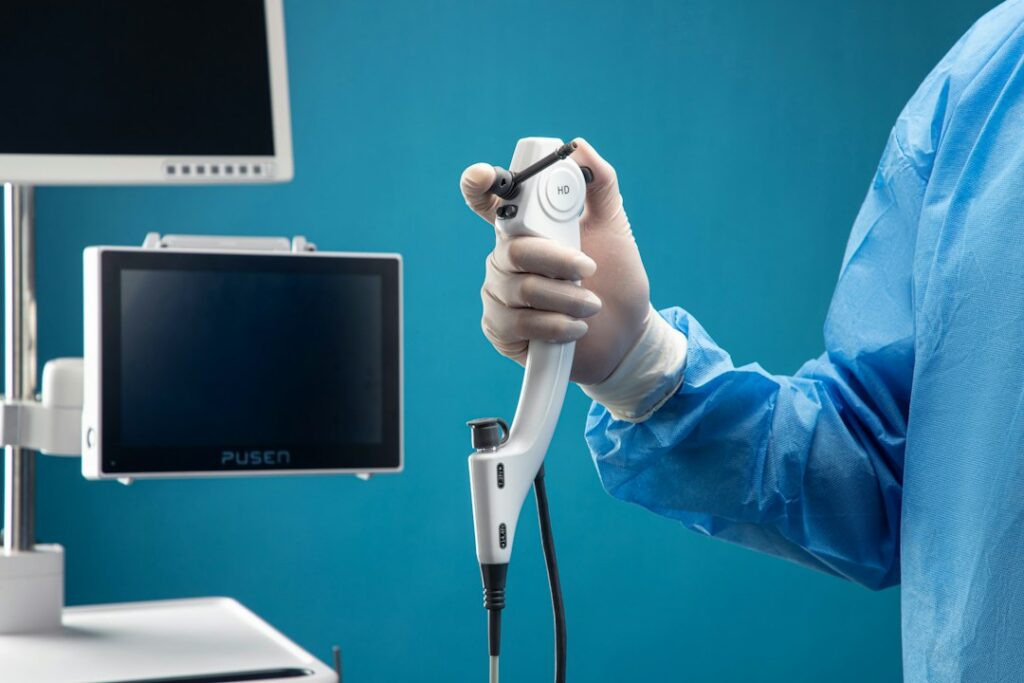
A colonoscopy cost can range from completely free — for a preventive screening covered by insurance — to an estimated $1,000 to $4,000 or more out of pocket, and the difference often comes down to a single word in your medical record. Whether your colonoscopy is coded as “screening” or “diagnostic” can dramatically change what you owe, even with good insurance. As of early 2026, uninsured or self-pay patients can expect an estimated $1,000 to $4,000 depending on the facility, geography, and whether polyps are found and removed. Every dollar figure in this guide is an estimate, not a quote — prices vary widely, so always confirm with a written estimate before you schedule. For a broader look at how US medical pricing works, see our healthcare costs guide.
If you are an average-risk adult age 45 or older with a non-grandfathered health plan, a screening colonoscopy should cost you $0 under the Affordable Care Act — and, under current federal guidance, that generally holds even if a polyp is removed. If you are uninsured or paying cash, expect an estimated $1,000-$4,000, with ambulatory surgery centers usually far cheaper than hospitals. A diagnostic colonoscopy (ordered for symptoms) is subject to your plan’s normal deductible and coinsurance. All prices here are estimates as of early 2026 — verify with your facility and insurer before scheduling. This is educational cost information, not medical or financial advice.
Average Colonoscopy Cost in 2026
Independent price-transparency data continues to place the “fair” cash price for a screening colonoscopy in the low-$2,000s, but actual prices vary enormously based on facility type and local market. As of early 2026, ambulatory surgery centers typically charge an estimated $1,000 to $2,500, while hospital outpatient departments bill roughly $2,000 to $4,500 or more for the same procedure performed by the same physician. This facility-driven price gap is one of the largest in all of healthcare, and it is the single most important number to understand before you book.
The total is built from several components, each of which may be billed by a different entity: the gastroenterologist’s professional fee (an estimated $300 to $1,000), the facility fee (an estimated $700 to $2,500, and the biggest variable), anesthesia (an estimated $200 to $1,000), and pathology fees if polyps are removed and biopsied (an estimated $150 to $500 per specimen). Because these come from separate billers, patients sometimes receive three or four separate bills after a single colonoscopy — a common source of confusion and “surprise” charges.
Data from CMS shows Medicare pays substantially less than commercial rates — roughly several hundred dollars for a screening colonoscopy — which gives a useful benchmark for what the procedure actually costs the healthcare system, far below what many hospitals charge commercially insured or uninsured patients. This gap between Medicare rates and commercial “chargemaster” prices illustrates the pricing opacity that defines much of US healthcare, and it is exactly why shopping and written estimates matter so much for this procedure.
Colonoscopy Cost With Insurance vs. Without Insurance
The screening-versus-diagnostic distinction is the most important cost factor for insured patients. Understanding this difference can save you thousands of dollars — and it is something many patients learn about only after an unexpected bill arrives.
Screening Colonoscopy (With Insurance)
Under the Affordable Care Act, non-grandfathered marketplace and employer-sponsored health plans must cover screening colonoscopies with no cost-sharing — no copay, no deductible, no coinsurance — for average-risk adults in the recommended age range. The US Preventive Services Task Force (USPSTF) recommends colorectal cancer screening for adults aged 45 to 75, having lowered the starting age from 50 to 45 in 2021, and insurers are required to follow this guidance. Medicare likewise covers screening colonoscopy at no cost every 10 years for average-risk beneficiaries (or every 24 months for those at high risk). In short, a screening colonoscopy should cost you $0 if you have qualifying insurance and meet the criteria.
Grandfathered health plans — those in place before the ACA was enacted in 2010 that have not been substantially changed — are exempt from this requirement. If you are on a grandfathered plan, check your specific benefits. Some states have passed additional legislation ensuring colonoscopy coverage even for grandfathered plans, but this varies by state, so verify your own coverage.
Diagnostic Colonoscopy (With Insurance)
Here is where it gets more expensive. If your colonoscopy is ordered because of symptoms — rectal bleeding, persistent abdominal pain, a change in bowel habits, unexplained weight loss, or iron-deficiency anemia — it is generally coded as diagnostic rather than screening. Diagnostic colonoscopies are subject to your plan’s normal cost-sharing: deductible, copay, and coinsurance. For a $2,500 procedure, you might owe an estimated $500 to $1,000 or more depending on your plan and how much of your deductible you have already met.
An important protection now applies when a screening colonoscopy finds and removes a polyp. Federal tri-agency guidance (from the Departments of Labor, Health and Human Services, and the Treasury) established that removing a polyp during an otherwise-preventive screening colonoscopy is an integral part of the screening, so most non-grandfathered commercial plans may not impose new cost-sharing when that happens. Medicare has been phasing out its own coinsurance for screening colonoscopies that become “diagnostic” because a polyp is removed: the coinsurance has been stepping down over time and is scheduled to reach 0% for these procedures by 2030. Implementation and compliance still vary, and patients occasionally receive incorrect bills that require an appeal — so keep documentation and push back if you are charged in error.
Follow-Up Colonoscopy After a Positive Stool Test
This is one of the most important recent updates, and it corrects a common source of surprise bills. Under federal guidance (ACA Implementation FAQs Part 51), a follow-up colonoscopy after a positive non-invasive screening test — such as a FIT, a high-sensitivity stool test, a stool-DNA test like Cologuard, or CT colonography — is now treated as part of the screening continuum. On most non-grandfathered plans, that follow-up colonoscopy is generally covered without cost-sharing, rather than being billed as a separate diagnostic procedure. If you complete a covered stool-based screen and it comes back abnormal, the colonoscopy to investigate it should not trigger a deductible or coinsurance on plans subject to this rule. Confirm this with your insurer in advance, and reference the guidance if you are told otherwise.
Without Insurance
Uninsured patients typically pay an estimated $1,500 to $4,000 at a hospital and an estimated $1,000 to $2,500 at an ambulatory surgery center, as of early 2026. Many gastroenterology practices and surgery centers offer cash-pay packages in the range of an estimated $1,000 to $2,000 that bundle the physician fee, facility, anesthesia, and basic pathology into one transparent price. These packages can be some of the best value in healthcare for self-pay patients — a single upfront figure with no surprise bills. Ask about them specifically, because they are not always advertised. Under the No Surprises Act, uninsured and self-pay patients are also entitled to a written Good Faith Estimate of expected charges before a scheduled procedure; request one and use it to compare facilities.
What Factors Affect Colonoscopy Pricing?
Facility type is the biggest cost driver. Hospital outpatient departments often charge two to three times more than ambulatory surgery centers for the same colonoscopy performed by the same gastroenterologist using the same equipment. Hospitals can bill facility fees that surgery centers cannot, and hospital overhead — administrative staff, emergency-department capacity, compliance requirements — is built into every procedure’s price.
Whether polyps are found and removed adds cost. Polypectomy can add an estimated $200 to $800 depending on the number and size of polyps, plus pathology lab fees of an estimated $150 to $500 per specimen. Anesthesia type matters too: moderate (“conscious”) sedation administered by the gastroenterologist generally costs less than monitored anesthesia care (MAC) provided by a separate anesthesiologist. MAC has become increasingly common — used in a large share of colonoscopies nationally — and typically adds an estimated $300 to $800 for the anesthesiologist’s professional fee.
Geographic location follows familiar patterns: colonoscopies in the Northeast and on the West Coast tend to run meaningfully higher than in much of the South and Midwest. However, the facility-type differential usually dwarfs the geographic one — choosing an ambulatory surgery center in a high-cost city can still be cheaper than choosing a hospital in a low-cost one.
How to Avoid Surprise Colonoscopy Bills
The most common source of surprise colonoscopy bills has historically been reclassification from screening to diagnostic when polyps are found. Before your procedure, ask your doctor’s office and your insurance company specifically: “If polyps are found and removed during my screening colonoscopy, will cost-sharing apply?” Get the answer in writing if you can. If your insurer says cost-sharing would apply, cite the federal guidance treating polyp removal during a screening as an integral part of that screening.
Verify that the facility and all providers (gastroenterologist, anesthesiologist, and pathologist) are in-network. The anesthesiologist is frequently out of network even when the facility and gastroenterologist are in network — historically the leading cause of surprise bills. Under the No Surprises Act, you are protected from balance billing by out-of-network providers at in-network facilities in most situations, but confirming network status proactively still eliminates administrative headaches.
Request a pre-procedure estimate from your insurance company using the CPT codes your doctor’s office provides, and, if you are self-pay, request a Good Faith Estimate. Neither guarantees the final cost (especially if polyps are found), but each gives you a reasonable baseline for financial planning and a document to reference if the bill later looks wrong.
How to Save Money on a Colonoscopy
If you are eligible for a preventive screening colonoscopy (age 45 or older, or meeting other USPSTF criteria), use that benefit — it is designed to be free under the ACA. If you are paying out of pocket, or have a high-deductible plan you have not yet met, schedule at an ambulatory surgery center rather than a hospital to reduce costs.
For uninsured patients, shop aggressively. Call at least three facilities and ask for their all-inclusive self-pay price and a Good Faith Estimate. Surgery centers are almost always cheaper than hospitals, and clinical quality, equipment, and outcomes are equivalent for standard screening colonoscopies. Some communities offer free or reduced-cost screening programs through local health departments, hospital community-benefit programs, or national organizations; the American Cancer Society can help you locate them.
If a colonoscopy is out of reach and you are due for routine screening (not a diagnostic workup for symptoms), lower-cost first-line options exist. A FIT (fecal immunochemical test) runs an estimated $20 to $50 and is done annually. Stool-DNA tests like Cologuard run an estimated $500 to $700 (often covered at no cost as preventive care) and are done every one to three years. Newer FDA-approved blood-based screening tests for average-risk adults have also entered the market; ask your clinician whether one is appropriate and how it would be covered. Remember the key caveat: if any of these tests is abnormal, you will need a follow-up colonoscopy — which, as noted above, is now generally covered without cost-sharing on most plans. HSA and FSA funds can be used for eligible out-of-pocket colonoscopy costs, providing a tax advantage on whatever you do pay.
Frequently Asked Questions
Is a colonoscopy free with insurance?
Screening colonoscopies are covered with no cost-sharing under the ACA for average-risk adults in the recommended age range (currently 45 to 75) on non-grandfathered plans. Federal guidance further clarifies that polyp removal during a screening colonoscopy — and a follow-up colonoscopy after a positive non-invasive screening test — should generally not trigger new cost-sharing on those plans. However, if the colonoscopy is diagnostic (ordered for symptoms), your plan’s normal cost-sharing applies. Always verify with your specific insurer.
How much does a colonoscopy cost at an ambulatory surgery center?
As of early 2026, ambulatory surgery centers typically charge an estimated $1,000 to $2,500, compared with an estimated $2,000 to $4,500 at hospital outpatient departments. The procedure, recovery experience, and clinical quality are generally equivalent — the cost difference is driven almost entirely by hospital facility-fee structures and overhead. These are estimates; get a written quote for your specific facility.
Why is a colonoscopy so expensive?
The price reflects the gastroenterologist’s fee, anesthesia services, facility charges (which subsidize overhead), equipment sterilization, and potential pathology services. Hospital colonoscopies carry substantial facility fees that inflate the total far beyond the procedure’s actual resource use. The exam itself typically takes only 20 to 45 minutes, but pre-procedure preparation, anesthesia recovery, and discharge observation add to the facility time billed.
At what age should I get my first colonoscopy?
The US Preventive Services Task Force recommends colorectal cancer screening starting at age 45 for average-risk adults, continuing routinely through age 75 (screening for adults 76 to 85 is individualized). If you choose colonoscopy and results are normal, it is typically repeated every 10 years. People with a family history of colorectal cancer or certain genetic conditions (such as Lynch syndrome or familial adenomatous polyposis) should begin earlier — often at age 40, or 10 years before the age at which their youngest affected relative was diagnosed, whichever comes first. Discuss your personal risk with your clinician.
Does Medicare charge for a screening colonoscopy?
Medicare covers screening colonoscopy at no cost for eligible beneficiaries. Historically, if a polyp was removed during a Medicare screening colonoscopy, the visit was reclassified and beneficiaries owed coinsurance. That coinsurance is being phased out under federal law and is scheduled to reach 0% by 2030, stepping down in the intervening years. Confirm the current figure and your specific situation with Medicare or your plan.
What to Expect on the Day of Your Colonoscopy
Understanding the full process helps you plan both financially and logistically. Bowel preparation starts the day before — your doctor will prescribe or recommend a prep regimen (options include over-the-counter regimens or prescription preps). Prescription preps generally cost an estimated $15 to $100, while over-the-counter prep regimens cost an estimated $10 to $30. You will follow a clear-liquid diet the day before and complete the prep in split doses (typically half the evening before and half the morning of the procedure). Follow your clinician’s specific instructions rather than any regimen you read online.
On the day of the colonoscopy, plan to be at the facility for roughly two to three hours total, though the procedure itself takes only 20 to 45 minutes. You will need a responsible adult to drive you home because of the sedation — this is a mandatory requirement at essentially all facilities, and your procedure will be canceled if you arrive without a driver. Some patients arrange rideshare services, though many facilities require a designated person to remain on-site during the procedure.
Afterward, you will rest in recovery for about 30 to 60 minutes as the sedation wears off. Results from the visual examination are available immediately — your doctor will discuss findings before you leave. If polyps were removed, pathology results typically take 5 to 10 business days. Most patients resume normal eating and activities the next day, though bloating and mild cramping from the air used during the exam are common for several hours.
The Bottom Line
A screening colonoscopy should cost you nothing with qualifying insurance thanks to ACA preventive-care rules, and recent federal guidance has closed two of the biggest loopholes — polyp removal during screening and follow-up after a positive stool test are now generally covered without new cost-sharing on most plans. If you are paying out of pocket or need a diagnostic colonoscopy, expect an estimated $1,000 to $4,000 depending on facility type and location, and treat every figure as an estimate to be verified with a written quote. Ambulatory surgery centers are significantly cheaper than hospitals for the same procedure with equivalent clinical quality. Above all, do not let cost deter you from getting screened: colorectal cancer remains one of the leading causes of cancer death in the US, and screening is one of the most effective tools for early detection and prevention. If you are comparing other diagnostic procedure costs, our guides to MRI pricing and CT scan costs provide additional context on navigating medical imaging expenses.
Sources
- U.S. Preventive Services Task Force — Colorectal Cancer Screening recommendation (screening ages 45-75)
- HealthCare.gov — ACA preventive services coverage
- U.S. Departments of Labor, HHS & Treasury — FAQs About ACA Implementation Part 51 (follow-up colonoscopy after a positive non-invasive screening test)
- CMS / Medicare — colorectal cancer screening coverage and phase-out of coinsurance for screening colonoscopies with polyp removal
- CMS — Good Faith Estimate and the No Surprises Act
- American Cancer Society — colorectal cancer screening tests and options
All prices in this article are illustrative estimates as of early 2026 and vary widely by facility, geographic region, insurer, and individual clinical circumstances. They are not quotes and are not medical or financial advice. Always obtain a written estimate (or a Good Faith Estimate if you are self-pay) from your facility and confirm coverage with your insurer before scheduling. Screening decisions and timing should be made with a qualified clinician.