
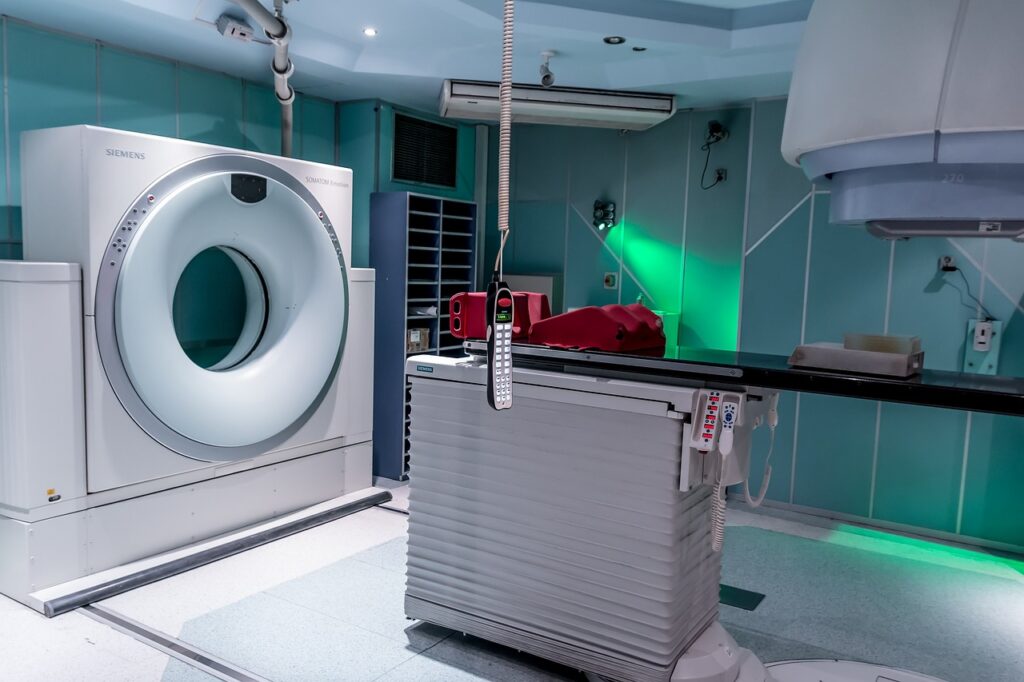
An MRI cost is one of the most unpredictable expenses in US healthcare. The same brain MRI can cost a few hundred dollars at a freestanding imaging center and several thousand at a hospital outpatient department across the street — and the images are read by equally qualified radiologists in both cases. That pricing gap isn’t about quality or technology; it’s about facility fees, negotiated insurance rates, and a billing system that rarely rewards patients who shop around. As of early 2026, uninsured patients most often pay somewhere between $400 and $3,500 for a common MRI, while insured patients typically pay $100 to $1,000 or more out of pocket depending on their plan structure and deductible status. These figures are estimates that vary by region, facility, and protocol, so treat them as a starting point and verify the actual price before you schedule. Our healthcare costs guide explains why medical imaging pricing is so wildly variable across the US.
The short version (as of early 2026): An MRI without insurance commonly runs roughly $400 to $3,500 depending on the body part, whether contrast is used, and — most of all — the facility. Freestanding imaging centers are usually dramatically cheaper than hospitals for the same scan, with equivalent diagnostic quality. With insurance, your cost hinges on your deductible, coinsurance/copay, in-network status, and prior authorization. All prices here are estimates that vary; confirm the cash price and your insurer’s estimate in writing before you book. An MRI is medically ordered imaging — your physician decides whether you need one.
Average MRI Costs by Body Part
MRI pricing depends heavily on what’s being scanned, the complexity of the imaging protocol, and whether contrast dye (a gadolinium-based agent) is used. Drawing on published benchmarks such as Healthcare Bluebook and CMS data, here are typical self-pay ranges as of early 2026. These are estimates only, and your local prices may fall outside them:
- Brain MRI: roughly $500 to $3,000 (with contrast: about $700 to $3,500)
- Knee MRI: roughly $400 to $2,500
- Shoulder MRI: roughly $400 to $2,500
- Spine/back MRI: roughly $500 to $3,000 per region (lumbar, thoracic, or cervical — each region is billed separately)
- Abdominal/pelvic MRI: roughly $600 to $3,500
- Cardiac MRI: roughly $1,000 to $5,000 (one of the most expensive due to specialized protocols)
- Breast MRI: roughly $700 to $3,000
Adding contrast increases the cost by roughly $100 to $500 because of the contrast agent itself, additional imaging sequences captured after injection, and potentially more radiologist interpretation time. Contrast-enhanced MRIs are used to evaluate blood-vessel abnormalities, tumors, infections, and certain inflammatory conditions — your doctor determines whether contrast is clinically needed based on the diagnostic question being asked. It is not something patients should request or decline on cost grounds alone.
Multi-region MRIs (for example, cervical and lumbar spine in the same session) cost more in total but are usually cheaper than scheduling two separate appointments, since you pay one facility fee and one radiologist interpretation for multiple sequences performed consecutively. Ask whether the studies your physician ordered can be combined into a single visit.
MRI Cost With Insurance vs. Without Insurance
Insurance dramatically reduces your MRI cost in most cases, but the amount you actually pay varies based on whether the MRI is performed at an in-network facility, your plan’s deductible status, and whether the scan requires prior authorization from your insurer.
Without Insurance
Uninsured patients face the widest price variation. Hospital-based MRI departments often charge $1,500 to $3,500 or more, while freestanding imaging centers frequently offer the same scan for roughly $400 to $1,200 as of early 2026. Many independent imaging centers advertise cash-pay pricing prominently on their websites, and some offer online scheduling with transparent, bundled pricing that includes the radiologist interpretation. Always ask specifically for the self-pay or cash price, which is often lower than the standard billed charge — and sometimes lower than an insurance-negotiated rate applied against an unmet deductible.
If you are uninsured or choosing to self-pay, you are entitled under the federal No Surprises Act to a Good Faith Estimate of expected charges before a scheduled service. Request it in writing. If your final bill exceeds the Good Faith Estimate by $400 or more, you may be able to use the law’s patient-provider dispute resolution process. Separately, the federal Hospital Price Transparency Rule requires hospitals to post their standard charges — including cash prices and negotiated rates — in machine-readable files and consumer-friendly displays, which can reveal large price differences before you book.
The difference in diagnostic quality between a hospital MRI and a reputable freestanding center is negligible in most clinical situations, as both typically use comparable equipment (1.5T or 3T scanners) and employ board-certified radiologists for image interpretation. Hospitals often justify higher pricing through overhead allocation — their MRI department helps subsidize the emergency room, charity care, and administrative infrastructure. That’s a legitimate institutional reality, but it doesn’t translate to a better MRI for the patient paying the bill.
With Insurance
With commercial insurance, your out-of-pocket MRI cost depends on where you are in your deductible cycle. If you haven’t met your annual deductible, you may owe the full allowed amount (often $500 to $2,000 at in-network facilities). After meeting your deductible, many plans charge 20% to 30% coinsurance, bringing your cost to roughly $100 to $600 per scan. Some plans instead have flat copays for imaging (often $100 to $300) regardless of facility, which provides more cost predictability. These are general patterns, not guarantees — check your specific plan documents or call the number on your insurance card.
Many plans require prior authorization for non-emergency MRIs. Getting the scan without required authorization can result in a claim denial and full financial responsibility. Prior authorization commonly takes a few business days and involves your doctor submitting clinical documentation justifying the medical necessity of the scan; urgent or semi-urgent authorizations can often be expedited. Ask your ordering physician’s office to handle the authorization and to confirm it is on file before your appointment.
Medicare typically pays a few hundred dollars for most outpatient MRIs, with patients responsible for the 20% Part B coinsurance after the annual deductible, which is $283 in 2026 per Medicare.gov. Medicare rates are publicly available and provide a useful benchmark: if a facility is charging uninsured patients several times what Medicare pays, its pricing is likely inflated relative to the actual cost of providing the service. Medicare Advantage plans may apply different cost-sharing and prior-authorization rules, so verify with your plan.
Why MRI Prices Vary So Dramatically
The single biggest factor is facility type. Hospital outpatient departments charge facility fees that can double or triple the price compared to independent imaging centers. Analyses of CMS transparency data have repeatedly shown that the same knee MRI can range from a few hundred to a few thousand dollars within a single metro area — with the cheapest and most expensive options sometimes located just miles apart.
Machine type also matters, though less than most patients assume. Open MRI scanners (helpful for claustrophobic patients or larger body types) tend to cost slightly less but produce lower-resolution images with weaker magnetic field strength (typically 0.3T to 0.7T versus 1.5T to 3T for closed MRIs). A 3-Tesla (3T) MRI provides among the highest commercially available image quality and is increasingly standard at academic medical centers and large imaging groups. It commands premium pricing but is clinically indicated for certain neurological, musculoskeletal, and prostate imaging protocols where the extra detail matters diagnostically.
Geographic variation adds another layer: MRIs in high-cost metros such as New York City, Boston, and the San Francisco Bay Area typically cost substantially more than in smaller markets like Memphis, Omaha, or Tucson. However, the facility-type differential within a single city is often larger than the geographic differential between cities — making facility choice the most impactful cost decision regardless of where you live.
MRI vs. CT Scan: Cost Comparison
MRI and CT scans serve different diagnostic purposes, but when either could answer the clinical question, cost may influence the choice. A CT scan typically costs less than an MRI of the same body region — often in the range of a few hundred to a couple thousand dollars as of early 2026. CT scans are also significantly faster (roughly 5 to 15 minutes versus 30 to 60 minutes for MRI), more widely available, and better for certain clinical applications: visualizing bones, detecting acute bleeding, evaluating lung disease, and guiding emergency diagnosis.
MRI excels at soft-tissue visualization — ligaments, tendons, cartilage, brain tissue, spinal-cord structures, and organ characterization. It uses no ionizing radiation, which is one reason it is often preferred for children, for certain situations in pregnancy, and for scenarios requiring repeated imaging over time. Your doctor determines which modality is clinically appropriate, but if both could reasonably answer the question, choosing a freestanding imaging center for either scan produces the biggest cost savings. If you’re planning imaging before a procedure like knee replacement surgery, factor the MRI cost into your overall surgical budget.
How to Save Money on an MRI
Choosing a freestanding imaging center over a hospital is the single most impactful cost-saving move. The clinical quality is equivalent for standard diagnostic scans, but the price difference can be $1,000 to $2,000 or more. Use price-transparency tools such as Healthcare Bluebook, MDsave, or your insurer’s online cost estimator to compare options in your area. Many large imaging networks publish cash-pay pricing on their websites, making comparison straightforward. Prices change, so confirm the current figure directly with the facility.
Get prior authorization before scheduling if your insurance requires it — skipping this step can result in claim denial and full financial responsibility. This is one of the most common and most preventable sources of unexpected medical bills. Ask your ordering physician’s office to handle the authorization process, as they have the clinical documentation needed.
Ask your doctor whether a lower-cost imaging study (such as ultrasound for many abdominal and pelvic conditions, or X-ray for straightforward bone evaluation) might answer the clinical question before jumping to MRI. If MRI is necessary, confirm whether contrast is truly needed — a non-contrast MRI costs less and avoids the small risk of gadolinium-related side effects. These are clinical decisions to make with your physician, not to force purely on price.
For uninsured patients, many imaging centers offer cash-pay rates well below hospital pricing for common MRI studies. FSA and HSA funds can generally be used for medically necessary MRI costs, providing a tax benefit tied to your marginal rate. If you have a high-deductible health plan and haven’t met your deductible, compare the cash-pay rate at a freestanding center to the insurance-negotiated rate — sometimes the cash rate is actually lower, especially early in the year when your deductible is fresh. And remember your right to a Good Faith Estimate before any scheduled self-pay scan.
Frequently Asked Questions
How much does an MRI cost without insurance?
As of early 2026, an MRI without insurance commonly costs roughly $400 to $3,500 depending on the body part, whether contrast is used, and the facility type. Freestanding imaging centers consistently offer the lowest prices (often around $400 to $1,200), while hospital outpatient departments frequently charge $1,500 to $3,500. Always ask for the cash-pay rate, which is often lower than the standard billed charge and sometimes lower than the insurance-negotiated rate. These are estimates — confirm the price with the facility, and request a Good Faith Estimate if you’re self-paying.
Does insurance cover MRI?
Yes, most insurance plans cover medically necessary MRIs ordered by a physician. Your out-of-pocket cost depends on your deductible, copay, and coinsurance structure. Many plans require prior authorization for non-emergency MRIs — obtaining the scan without authorization risks claim denial. Screening MRIs (such as breast MRI for high-risk patients) may be covered under certain plans. Verify coverage and authorization requirements with your insurer before scheduling.
Is an open MRI cheaper than a closed MRI?
Open MRIs are sometimes slightly cheaper, but the difference is modest and inconsistent. Open MRIs are primarily chosen for patient comfort (claustrophobia, larger body size) rather than cost savings. Image quality may be lower with open MRI due to weaker magnetic field strength (0.3T to 0.7T versus 1.5T to 3T), which can affect diagnostic accuracy for certain conditions. Discuss with your doctor whether an open MRI is clinically appropriate for your specific diagnostic need.
How long does an MRI take?
A standard MRI takes about 30 to 60 minutes depending on the body part and imaging protocol. Brain and knee MRIs are typically on the shorter end (roughly 20 to 30 minutes), while abdominal and cardiac MRIs can take 45 to 90 minutes. Including check-in, preparation, the scan itself, and post-scan wrap-up, plan for about 1 to 2 hours at the facility. Longer scans don’t necessarily cost more, but they can increase costs if IV sedation is required for claustrophobia.
What is a Good Faith Estimate for an MRI?
Under the federal No Surprises Act, uninsured and self-pay patients are entitled to a written Good Faith Estimate of expected charges before a scheduled MRI. It should list the facility (technical) and radiologist (professional) components. If your final bill exceeds the estimate by $400 or more, you may qualify for the law’s patient-provider dispute resolution process. Always request the estimate in writing and keep a copy.
The Bottom Line
MRI costs vary widely based on facility type, location, and insurance status — but the most actionable takeaway is simple: for outpatient scans, choose a freestanding imaging center over a hospital, and you can often cut your cost by 50% to 70% with no difference in diagnostic quality. Verify prior authorization requirements before scheduling, confirm all providers are in-network, request a Good Faith Estimate if you’re self-paying, and use price-transparency tools to compare options in your area. You’re paying the hospital facility-fee premium for the hospital’s infrastructure, not for better images or better radiologists. All prices in this guide are estimates as of early 2026 and change over time, so verify current figures before you book.
This article is for general educational purposes only and is not medical or financial advice. Prices are estimates as of early 2026, vary widely by region and facility, and change over time — verify current pricing directly with providers and your insurer. Whether an MRI (and whether contrast) is appropriate is a clinical decision for your physician.