
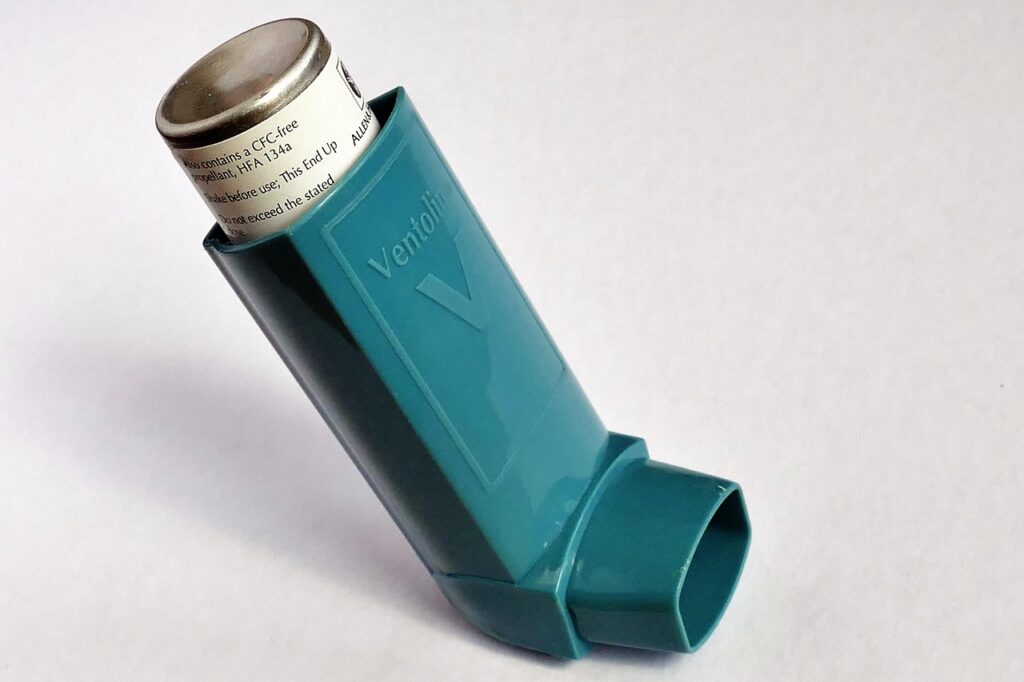
- Asthma clinical trials test new inhalers, biologics, and management approaches under careful oversight.
- Trials move through phases (1–4); each has a different goal, from safety to real-world use.
- ClinicalTrials.gov is the main free registry to search for asthma studies by location and eligibility.
- Joining a trial means informed consent — you can ask questions and leave at any time.
- Research participation is not guaranteed treatment, and you should never stop your current asthma plan without your doctor.
- Eligibility depends on factors like age, asthma severity, and current medications.
Clinical trials are research studies that test whether a new treatment, device, or care approach is safe and works as intended. For asthma, trials may study new inhaled medications, biologic injections for severe asthma, digital inhaler-tracking tools, or ways to reduce flare-ups. This guide explains how asthma trials are structured, how to search for them, and the questions worth asking before you consider joining.
Why asthma clinical trials matter
Many of today’s standard asthma treatments — including inhaled corticosteroids and newer biologics — reached patients only after years of clinical research. Trials help answer practical questions: Does a new medication reduce attacks? Does it work for a specific type of asthma, such as eosinophilic or allergic asthma? Are there side effects that show up only in larger groups? According to the National Heart, Lung, and Blood Institute (NHLBI), asthma is a diverse condition, and research increasingly focuses on matching treatments to the person rather than a one-size-fits-all approach.
The phases of a clinical trial
Most drug and biologic trials move through defined phases. Understanding them can help you gauge what a study involves.
| Phase | Main goal | Typical size |
|---|---|---|
| Phase 1 | Check basic safety and dosing | Small (often dozens) |
| Phase 2 | Look at whether it works and monitor side effects | Larger (up to a few hundred) |
| Phase 3 | Confirm effectiveness vs. standard care or placebo | Large (hundreds to thousands) |
| Phase 4 | Track long-term safety after approval | Varies; real-world use |
Some asthma studies are observational rather than treatment trials — they follow people over time to understand triggers, symptoms, or outcomes without testing a new drug. The trial listing usually states which type it is.
How to find asthma clinical trials
The main free, public registry is ClinicalTrials.gov, run by the U.S. National Institutes of Health. You can search by condition (“asthma”), location, age, and recruitment status. Each listing includes a summary, eligibility criteria (called inclusion and exclusion criteria), study locations, and a contact for questions. Your allergist or pulmonologist may also know of studies at academic medical centers, and patient advocacy organizations sometimes maintain trial-matching tools. If you are exploring several research options, our clinical trials for long COVID and cystic fibrosis studies guides walk through the same search process for other lung-related conditions.
What informed consent means
Before joining any trial, you go through informed consent: the study team explains the purpose, procedures, potential risks and benefits, and your rights in language you can understand. Signing a consent form does not lock you in — participation is voluntary, and you can withdraw at any time, for any reason, without losing your regular medical care. Good questions to ask include: What is being tested? Might I receive a placebo? How often are visits? Who covers costs? What happens if my asthma worsens during the study?
Research is not the same as guaranteed treatment
It is important to hold realistic expectations. A trial tests something that is not yet proven, so there is no guarantee the study treatment will help you — and in placebo-controlled studies, some participants receive an inactive comparison. That said, trials are closely monitored, and participants often receive careful attention from specialists. Crucially, do not stop or change your current asthma medications to qualify for or participate in a trial unless your own doctor tells you to. Uncontrolled asthma can be dangerous, and your prescriber should be part of any decision.
Safety, eligibility, and who should be cautious
Eligibility varies widely and may depend on your age, asthma severity, lung function tests, other health conditions, current medications, pregnancy status, and smoking history. These criteria exist to protect participants and to keep results meaningful. If you have severe or unstable asthma, are pregnant, or take multiple medications, discuss any trial with your clinician first — some studies specifically exclude these situations for safety. Ethics boards (called Institutional Review Boards) oversee trials to help protect participants, but you remain your own best advocate: bring a list of your medications and questions to every visit.
Frequently asked questions
Do I have to pay to join an asthma clinical trial?
Study-related procedures and the investigational treatment are typically provided at no cost, and some trials reimburse travel. Costs vary, so ask the study team directly before enrolling.
Will I get a placebo instead of real treatment?
Possibly, in some randomized trials. Many asthma studies compare a new treatment against standard care rather than a true placebo, and the consent form explains the design.
Can I stay on my inhaler during a trial?
Sometimes yes, sometimes the protocol requires changes. Never adjust your medications on your own — only under the study team’s and your doctor’s guidance.
How do I know a trial is legitimate?
Legitimate trials are usually registered on ClinicalTrials.gov and overseen by an ethics board. Be cautious of any program that charges you to receive an “experimental cure” or pressures you to stop proven treatment.
Can children join asthma trials?
Some trials enroll children, with parental consent and the child’s assent. Pediatric eligibility is listed in each study’s criteria.
What if I qualify but change my mind?
You can decline or withdraw at any point. Your routine medical care will not be affected. For more background on managing your health, see our wellness guide hub.
This article is for general education and is not medical advice. Supplements and therapies affect people differently and can interact with medications or conditions. Talk to your doctor, pharmacist, or a licensed clinician before making changes to your health routine.
Sources
- ClinicalTrials.gov (U.S. National Institutes of Health) — trial registry and search
- National Heart, Lung, and Blood Institute (NHLBI) — asthma research and treatment
- MedlinePlus — clinical trials and asthma basics
- Mayo Clinic — asthma diagnosis and management
- U.S. Food and Drug Administration (FDA) — clinical trial phases and participant protections