
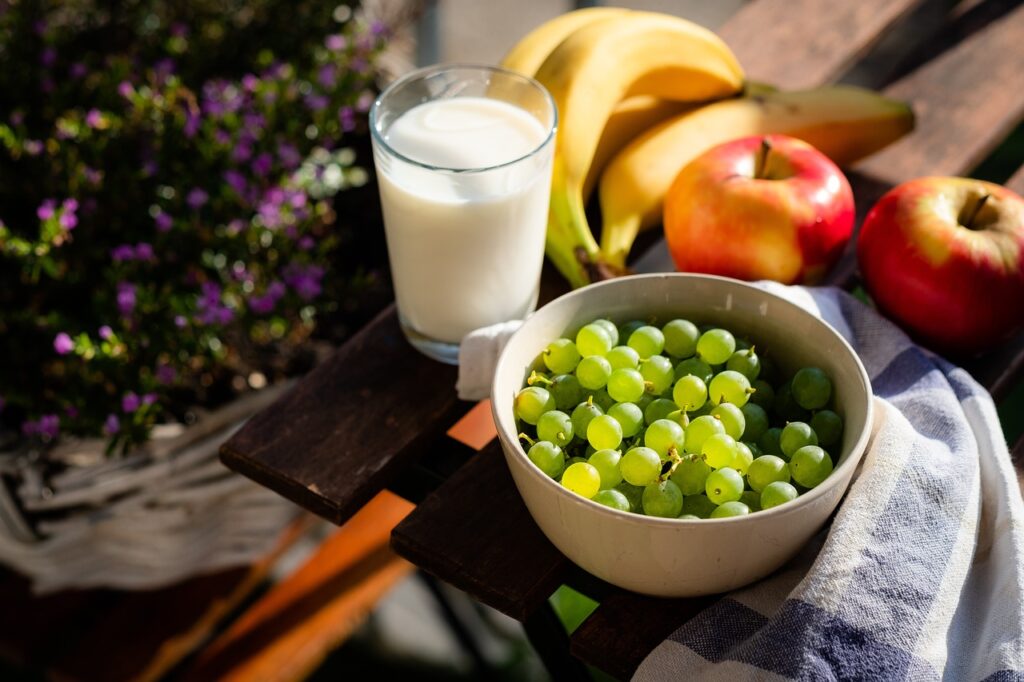
Grapes are one of the most popular fruits in America, with the average person eating several pounds per year. They are sweet, convenient, and easy to snack on, which is exactly what raises the question many health-conscious people ask: are grapes healthy, or is their sugar content a reason to limit them? Gram for gram, grapes contain more sugar than strawberries, watermelon, and most citrus fruits. But sugar is only one piece of the nutritional picture, and grapes bring several compounds to the table that most other fruits do not. This wellness guide breaks down the full nutrition profile, explains the evidence-based benefits, offers practical guidance on serving sizes, and covers an important safety point for families with young children.
Grape Nutrition Per Serving
One cup of red or green grapes (about 150 grams, or roughly 32 grapes) provides approximately 104 calories, 27 grams of carbohydrates, 23 grams of sugar, 1.4 grams of fiber, 1 gram of protein, 0.2 grams of fat, 288 mg of potassium (about 6 percent of the Daily Value), 22 mcg of vitamin K (about 18 percent DV), 4.8 mg of vitamin C (about 5 percent DV), and small amounts of thiamine, riboflavin, and vitamin B6, according to the USDA FoodData Central database. Exact numbers vary by variety, ripeness, and cup size, so treat them as close estimates rather than fixed values.
Grapes are also about 80 to 82 percent water by weight, which is one reason a full cup is so low in calories relative to its volume. That high water content, combined with potassium, means grapes contribute modestly to daily hydration and fluid balance while satisfying a craving for something sweet.
The sugar in grapes is a mix of glucose and fructose, the natural sugars found in all fruit. Grapes have a glycemic index (GI) of about 53, placing them in the low-to-moderate range. Their glycemic load per serving is approximately 11, which the Harvard T.H. Chan School of Public Health classifies as moderate. In plain terms, grapes raise blood sugar less dramatically than many people assume.
Key Health Benefits of Grapes
Resveratrol and Polyphenols
Red and purple grapes are among the richest dietary sources of resveratrol, a polyphenol that has attracted extensive research interest. Resveratrol is concentrated in grape skins and has demonstrated anti-inflammatory, antioxidant, and cardioprotective effects in laboratory and animal studies. A review published in the Annals of the New York Academy of Sciences described how resveratrol activates sirtuins, proteins involved in cellular repair, though the clinical relevance in humans at ordinary dietary doses remains an active area of study rather than settled fact.
Beyond resveratrol, grapes contain quercetin, catechins, anthocyanins (in red and purple varieties), and proanthocyanidins. As MedlinePlus explains, antioxidants are substances that may protect cells against the effects of free radicals; a diet rich in a variety of antioxidant-containing fruits and vegetables is associated with better health, even though antioxidant supplements have not shown the same benefit. Red and purple grapes contain more polyphenols than green grapes, making them the more nutrient-dense choice if antioxidant content is a priority.
Heart Health
Regular grape consumption has been linked in research to improved cardiovascular markers. Grape polyphenols may help improve endothelial function, reduce LDL oxidation, and support healthy blood pressure. A clinical trial published in the Journal of Nutrition found that consuming grape powder equivalent to about 2 cups of fresh grapes daily for several weeks improved certain vascular measures in men with metabolic syndrome. These are promising but preliminary findings, not a guarantee of results for any individual. For more strategies on cardiovascular health, see our guide on how to lower cholesterol naturally.
Brain Function
Emerging research suggests grape polyphenols may support cognitive function. A randomized controlled trial published in the British Journal of Nutrition found that Concord grape juice supplementation improved some measures of memory in older adults with early memory decline. The proposed mechanism involves improved cerebral blood flow and reduced neuroinflammation. As with the heart data, this is an area of ongoing study, and results from small trials should be interpreted cautiously.
The Sugar Concern: Perspective Matters
The 23 grams of sugar in a cup of grapes understandably gives some people pause. Context is important. The sugar in whole grapes comes packaged with fiber, water, vitamins, minerals, and polyphenols that slow absorption and add nutritional value. That is fundamentally different from 23 grams of added sugar in a candy bar or soda, which carry none of those companions.
Large epidemiological studies have generally found that whole-fruit consumption, including grapes, is associated with a reduced risk of type 2 diabetes rather than an increased one, while sugar-sweetened beverages move risk in the opposite direction. The fiber, water, and polyphenols in whole grapes are a big part of why. That said, people who are actively managing diabetes or following a strict low-carbohydrate plan should be mindful of portion size and their own glucose response. One cup of grapes is a reasonable serving; mindlessly eating two or three cups in front of the television can add 45 to 70 grams of sugar quickly.
Whole Grapes vs Grape Juice
An important distinction: whole grapes are not the same as grape juice. Juicing removes most of the fiber and concentrates the sugar, so an 8-ounce glass of grape juice can contain roughly 35 to 40 grams of sugar with far less of the fullness that whole grapes provide. For blood-sugar and weight purposes, the whole fruit is the better choice, and it is easy to overconsume calories and sugar from juice. If you drink juice, keep portions small and count it toward your daily sugar rather than treating it as “free” hydration.
How Grapes Compare to Other Fruits
Per cup, grapes contain about 23 grams of sugar compared to roughly 13 grams in strawberries, 9 grams in raspberries, 7 grams in blackberries, 12 grams in blueberries, 17 grams in pineapple, and 9 grams in watermelon. Grapes do sit near the higher end of the sugar spectrum for common fruits, alongside cherries (about 18 grams) and mangoes (about 23 grams).
However, grapes also offer a combination of resveratrol, quercetin, and other polyphenols that most lower-sugar fruits do not provide in comparable amounts. Rather than declaring one fruit “better” than another, the most sensible approach is to eat a variety of fruits in appropriate portions. If you are comparing beverages, our article on whether almond milk is healthy covers nutrition in a different category, and our look at dark chocolate weighs another polyphenol-rich food against its sugar and fat.
Proper Serving Sizes
Are grapes healthy in any amount? Like all foods, dose matters. The USDA’s Dietary Guidelines suggest most adults aim for roughly 1.5 to 2 cups of fruit per day. One cup of grapes (about 32 grapes) counts as one serving and fits comfortably within that range. For people watching sugar intake, half a cup (about 16 grapes) paired with a protein source like cheese, plain yogurt, or a small handful of nuts makes a balanced snack that slows sugar absorption and improves satiety.
Frozen grapes are a popular snack that naturally slows eating speed, making it harder to overeat, and they double as a cooling treat in hot weather. Grapes are also relatively low in calories compared with other sweet snacks: about 104 calories per cup versus roughly 220 calories in a typical granola bar or 140 calories in a small cookie. As a satisfying sweet snack, grapes are hard to beat on a calorie-to-nutrient basis.
Safety: Grapes Are a Choking Hazard for Young Children
This is the single most important safety point about grapes. Their round, firm, smooth shape and slippery skin make whole grapes one of the most common and dangerous choking hazards for babies and young children — a whole grape can completely block a small airway. According to the American Academy of Pediatrics (HealthyChildren.org), most children who die from choking are under age 5, and whole grapes are specifically listed among the foods to avoid giving young children.
The AAP’s guidance is to cut food for infants and young children into pieces no larger than about one-half inch and to make sure children chew well. For grapes, that means quartering them — cutting each grape lengthwise and then again so no round, airway-sized piece remains — before serving to children under 4 (and using the same caution for slightly older children who are still learning to chew). Always keep young children seated and supervised while eating, and avoid letting them eat in the car, while walking, or while playing. If your child is younger than this or has any swallowing concerns, follow your pediatrician’s specific advice.
Other Potential Downsides
Grapes are consistently among the fruits with higher pesticide residue on conventionally grown samples, and they frequently appear on the Environmental Working Group’s “Dirty Dozen” list. The EWG recommends buying organic grapes when feasible or washing them thoroughly under running water. The FDA and USDA monitoring programs generally report that residues on U.S. produce fall within established safety limits, so the benefits of eating fruit outweigh this concern for most people — but rinsing well is a simple, sensible step, and choosing organic further reduces exposure.
People taking the blood thinner warfarin should note that the vitamin K in grapes, while modest, contributes to total daily vitamin K intake, which should stay consistent day to day for stable dosing — a change in vitamin K intake, not grapes specifically, is what matters. Anyone on warfarin should coordinate diet questions with the clinician or pharmacist managing their therapy rather than making changes on their own.
Frequently Asked Questions
Are red grapes healthier than green grapes?
Red and purple grapes contain more polyphenols, including resveratrol and anthocyanins, than green grapes. If maximizing antioxidant intake is your goal, red or purple varieties are the better choice. Green grapes still provide vitamin K, potassium, water, and some polyphenols. Both are healthy fruit options.
Can people with diabetes eat grapes?
Many people with diabetes can include grapes in moderation as part of a balanced diet. A serving of about half a cup to one cup is reasonable, especially when paired with protein or healthy fat to slow sugar absorption, and the whole fruit is preferable to juice. Individual responses vary, so monitor your own blood sugar and discuss portion sizes with your healthcare provider or a registered dietitian rather than relying on general rules.
How should I wash grapes?
Rinse grapes under cool running water for several seconds just before eating, rubbing gently with your hands; there is no need for soap or special produce washes. Washing removes surface dirt and reduces pesticide residue. Store unwashed grapes in the refrigerator and wash only the portion you plan to eat to help them last longer.
At what age can children eat whole grapes?
Because whole grapes are a serious choking hazard, cut them into small pieces (quartered lengthwise, no larger than about half an inch) for children under 4, and supervise eating. There is no single “safe age” for whole grapes; readiness depends on a child’s chewing ability, so follow your pediatrician’s guidance and continue cutting round foods until you are confident your child can chew them safely.
Should I eat grape seeds?
Grape seeds are safe to eat and contain concentrated proanthocyanidins with antioxidant properties, which is why grape seed extract is sold as a supplement. The seeds are bitter, and most people prefer seedless varieties. If you do not mind the taste, eating grapes with seeds adds a little extra polyphenol content.
The Bottom Line
Are grapes healthy? For most people, yes. Despite their higher sugar content compared with berries, grapes deliver a potent package of polyphenols, particularly resveratrol, that few other fruits match, plus water, potassium, vitamin K, and vitamin C. Their cardiovascular and cognitive benefits are supported by early research, though not proven for every individual. The keys are portion control and preparation: stick to about one cup per serving, favor red or purple varieties for more polyphenols, wash them well or buy organic, pair them with protein or fat for steadier blood sugar, choose whole grapes over juice, and always cut them small for young children. Grapes earn their place in a healthy diet — just measure rather than mindlessly graze.
TL;DR: Grapes are a nutritious whole fruit — about 104 calories and 23 g of natural sugar per cup, plus water, potassium, vitamin K, vitamin C, and standout polyphenols like resveratrol. They are low-to-moderate on the glycemic index, so a measured serving (about one cup, ideally with protein or fat) fits most diets, including many people managing diabetes; choose whole fruit over juice. Wash well or buy organic. Most important: whole grapes are a leading choking hazard for young children — cut them lengthwise into small pieces (no larger than about half an inch) for kids under 4 and supervise eating.
Medical disclaimer: This article is educational information and not medical or nutrition advice. Individual needs vary. Talk with your physician, pediatrician, or a registered dietitian about your own diet, blood-sugar management, medications (such as warfarin), and your child’s readiness for particular foods. Nutrition figures are estimates that vary by source and variety — verify current values as needed.
Sources
- U.S. Department of Agriculture — FoodData Central (grape nutrition values)
- MedlinePlus (U.S. National Library of Medicine) — Antioxidants and Dietary Fiber
- American Academy of Pediatrics (HealthyChildren.org) — Choking Prevention (whole grapes as a choking hazard; cut into small pieces for young children)
- Harvard T.H. Chan School of Public Health — Carbohydrates and Blood Sugar (glycemic index and load)
- Environmental Working Group — EWG’s Shopper’s Guide to Pesticides in Produce; U.S. Food & Drug Administration — Pesticide Residue Monitoring Program