
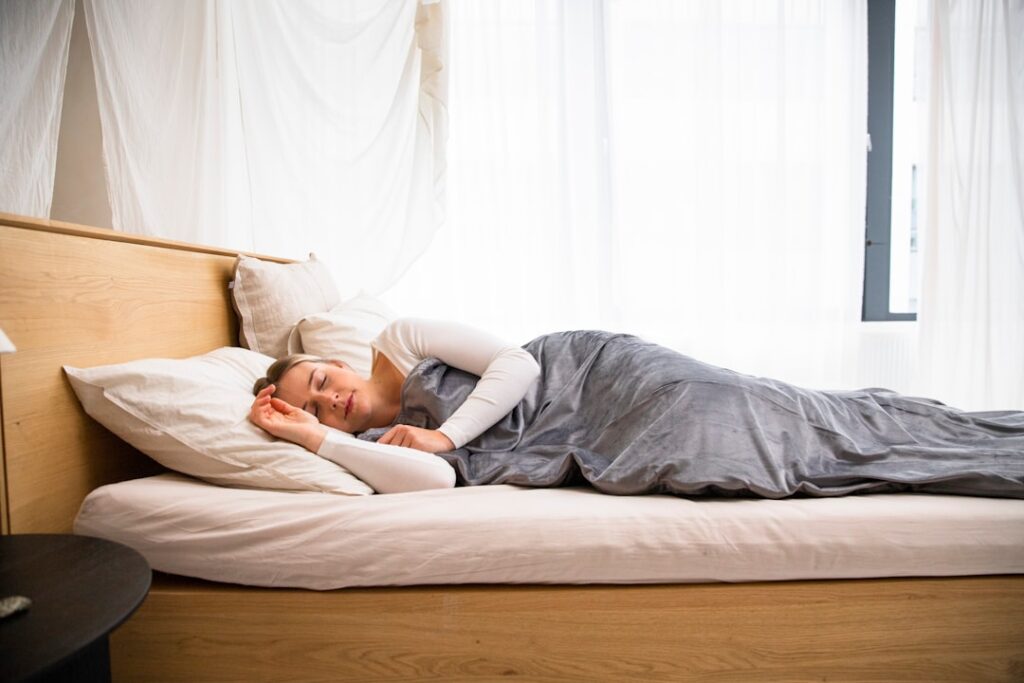
- Sleep apnea is common in women but frequently underdiagnosed, partly because symptoms can differ from the classic loud-snoring picture.
- Women more often report fatigue, insomnia, mood changes, morning headaches, and unrefreshing sleep rather than dramatic breathing pauses.
- Risk rises after menopause, and pregnancy can also increase the chance of sleep-disordered breathing.
- Only a sleep study ordered by a clinician can diagnose sleep apnea; symptoms alone cannot confirm or rule it out.
- Untreated sleep apnea is linked to serious health risks, so red-flag symptoms should prompt a doctor's visit, not watchful waiting.
Sleep apnea is often pictured as a problem of loud, middle-aged men who snore and gasp through the night. That image causes real harm, because it leads many women — and their doctors — to overlook a condition women also get. Sleep apnea in women can present differently, is frequently underdiagnosed, and carries the same serious health risks when left untreated. This guide explains how symptoms can differ, who is at higher risk, and when to get evaluated. It is educational and not a substitute for a medical diagnosis.
What sleep apnea is
Obstructive sleep apnea (OSA) is a condition in which the airway repeatedly becomes partly or fully blocked during sleep, causing pauses in breathing and brief drops in blood oxygen. Each interruption pulls you out of restful sleep, often without your awareness. Over time, the Sleep Foundation and Mayo Clinic note, untreated OSA is associated with high blood pressure, heart disease, stroke, type 2 diabetes, and daytime accidents from drowsiness. It is treatable — but only once it is recognized.
Why sleep apnea is often missed in women
Historically, research and screening tools were built largely around men, and the “classic” symptoms clinicians ask about — witnessed breathing pauses and thunderous snoring — are the ones women are less likely to report or have noticed. Women may snore more softly, and a bed partner may not observe obvious pauses. As a result, women’s symptoms are sometimes attributed to stress, depression, anemia, or hormonal changes instead of a breathing disorder, delaying diagnosis.
How symptoms can differ
Women with sleep apnea more often describe less “textbook” complaints. The table below contrasts the commonly cited classic presentation with symptoms women frequently report; keep in mind these are general patterns, not rules, and any of them can appear in anyone.
| Classic presentation | Often reported by women |
|---|---|
| Loud snoring | Softer snoring or none noticed |
| Witnessed breathing pauses | Fatigue and low energy |
| Gasping or choking awakenings | Insomnia or trouble staying asleep |
| Obvious daytime sleepiness | Morning headaches, mood changes, anxiety |
| — | Unrefreshing sleep, poor concentration |
Because these overlap with many other conditions, the key is not to self-diagnose but to raise the possibility of sleep apnea with your doctor if the pattern fits — especially when everyday fatigue does not improve with rest. Disrupted breathing repeatedly fragments the restorative stages of sleep, including deep sleep, which is part of why the tiredness can be so persistent.
Risk factors that matter for women
Many general risk factors — excess weight, family history, a naturally narrow airway or enlarged tonsils, nasal congestion, smoking, and alcohol or sedative use — apply to everyone. A few points are especially relevant for women, according to the Sleep Foundation and NIH:
- Menopause. The risk of sleep apnea rises after menopause, and the gap between men and women narrows with age.
- Pregnancy. Sleep-disordered breathing can emerge or worsen during pregnancy and has been linked to complications, so new loud snoring or breathing pauses in pregnancy deserve prompt attention.
- Certain conditions. Some hormonal conditions, such as polycystic ovary syndrome, are associated with a higher likelihood of sleep apnea.
Having risk factors does not mean you have apnea, and lacking the classic ones does not rule it out — which is exactly why testing, not assumption, is how it is confirmed.
Red-flag symptoms — do not ignore these
See a doctor promptly if you or a partner notice witnessed pauses in breathing, gasping or choking during sleep, loud snoring combined with daytime sleepiness, morning headaches, or waking unrefreshed most days. If you are extremely sleepy while driving, or someone sees you stop breathing, seek care sooner rather than later. These signs do not confirm apnea, but they are precisely what warrants an evaluation instead of waiting it out.
How sleep apnea is diagnosed
Symptoms alone cannot confirm or rule out sleep apnea — only a sleep study can. A clinician may order in-lab polysomnography or, in appropriate cases, a home sleep study that measures breathing, oxygen, and other signals overnight. If you suspect apnea, ask your primary-care doctor for a referral to a sleep specialist or an AASM-accredited sleep center. Advocate for yourself: if your fatigue has been attributed to something else but sleep-apnea red flags are present, it is reasonable to ask specifically about testing.
What treatment can look like
The encouraging part is that sleep apnea responds well to treatment. Depending on severity and cause, options studied and used in practice include CPAP (continuous positive airway pressure), oral appliances fitted by a dentist, positional therapy, weight management, and treating nasal problems. Your clinician can match the approach to your diagnosis. For broader healthy-sleep context, see our wellness guide.
Frequently asked questions
Can I have sleep apnea if I do not snore loudly? Yes. Women in particular may snore softly or not obviously, yet still have apnea. Symptoms like unrefreshing sleep and fatigue can be the main clue.
Is sleep apnea only a problem after menopause? No. It can occur at any age, including during pregnancy, though the risk does rise after menopause.
Could my fatigue really be sleep apnea and not just stress? It is possible. Persistent tiredness that does not improve with rest is worth discussing with a doctor, who can decide whether testing is warranted.
Do I need an in-lab study, or is home testing enough? That depends on your situation. Home sleep apnea tests work for many adults when ordered by a clinician, but some cases still call for an in-lab study.
Is sleep apnea dangerous if untreated? It can be. Untreated apnea is linked to serious cardiovascular and metabolic risks, which is why evaluation matters.
Can it improve with weight loss? Weight loss can reduce severity for some people but does not always eliminate apnea; follow your care team’s guidance.
This article is for general education and is not medical advice. Supplements and therapies affect people differently and can interact with medications or conditions. Talk to your doctor, pharmacist, or a licensed clinician before making changes to your health routine.
Sources
- Sleep Foundation — sleep apnea in women, symptoms and risk factors
- Mayo Clinic — obstructive sleep apnea
- NIH / National Heart, Lung, and Blood Institute (NHLBI) — sleep apnea
- American Academy of Sleep Medicine (AASM) — diagnosis and sleep studies
- MedlinePlus — sleep apnea