
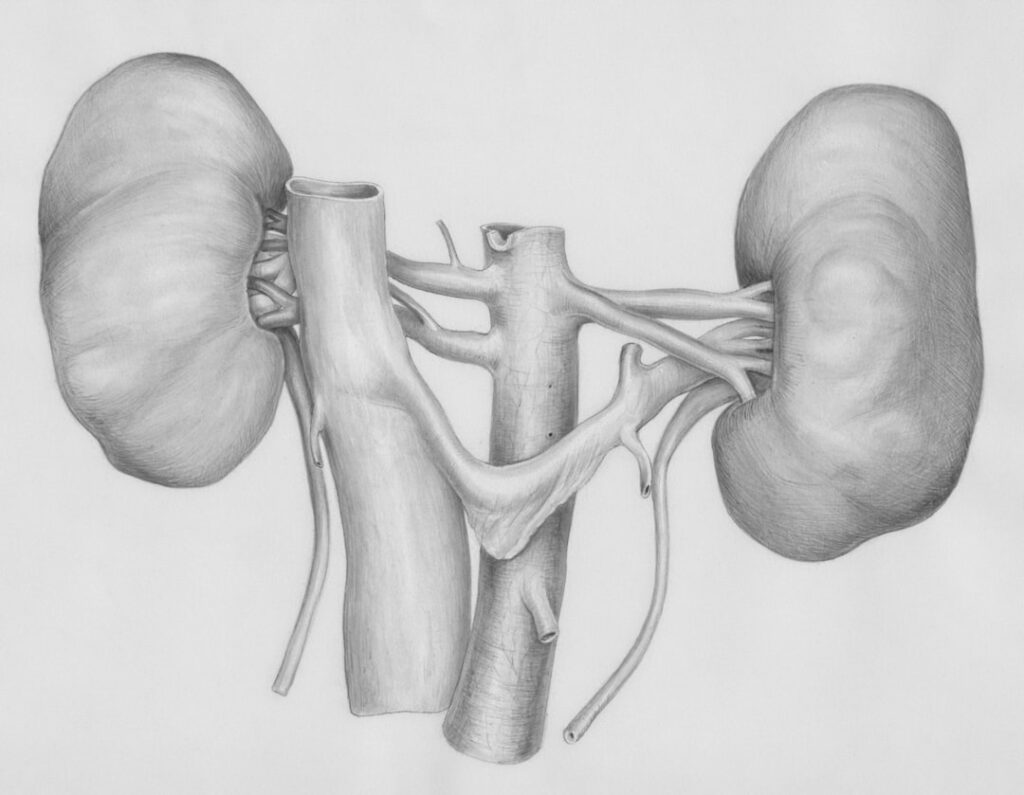
People who have passed a kidney stone often describe it as the worst pain of their lives — and they are not exaggerating. If you are wondering what does a kidney stone feel like, the short answer is this: sudden, severe pain in the back or side that comes in waves, often accompanied by nausea and bloody urine. According to the National Institute of Diabetes and Digestive and Kidney Diseases (NIDDK), roughly 11% of men and 6% of women in the United States develop a kidney stone at least once, and the lifetime prevalence has been rising over recent decades. Understanding the stages of pain helps you recognize what is happening and make the right decision about seeking care. For more on health conditions, see our medical conditions guide.
The short version: A kidney stone typically causes sudden, one-sided flank pain that comes in waves (renal colic), radiates toward the lower abdomen and groin, and is paired with nausea and blood-tinged urine. Most small stones pass on their own with fluids and pain relief. But a fever or chills alongside stone symptoms, an inability to urinate, uncontrollable vomiting, a single or transplanted kidney, or pregnancy turn a stone into an emergency — seek care right away. This article explains the sensations and stages so you can act quickly, but it is not medical advice; talk to a clinician about your own symptoms.
What Is a Kidney Stone?
A kidney stone (nephrolithiasis) is a hard deposit made of minerals and salts that forms inside the kidney. Stones develop when urine becomes concentrated, allowing minerals like calcium, oxalate, uric acid, and phosphate to crystallize and stick together. They range in size from a grain of sand to a golf ball, though most are small enough to pass through the urinary tract on their own.
The four most common types are calcium oxalate stones (the most prevalent, accounting for roughly 80% of cases), uric acid stones, struvite stones (often associated with urinary tract infections), and cystine stones (caused by a genetic disorder). The Mayo Clinic notes that the type of stone affects treatment and prevention strategies, which is why doctors often ask you to strain your urine and capture a passed stone for analysis.
The Stages of Kidney Stone Pain
Kidney stone pain follows a characteristic pattern as the stone moves through the urinary tract. Here is what does a kidney stone feel like at each stage. Keep in mind that not everyone moves through the stages in a neat sequence — a stone can stall at a narrow point for hours or days, and the pain often mirrors where the stone is stuck.
Stage 1: Stone Moves From the Kidney Into the Ureter
When a stone exits the kidney and enters the ureter — the narrow tube connecting the kidney to the bladder — the pain begins. This is typically the most intense phase. The ureter is only 3 to 4 millimeters wide, so even a small stone can partially or fully block urine flow, causing the kidney to swell (hydronephrosis). The pain is a sudden, severe cramping in the back or side, usually just below the rib cage on the affected side. It comes in waves called renal colic, with peaks of agonizing pain lasting 20 to 60 minutes followed by brief periods of relative relief.
Stage 2: Stone in the Mid-Ureter
As the stone travels down the ureter, the pain may shift. It often radiates from the flank to the lower abdomen and groin on the same side. Many people describe it as a pain that seems to move as the stone moves — starting in the back and wrapping around to the front. Nausea and vomiting are common at this stage because the kidneys and gastrointestinal system share nerve pathways, so the brain interprets intense kidney signals as abdominal distress.
Stage 3: Stone Near the Bladder
When the stone reaches the lower portion of the ureter near the bladder, symptoms shift again. Pain may concentrate in the lower abdomen or pelvic area. Urinary symptoms become more prominent: frequent, urgent urination, burning or pain during urination, and feeling like you need to urinate even when the bladder is empty. Men may feel pain at the tip of the penis. These symptoms can mimic a urinary tract infection — and in fact, a kidney stone can trigger a secondary UTI.
Stage 4: Passing the Stone
The final passage from the bladder through the urethra is often anticlimactic compared to the earlier stages. The urethra is wider than the ureter, so most stones that make it to the bladder pass out of the body with relatively little discomfort. You may feel brief stinging during urination. Many people never see or feel the stone leave — but if you are straining urine through a filter (as doctors often recommend), you may catch a small, rough-edged pebble. The relief after passing a stone is immediate and dramatic.
What the Pain Feels Like
Kidney stone pain is distinctive in several ways that set it apart from other types of abdominal and back pain.
It comes in waves. Unlike constant pain from an injury, renal colic fluctuates in intensity. The waves result from the ureter contracting (peristalsis) as it tries to push the stone through, so the pain surges and eases in a rhythm rather than holding steady.
There is no comfortable position. People with kidney stones are famously unable to find relief by lying down, sitting, or changing position. They often pace, writhe, or rock back and forth — a behavior so characteristic that emergency clinicians sometimes suspect kidney stones by how the patient is moving in the waiting room. This restlessness contrasts with conditions like appendicitis or peritonitis, where people tend to lie very still.
The intensity is extreme. Kidney stone pain is frequently compared to labor contractions and is rated near the top of pain scales in clinical studies. Patients consistently rate acute renal colic among the most painful experiences they have ever had, and it is one of the most common reasons for urgent urologic visits documented by the Urology Care Foundation.
It is one-sided. Kidney stone pain almost always affects one side of the body — whichever side the stone is on. Pain on both sides at the same time is uncommon and should prompt a medical evaluation to rule out other causes.
Other Symptoms That Accompany Kidney Stones
Pain is not the only symptom. Most kidney stone episodes include several additional features.
Blood in urine (hematuria). The rough edges of the stone scratch the ureter lining, causing pink, red, or brown-tinged urine. Blood is present in a large share of kidney stone cases, though it is sometimes microscopic and only detected on a urine test.
Nausea and vomiting. The severity of the pain triggers a strong nausea response in many patients. Vomiting can be persistent enough to cause dehydration, which in turn concentrates the urine and can make it harder to pass the stone.
Urinary urgency and frequency. As the stone approaches the bladder, the irritation triggers a near-constant urge to urinate, often with very small volumes.
Cloudy or foul-smelling urine. This may indicate a concurrent urinary tract infection, which is a complication that requires antibiotic treatment alongside stone management. For more on UTI symptoms, see our article on what a UTI feels like.
Fever and chills. A fever with kidney stone symptoms is a red flag for infection behind an obstructing stone and requires urgent, in-person medical evaluation — see the emergency box below.
Red flags — get emergency care now. Call 911 or go to the nearest emergency room if kidney stone symptoms come with any of the following:
- Fever or chills plus stone symptoms. This can mean an infected, obstructing stone — a true urologic emergency. Bacteria trapped behind the blockage can enter the bloodstream and cause sepsis within hours. This kidney usually needs urgent drainage plus antibiotics; it cannot wait.
- Inability to pass any urine, or passing far less than normal, which can signal blockage of both kidneys or of a single functioning kidney.
- Uncontrollable vomiting that prevents you from keeping down fluids, raising the risk of dehydration.
- Pain you cannot control with over-the-counter medication, or pain that keeps escalating.
- A single kidney, a transplanted kidney, or known kidney disease — obstruction is far more dangerous when you have limited kidney reserve.
- Pregnancy — stone symptoms in pregnancy need urgent evaluation, because both imaging and treatment choices differ and infection risk is higher.
- Confusion, a racing heart, lightheadedness, or feeling very unwell — possible signs of sepsis.
When in doubt, err on the side of being seen. An obstructed and infected kidney can become life-threatening quickly if it is not treated with antibiotics and drainage.
When to Manage at Home vs. Seek Care
Many small stones can be managed at home under a clinician’s guidance. If you have already been evaluated, your imaging shows a small stone (generally under 5 mm), you have no fever, you are keeping fluids down, and your pain responds to prescribed or over-the-counter medication, your doctor may recommend waiting for the stone to pass while you stay well hydrated and strain your urine.
You should still contact a clinician promptly — even without the emergency signs above — if this is your first suspected stone and you have not been evaluated, if pain lasts more than a day or two, if you develop urinary symptoms suggesting infection, or if you simply are not sure what is causing the pain. Kidney stone pain can closely resemble other serious conditions, so a proper diagnosis matters. For more guidance on ER-worthy situations, see our article on when to go to the ER for dehydration.
Risk Factors for Kidney Stones
Understanding why kidney stones form can help you assess your own risk and take preventive steps. The most significant risk factors include inadequate fluid intake (concentrated urine allows minerals to crystallize), a diet high in sodium (increases calcium excretion in urine), a diet high in animal protein (raises uric acid levels and reduces urinary citrate), obesity, family history of kidney stones, and certain medical conditions including hyperparathyroidism, type 2 diabetes, gout, and inflammatory bowel disease. Chronic dehydration from hot climates or physically demanding jobs also raises risk.
Certain medications can increase stone risk as well. Loop diuretics, topiramate, calcium-based antacids taken in excess, and some protease inhibitors used for HIV treatment are known stone-promoting medications — though you should never stop a prescribed medication without talking to your prescriber. If you have had a kidney stone, your doctor may order a 24-hour urine collection to analyze your urine chemistry and identify specific metabolic risk factors that can be targeted with dietary changes or medication. The American Urological Association recommends metabolic evaluation for all recurrent stone formers and for high-risk first-time stone formers.
How Kidney Stones Are Treated
Treatment depends on the stone’s size, location, and whether it is causing complications such as infection or a blocked kidney. Any specific medications below are examples of what clinicians may consider — they are not a self-treatment plan, and dosing must come from your own doctor.
Small stones (under 5 mm): Most pass on their own within one to three weeks with adequate hydration and pain management. Your doctor may prescribe a medication such as tamsulosin to relax the ureter and help the stone pass more comfortably (an approach called medical expulsive therapy). Pain is typically managed with NSAIDs or other prescribed medications.
Medium stones (5 to 10 mm): These may pass on their own but often require intervention. Options include extracorporeal shock wave lithotripsy (ESWL), which uses focused sound waves to break the stone into smaller pieces, or ureteroscopy, in which a small scope is passed through the urethra and bladder into the ureter to remove or laser-fragment the stone.
Large stones (over 10 mm): These rarely pass spontaneously and typically require a procedure. According to the American Urological Association, ureteroscopy and percutaneous nephrolithotomy (PCNL) are standard procedures for larger or complex stones. When a stone is blocking an infected kidney, the priority is urgent drainage (with a stent or nephrostomy tube) and antibiotics before definitive stone removal.
Frequently Asked Questions
How long does kidney stone pain last?
Individual episodes of renal colic (the wave-like pain) typically last 20 to 60 minutes. The overall process of passing a small stone can take days to a few weeks. Pain tends to be worst when the stone first enters the ureter and as it passes through the narrowest points. Once the stone reaches the bladder, the severe pain usually resolves. If severe pain persists beyond a couple of weeks or your stone has not passed, your doctor may recommend a procedure.
Can kidney stones cause back pain?
Yes. Kidney stone pain often presents as back pain in the flank area — the side of the back between the lower ribs and the hip. This is one of the most common initial locations. The key distinguishing feature is that kidney stone back pain is colicky (comes in waves) and is generally unrelated to movement or position, unlike a muscle strain that hurts when you bend or twist.
How do I know if it is a kidney stone or something else?
The combination of sudden severe flank pain, blood in the urine, nausea, and pain that comes in waves is highly suggestive of a kidney stone. Conditions that can mimic kidney stone pain include appendicitis (typically right lower quadrant), ovarian cysts or a twisted ovary (lower abdomen), an abdominal aortic aneurysm (especially in older adults), ectopic pregnancy in someone who could be pregnant, and kidney infection (flank pain with fever). A non-contrast CT scan is the most accurate way to confirm a kidney stone, so a first episode should be evaluated. For comparison, see our article on what appendicitis feels like.
Do kidney stones always cause pain?
No. Small stones that remain in the kidney without blocking urine flow may cause no symptoms at all and are sometimes discovered incidentally on imaging. Pain occurs when a stone moves into the ureter and causes obstruction. Some people pass tiny stones with minimal discomfort.
Can I prevent kidney stones?
Yes, prevention is possible for many people. Drinking enough water to produce at least 2 to 2.5 liters of urine per day is the single most effective measure. Dietary changes — reducing sodium intake, moderating animal protein, and eating adequate dietary calcium (paradoxically, calcium from food can reduce stone risk) — also help. If you have had a stone analyzed, your doctor can recommend targeted prevention based on the stone type, sometimes including medications like potassium citrate or thiazides for the right patients.
Does a larger stone always hurt more?
Not necessarily. Pain is driven mainly by obstruction, not size. A small stone lodged in a narrow section of the ureter can cause excruciating pain, while a larger stone sitting quietly in the kidney may cause none. This is why symptoms alone cannot tell you how serious a stone is — imaging is what defines the situation.
The Bottom Line
Knowing what does a kidney stone feel like — the sudden flank pain, the waves of colic, the migration of pain to the groin, and the urinary symptoms — helps you recognize the condition quickly and seek appropriate care. Most small stones pass on their own with hydration and pain management, but stones accompanied by fever or chills, an inability to urinate, uncontrollable vomiting, or uncontrollable pain need emergency evaluation, as do stone symptoms in anyone with a single or transplanted kidney or who is or could be pregnant. If you have passed a stone, talk to your doctor about prevention strategies — because once you have had one, the risk of a second stone within several years is substantial.
Medical disclaimer: This article is for general education only and does not replace professional medical advice, diagnosis, or treatment. Kidney stone pain can overlap with other serious conditions, and the right care depends on your individual situation. Always seek the advice of a qualified clinician with any questions about your health, and call 911 or go to the nearest emergency room for the red-flag symptoms described above.