
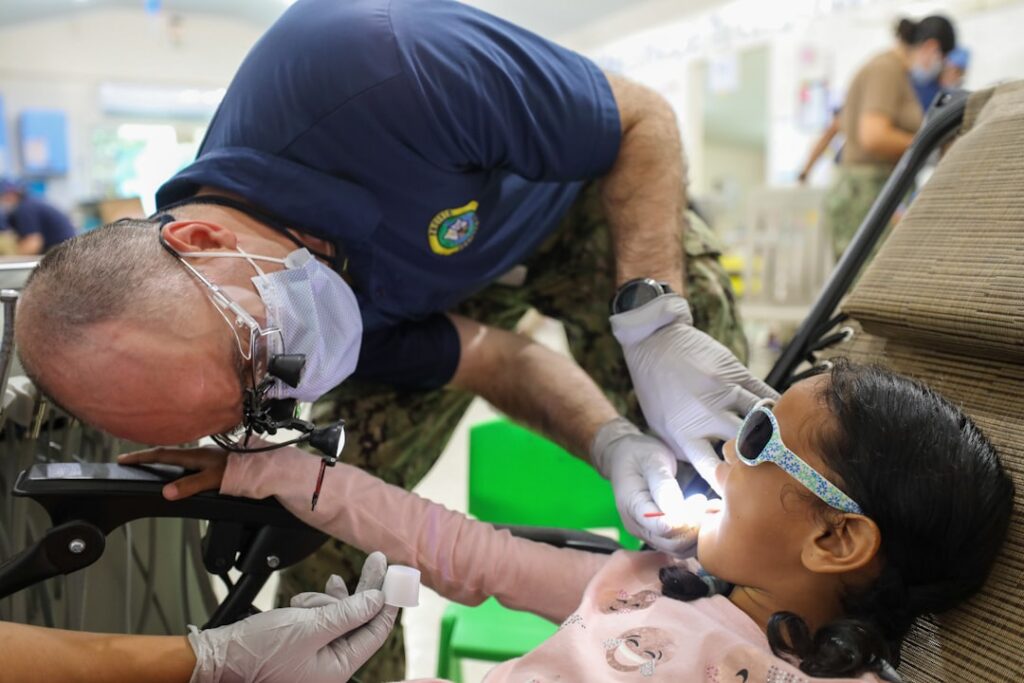
- Dental care that treats or prevents disease is HSA-qualified — cleanings, exams, X-rays, fillings, crowns, root canals, extractions, dentures, implants, and medically appropriate braces.
- Purely cosmetic dental work does NOT qualify: teeth whitening and veneers placed only to improve appearance are not HSA-eligible.
- When a procedure both treats disease and improves looks (a crown on a broken tooth, braces for malocclusion), it generally still qualifies because it serves a medical purpose.
- The 2026 HSA contribution limit is $4,400 self-only and $8,750 for family coverage, plus a $1,000 catch-up at age 55+.
- Using HSA money for non-qualified expenses means income tax plus a 20% additional tax before age 65 (the 20% penalty ends at 65, disability, or death) — per IRS Publication 969.
- This is general tax information, not tax advice — confirm eligibility against IRS Publication 502, and verify with your HSA administrator or a tax professional.
Dental costs catch many Americans off guard, especially when their health insurance plan does not include dental coverage. If you have a health savings account, you are probably wondering can I use my HSA for dental expenses. The short answer is a clear yes for care that treats or prevents disease — dental care is one of the broadest and most straightforward categories of HSA-eligible expenses, covering everything from routine cleanings to major procedures like implants and medically appropriate orthodontics. The main thing to watch is the line between treating a dental problem (qualified) and purely cosmetic work (not qualified). For a broader look at how these accounts fit into your spending, see our healthcare costs guide.
Using your HSA for dental care is particularly valuable if you have a high-deductible health plan without separate dental coverage, which is a common situation. Because HSA contributions go in pre-tax, spending those dollars on qualified dental care can effectively reduce your out-of-pocket dental costs by roughly 25% to 40% depending on your combined federal, state, and payroll tax situation. Your exact savings depend on your tax bracket, so treat those percentages as estimates rather than a guarantee.
Dental Services Your HSA Covers
The IRS defines qualified medical expenses under Internal Revenue Code Section 213(d), and IRS Publication 502 spells out that you can include amounts paid for the prevention and alleviation of dental disease. Preventive care is covered: routine cleanings, dental exams, X-rays (both bitewing and panoramic), fluoride treatments, and dental sealants. These are the foundation of dental health maintenance and are expenses most people incur every year.
Restorative dental work qualifies as well. Fillings of all types (composite, amalgam, ceramic), crowns, bridges, inlays, and onlays are all HSA eligible. Root canal therapy, tooth extractions (including wisdom teeth removal), and periodontal treatments for gum disease — including scaling, root planing, and gum surgery — are covered. Publication 502 specifically lists X-rays, fillings, braces, extractions, and dentures among includible dental expenses. For a comprehensive look at what counts, see our detailed article on HSA dental coverage.
Major Dental Work and Your HSA
HSA funds are especially valuable for major dental procedures where costs can be substantial. Dental implants commonly cost roughly $3,000 to $6,000 per tooth and are HSA eligible because they replace missing teeth and restore oral function. Dentures and partial dentures, which often range from about $1,000 to $3,000, qualify. Oral surgery including jaw surgery and bone grafts is covered. Emergency dental care, including same-day crowns and emergency extractions, is eligible. Prices vary widely by region, provider, and materials, so use these figures as ballpark estimates and ask for an itemized quote.
Orthodontic treatment is another major category. Traditional braces, ceramic braces, lingual braces, and clear aligner systems like Invisalign generally qualify when they correct a functional problem such as malocclusion — which the IRS treats as alleviating a dental condition, not cosmetic work. Orthodontic treatment often spans one to three years with costs ranging from roughly $3,000 to $8,000. You can use your HSA to pay each installment as it comes due, and because HSA funds roll over year to year, you can plan ahead by building your balance before starting treatment.
How to Pay for Dental Care With Your HSA
Most dental offices accept HSA debit cards directly. Provide your HSA card at check-in the way you would a credit card, and the payment processes from your HSA balance. Dental offices are coded as healthcare providers, so your card should be accepted in most cases. This works for copays, coinsurance, deductible amounts, and full self-pay charges. For more on the mechanics, see our guide on how to use your HSA card.
For larger procedures, verify your HSA balance before the appointment. If the cost exceeds your current balance, you can split the payment between your HSA card and a personal payment method. Some dental offices also offer payment plans where you can use your HSA for each installment. If your card is declined or the office does not accept it, pay personally and submit a reimbursement claim through your HSA administrator’s app or website. Whichever route you take, keep your itemized receipts — the IRS can ask you to substantiate that a distribution paid for a qualified expense, so save documentation with your tax records.
Dental Expenses That Do Not Qualify
The primary exclusion is cosmetic dental work. Publication 502 states plainly that you cannot include amounts paid to whiten teeth, so teeth whitening — whether in-office professional treatment or an at-home kit, including one bought at a dentist’s office — is not HSA eligible because it is done for appearance rather than to treat disease. Cosmetic veneers placed solely to improve the look of otherwise healthy teeth are also excluded.
However, many procedures that improve appearance also serve a medical function and do qualify. A crown on a broken tooth restores function even though it also looks better. Orthodontics corrects malocclusion even though straighter teeth are more attractive. The IRS focuses on whether the procedure has a legitimate medical purpose, not whether it also has cosmetic benefits. When a procedure serves both purposes, it generally qualifies — but because these calls can be fact-specific, it is worth confirming a borderline expense with your HSA administrator before you assume it is reimbursable.
What Happens If You Use HSA Money for Non-Qualified Dental Work
If you tap your HSA for something that is not a qualified medical expense — teeth whitening is the classic dental example — that distribution is not tax-free. Under IRS Publication 969, the amount you spent on the non-qualified item is included in your gross income and taxed as ordinary income, and there is an additional 20% tax on top of that. You report and calculate the additional tax on Form 8889, which you file with your Form 1040.
That 20% additional tax goes away once you reach age 65, become disabled, or in the event of death. After 65, a non-qualified withdrawal is still subject to ordinary income tax (much like a traditional IRA distribution), but the 20% penalty no longer applies. The takeaway for dental spending: keep HSA dollars for care that treats or prevents disease, and pay for whitening or purely cosmetic work with regular after-tax money to avoid the penalty. When in doubt about whether something qualifies, verify with your HSA administrator or a tax professional before you swipe the card.
Using Your HSA When You Have No Dental Insurance
Many high-deductible health plan enrollees do not have separate dental insurance. In this situation, your HSA becomes your primary tool for managing dental costs. Without insurance, two annual cleanings often cost $200 to $400, and any restorative work is fully out of pocket. Paying these costs with pre-tax HSA dollars provides meaningful savings compared with paying the same bills with after-tax income.
Consider negotiating cash-pay discounts with your dentist. Many offices offer 10% to 20% discounts for patients who pay in full at the time of service without insurance. You can combine this discount with HSA payment: the cash-pay price minus the discount is what you claim from your HSA. Between the cash discount and the tax savings, your effective dental costs can drop substantially compared to paying full retail with after-tax dollars. Actual savings depend on the discount offered and your tax situation, so ask each office what cash-pay pricing it will honor.
Planning Ahead for Major Dental Work
One of the biggest advantages of an HSA over an FSA for dental care is the rollover feature. HSA funds never expire, so you can deliberately build your balance in anticipation of expensive dental work. If you know your teenager will need braces in two years, maximizing your HSA contributions now creates a tax-advantaged fund specifically for that purpose.
The 2026 HSA contribution limit is $4,400 for self-only coverage and $8,750 for family coverage, with an additional $1,000 catch-up contribution allowed for those age 55 and older (these figures come from IRS Revenue Procedure 2025-19, and the IRS updates them annually for inflation). Two years of maximum family contributions puts more than $17,000 of pre-tax funds within reach for dental and other qualified medical expenses. Strategic HSA planning can turn a major dental expense from a financial strain into a manageable, tax-efficient payment. Learn more about maximizing your HSA.
Frequently Asked Questions
Can I use my HSA for dental implants?
Yes. Dental implants are qualified medical expenses because they replace missing teeth and restore oral function. The full implant process generally qualifies, including consultations, imaging, bone grafts, implant placement, the abutment, and the final crown.
Can I use my HSA for my child’s braces?
Yes, when the braces are medically appropriate. Your HSA can cover qualified medical expenses for your spouse and tax dependents, and orthodontic treatment to correct malocclusion is a qualified dental expense — including braces, retainers, and related orthodontic visits. Purely cosmetic tooth movement would be a different story, so keep documentation of the functional reason for treatment.
Is teeth whitening HSA eligible?
No. IRS Publication 502 specifically says you cannot include amounts paid to whiten teeth, so whitening is treated as cosmetic and does not qualify. This applies to both professional in-office whitening and at-home whitening products, including those bought at a dentist’s office. Paying for it from your HSA would trigger income tax plus the 20% additional tax if you are under 65.
Can I use my HSA for dental anesthesia?
Yes. Anesthesia and sedation administered as part of a qualifying dental procedure are part of the medical treatment and are HSA-eligible. This includes local anesthesia, nitrous oxide (laughing gas), IV sedation, and general anesthesia for oral surgery.
How do I prove a dental expense was qualified?
Keep the itemized receipt or statement showing the service and the amount you paid. You do not send these to the IRS with your return, but you should retain them with your tax records in case you are ever asked to substantiate that an HSA distribution paid for a qualified expense. When an expense is borderline, verify with your HSA administrator first.
The Bottom Line
Can I use my HSA for dental? For care that treats or prevents dental disease, absolutely — and dental care is one of the best uses of your HSA funds. Nearly every functional dental service, from basic cleanings to complex implant surgery, qualifies under IRS Publication 502. The notable exception is purely cosmetic work like whitening, which is not eligible and would trigger tax plus a 20% penalty before age 65. Whether or not you have dental insurance, paying qualified dental expenses with pre-tax HSA dollars is a straightforward way to save on care you need. Build your HSA balance with dental costs in mind, verify any borderline expense with your administrator, and your healthcare dollars will go significantly further.
Tax disclaimer: This article is general educational information, not tax or legal advice. HSA eligibility rules come from IRS Publication 502, Publication 969, and Internal Revenue Code Section 213(d), and are applied by your HSA administrator; rules, contribution limits, and administrator policies change over time and can vary by plan. Confirm whether a specific dental expense qualifies with your HSA administrator, and consult a qualified tax professional about your own situation before relying on any expense being HSA-reimbursable or tax-free.
Sources: IRS — Publication 502 (Medical and Dental Expenses), including dental expenses you can include and the exclusion of teeth whitening; IRS — Publication 969 (Health Savings Accounts and Other Tax-Favored Health Plans), qualified vs. non-qualified distributions and the 20% additional tax before age 65; IRS — Revenue Procedure 2025-19 (2026 HSA contribution limits); Internal Revenue Code Section 213(d) (definition of a medical/dental expense).