
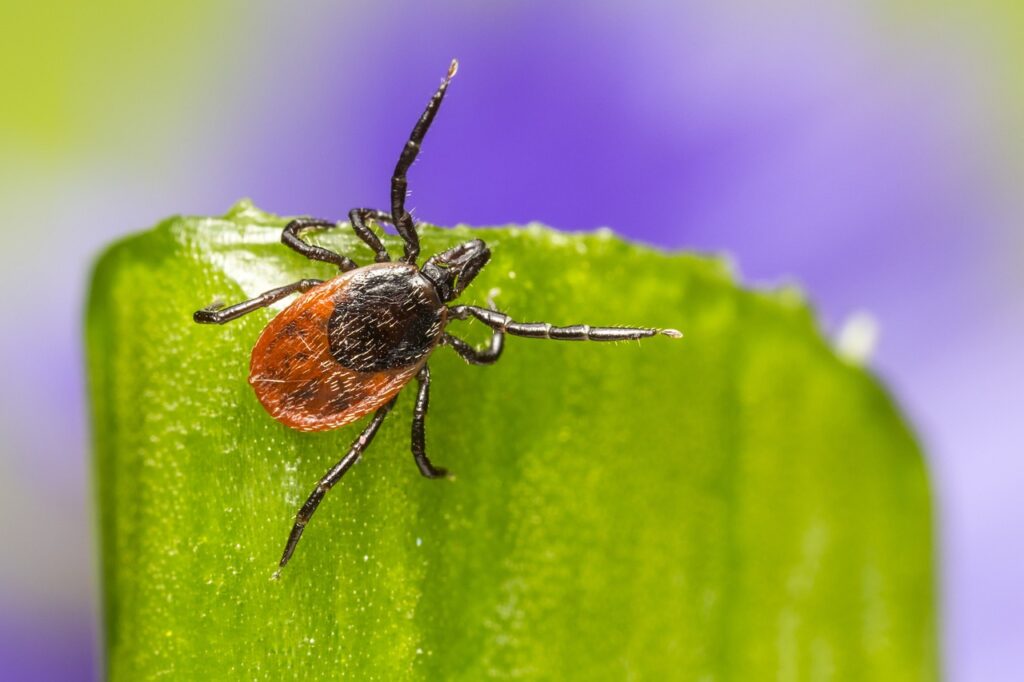
Lyme disease is the most common vector-borne illness in the United States. The Centers for Disease Control and Prevention estimates that roughly 476,000 people may be diagnosed and treated for Lyme disease each year, based on an analysis of insurance claims from 2010 to 2018. The CDC cautions that this is an estimate and may overstate the true number, because billing codes do not always reflect a confirmed diagnosis. Caused by the bacterium Borrelia burgdorferi (and, less commonly, Borrelia mayonii) and transmitted through the bite of infected black-legged ticks, the symptoms of Lyme disease can progress through distinct stages if the infection is not treated, ranging from a characteristic rash and flu-like illness to serious joint, neurological, and cardiac complications. Catching it early makes all the difference. For more on health conditions, see our medical conditions guide.
The short version: The symptoms of Lyme disease appear in stages. Early on, look for an expanding rash (often not a classic bull’s-eye) plus fatigue, fever, headache, and body aches during tick season. Left untreated, the infection can spread to the nerves, joints, and heart. Some symptoms are emergencies – see the red-flag box below. Two-tier blood tests can miss early infection, so a clear rash in a tick-exposed person is usually treated without waiting for results. When in doubt, contact a clinician promptly; early antibiotic treatment is highly effective.
What Causes Lyme Disease
Lyme disease is transmitted by the bite of an infected Ixodes scapularis (black-legged, or “deer” tick) in the eastern and central United States, or Ixodes pacificus (western black-legged tick) on the Pacific Coast. In most cases the tick must be attached and feeding for roughly 36 to 48 hours before it can transmit Borrelia burgdorferi, according to the CDC. Not every tick bite leads to Lyme disease; in many endemic areas only about 15% to 30% of ticks carry the bacterium, and prompt removal further lowers the risk.
High-risk regions include the Northeast (from Virginia up through Maine), the upper Midwest (especially Wisconsin and Minnesota), and parts of northern California and Oregon. The geographic range of these ticks has been expanding over time, so cases now occur in areas once considered low risk. Most infections occur between April and October, when nymphal ticks – the immature stage, roughly the size of a poppy seed – are most active. Their tiny size means nymphs often go unnoticed while feeding, which is why they cause most human infections.
What to Do After a Tick Bite
If you find a tick attached to your skin, remove it promptly with fine-tipped tweezers. Grasp the tick as close to the skin surface as possible and pull upward with steady, even pressure. Don’t twist, jerk, or crush the body. After removal, clean the bite area and your hands with rubbing alcohol or soap and water.
Note the date of the bite and where you likely picked up the tick; this information helps a clinician assess your risk. In certain situations – for example, an engorged deer tick that was likely attached for more than 36 hours in a highly endemic area – a healthcare provider may recommend a single preventive dose of an antibiotic (doxycycline) taken within 72 hours of removal to reduce the chance of Lyme disease. Whether this is appropriate depends on your age, health, and the specifics of the bite, so ask your provider rather than self-treating.
Do not use folk remedies such as painting the tick with nail polish or petroleum jelly, or touching it with a hot match. These methods don’t work and may prompt the tick to release more bacteria into the wound. Monitor the bite site and your overall health for at least 30 days for a new rash or flu-like symptoms, and contact a clinician if either develops.
Stage 1: Early Localized Lyme Disease (Days to Weeks)
The earliest symptoms of Lyme disease typically appear 3 to 30 days after a tick bite, most often within 7 to 14 days. This stage is the most treatable and the most important to recognize.
The hallmark sign is erythema migrans (EM), a gradually expanding red or discolored patch at the site of the bite. Importantly, EM is often not the textbook “bull’s-eye.” The classic pattern – a central spot surrounded by a clear ring and an outer red ring – appears only some of the time. More often the rash is a uniformly red or pink oval that expands over days to weeks, sometimes reaching several inches or more across. It is usually flat, may feel warm, and is rarely itchy or painful. On darker skin tones the rash can be much harder to see: instead of bright red it may look bruise-like, purplish, or subtly darker than the surrounding skin, and it is more easily missed. Any new, enlarging patch after possible tick exposure deserves attention regardless of its color.
According to the NIH and other authorities, a meaningful share of people – commonly cited as roughly 20% to 30% – never develop or never notice the rash at all, which makes the other early symptoms important for detection. These often include fatigue, headache, mild fever and chills, muscle and joint aches, and swollen lymph nodes. Flu-like symptoms without respiratory features (no cough, sore throat, or runny nose) during tick season should raise suspicion for Lyme disease, especially in an endemic area.
Stage 2: Early Disseminated Lyme Disease (Weeks to Months)
Without treatment, the bacteria can spread through the bloodstream to other parts of the body within weeks to months. Stage 2 symptoms reflect this spread and can appear even in people who never noticed a Stage 1 rash.
Multiple erythema migrans lesions may appear on areas of the body away from the original bite, signaling that the infection has disseminated; these secondary patches are usually smaller than the first. Neurological involvement can include facial palsy (weakness or drooping on one or both sides of the face), meningitis (severe headache, neck stiffness, and light sensitivity), and radiculopathy (shooting pain, numbness, or weakness along nerve pathways). Some people also report profound fatigue and intermittent joint pain during this stage.
Cardiac involvement, called Lyme carditis, is less common but potentially serious. It can cause palpitations, chest pain, shortness of breath, light-headedness, and fainting. The most dangerous manifestation is heart block, in which the electrical signals that coordinate the heartbeat are disrupted. Lyme carditis can be life-threatening and, in rare cases, fatal, so it requires urgent medical evaluation.
Red flags – seek emergency or urgent care now. Call 911 or go to the nearest emergency room if you have chest pain, a pounding or irregular heartbeat, unexplained fainting, or shortness of breath – these can signal Lyme carditis and heart block, which can be fatal. Also seek emergency care for a severe headache with a stiff neck and fever (possible meningitis). Sudden facial drooping or new one-sided facial weakness should be evaluated the same day – and because facial drooping is also a warning sign of stroke, treat it as an emergency until a clinician has ruled that out. When symptoms are severe or you are unsure, do not wait. See our guide on urgent care vs. the emergency room to choose the right setting.
Stage 3: Late Disseminated Lyme Disease (Months to Years)
If Lyme disease goes untreated for months or longer, it can cause more stubborn symptoms that are harder to treat. Late-stage disease develops in a substantial share of untreated patients.
Lyme arthritis is the most common late manifestation, and by CDC figures it affects roughly 60% of people who are never treated. It typically causes intermittent episodes of severe joint pain and swelling, most often in the knee. Episodes can last weeks to months and may become chronic. In many cases the arthritis is driven by the immune response to the bacteria rather than ongoing active infection.
Late neurological Lyme disease can cause encephalopathy (problems with concentration, memory, and mental processing), peripheral neuropathy (numbness, tingling, and shooting pain in the hands and feet), and, rarely, inflammation of the brain and spinal cord. These symptoms may surface months to years after the original infection, which is one reason it is worth mentioning any possible past tick exposure to your clinician.
Diagnosis and Testing
Diagnosing Lyme disease relies on a combination of clinical evaluation – your symptoms, physical findings, and exposure history – and laboratory testing. The standard approach is two-tier serologic testing: an initial screening test (traditionally an ELISA), followed by a confirmatory test. Modern labs increasingly use a “modified two-tier” strategy that runs two EIA-type tests rather than a Western blot, which the CDC now recognizes as an acceptable alternative.
Testing has important limits. Antibodies take about 2 to 6 weeks to develop after infection, so blood tests done in the first days after a bite are frequently falsely negative. For this reason, if you have a clear erythema migrans rash in an endemic area, most clinicians will diagnose and treat Lyme disease clinically without waiting for blood work – early treatment matters more than a confirmatory result. False positives can also occur with other tick-borne infections, some autoimmune conditions, and certain viral illnesses. And because antibodies can persist, no currently available test reliably shows whether an infection is still active after treatment, which complicates the evaluation of lingering symptoms. If you are weighing where to get evaluated, our telehealth guide explains when a virtual visit is appropriate and when you need to be seen in person.
Treatment and What to Expect
Early Lyme disease usually responds well to a course of oral antibiotics. Commonly used options include doxycycline (often first-line for adults and many children), amoxicillin, and cefuroxime, prescribed over a period of a few weeks. The specific medication, its strength, and the length of treatment are decisions for your clinician based on your age, other health conditions, pregnancy status, and the stage of disease, so this article does not provide doses. Most people treated during Stage 1 recover completely, according to the Infectious Diseases Society of America.
Later-stage disease may call for a longer oral course or, for some neurological presentations, intravenous antibiotics given under medical supervision. Lyme arthritis that persists after antibiotics may be managed with additional anti-inflammatory or disease-modifying treatment. None of this should be self-directed – it requires a clinician’s assessment and monitoring.
A minority of treated patients – commonly cited as roughly 10% to 20% – experience lingering fatigue, pain, or difficulty concentrating that can last weeks to months after finishing antibiotics. This is sometimes called Post-Treatment Lyme Disease Syndrome (PTLDS) and remains an area of active research. The NIH does not recommend prolonged or repeated courses of antibiotics for these symptoms, because controlled studies have not shown a lasting benefit and long antibiotic courses carry real risks. Care instead focuses on managing symptoms and ruling out other causes.
Prevention: Reducing Your Tick Exposure
Preventing tick bites remains the most effective strategy against Lyme disease. In wooded, brushy, or grassy areas, wear long pants tucked into socks, use EPA-registered insect repellents containing DEET, picaridin, or oil of lemon eucalyptus on exposed skin, and treat clothing and gear with permethrin. Stick to the center of trails where possible.
Do thorough tick checks on yourself, children, and pets within a couple of hours of coming indoors, and shower soon after being outside to wash off unattached ticks. Check the common attachment sites: behind the ears, along the hairline, under the arms, around the waist, behind the knees, and in the groin. Tumbling clothes in a dryer on high heat for about 10 minutes helps kill any ticks still on fabric.
Is There a Lyme Disease Vaccine?
As of 2026, there is no FDA-approved Lyme disease vaccine for humans. A candidate vaccine has advanced through late-stage clinical trials and has been the subject of regulatory review, but no product is yet available, and timelines can shift. An earlier vaccine (LYMErix) was on the U.S. market from 1998 to 2002 before being withdrawn amid low demand. Until an approved vaccine is available, tick avoidance and prompt tick removal remain the core of prevention. Check current CDC guidance for the latest status.
Frequently Asked Questions
How soon do symptoms of Lyme disease appear after a tick bite?
The earliest symptoms usually appear 3 to 30 days after a bite, with the erythema migrans rash most often developing within 7 to 14 days. Flu-like symptoms – fatigue, fever, headache, and muscle aches – frequently arrive around the same time. Later-stage symptoms can emerge weeks to months after the bite if the infection is not treated.
Can you have Lyme disease without the bull’s-eye rash?
Yes. A significant share of people with Lyme disease – commonly cited as about 20% to 30% – never develop or never notice the rash. When a rash does appear, it is frequently a uniformly red or discolored patch rather than a textbook bull’s-eye, and on darker skin it can be faint or bruise-like and easy to miss. Because of this, the diagnosis often rests on symptoms and tick exposure rather than a rash alone.
How long does a tick have to be attached to transmit Lyme disease?
In most cases the tick needs to be attached and feeding for roughly 36 to 48 hours to transmit the bacteria that cause Lyme disease, which is why prompt tick checks and removal are so effective. An engorged tick has been attached longer and carries a higher transmission risk. Removing a tick quickly and correctly meaningfully lowers your odds of infection.
Can Lyme disease be cured?
In most cases, yes – especially when it is caught early. The majority of people treated with appropriate antibiotics during early Lyme disease recover fully. Late-stage disease is also treatable but may require longer treatment, and a minority of patients have lingering symptoms afterward. There is no good evidence that standard Lyme disease becomes a permanent, incurable infection in people who receive recommended treatment.
Is there a Lyme disease vaccine available now?
Not for humans in the United States as of 2026. A candidate vaccine is in late-stage development and has been under regulatory consideration, but nothing is FDA-approved and available yet, and timelines may change. Prevention through tick avoidance and prompt removal remains the primary strategy. Veterinary Lyme vaccines exist for dogs but are not used in people.
What to Do Next
If you have been bitten by a tick in a Lyme-endemic area, found an engorged tick on your body, or are noticing symptoms of Lyme disease – an expanding rash, unexplained flu-like illness during tick season, or new joint pain and fatigue – contact a healthcare provider promptly. Early antibiotic treatment is highly effective, while delay increases the risk of more serious and harder-to-treat complications. If you have a characteristic rash, most clinicians will begin treatment based on your presentation and exposure without waiting for test results. And if you develop any of the red-flag symptoms above – chest pain, fainting, a severe headache with a stiff neck, or sudden facial drooping – seek emergency care right away.
This article is for general educational purposes only and is not medical advice. It does not include medication doses and should not be used to self-treat. Lyme disease diagnosis and treatment must be individualized by a licensed clinician. If you think you have a medical emergency, call 911 or go to the nearest emergency room.
Sources
- Centers for Disease Control and Prevention – Lyme Disease (signs and symptoms, data, testing, and prevention)
- MedlinePlus – Lyme Disease
- Mayo Clinic – Lyme Disease
- Infectious Diseases Society of America – Lyme Disease Clinical Practice Guidelines
- NIH / National Institute of Allergy and Infectious Diseases – Lyme Disease