
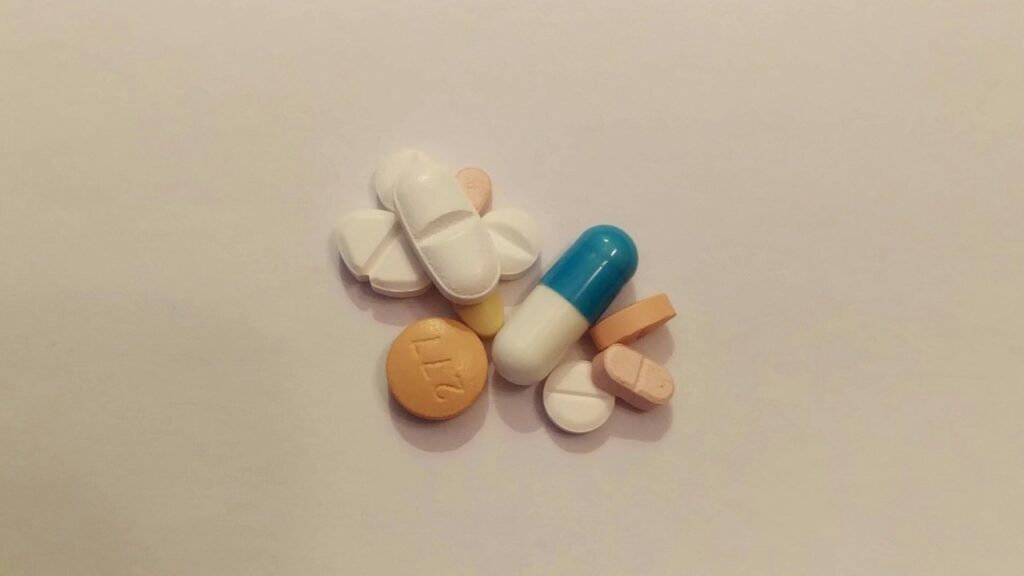
- Omeprazole and pantoprazole are both proton pump inhibitors (PPIs) that block stomach acid the same way and are similarly effective for GERD and ulcers.
- Omeprazole is available over the counter and is usually cheaper; pantoprazole is prescription-only in the US and is the only PPI with an IV form.
- The biggest practical difference is interactions: omeprazole can interfere with clopidogrel (Plavix) via CYP2C19, so many cardiologists prefer pantoprazole for those patients.
- Long-term PPI use is linked to possible B12 and magnesium deficiency, bone-fracture and kidney concerns, and C. diff — use the lowest effective dose for the shortest needed time.
- Do not stop a prescribed PPI abruptly; stopping suddenly can cause rebound acid, so taper only with your clinician's guidance.
- Alarm symptoms — trouble swallowing, unintended weight loss, black or bloody stools, chest pain, or persistent vomiting — need medical evaluation, not just more acid suppression.
Proton pump inhibitors (PPIs) are among the most widely used medications in the world, with millions of Americans taking them for acid reflux, GERD, and ulcers. When your doctor recommends a PPI, the two names you will hear most often are omeprazole and pantoprazole. Comparing omeprazole vs pantoprazole reveals two medications that work through the same mechanism but differ in meaningful ways — from drug interactions to cost to how quickly they take effect. Both are highly effective at reducing stomach acid, but one may fit your situation better. This side-by-side comparison from our medical conditions guide covers what to discuss with your doctor.
Both drugs are effective PPIs. Omeprazole is cheaper and available over the counter; pantoprazole is prescription-only, has fewer drug interactions, and is preferred for many people on clopidogrel. Neither is universally “better” — the right choice depends on your other medications and health history. This article is general education, not medical advice, and it does not provide dosing schedules: take any PPI exactly as directed by the product label or your clinician, and do not start, stop, or change one on your own.
How Both Medications Work
Omeprazole and pantoprazole are both proton pump inhibitors. They work by irreversibly binding to and blocking the hydrogen-potassium ATPase enzyme (the “proton pump”) in the stomach lining’s parietal cells. According to the National Library of Medicine, this enzyme carries out the final step of acid secretion into the stomach. By blocking it, PPIs can reduce stomach acid production substantially (commonly cited as up to roughly 90-95%).
Both medications are prodrugs, meaning they are inactive when swallowed and become active only after being absorbed into the bloodstream and reaching the acidic environment of the parietal cells. This is why PPIs are generally taken before a meal, as directed — the parietal cells need to be actively secreting acid for the drug to work best. While the mechanism is identical, the two drugs differ in their chemical structure, metabolism, onset time, and interaction profile. For more on one of them, see our detailed article on omeprazole side effects.
Side-by-Side Comparison Table
| Feature | Omeprazole (Prilosec) | Pantoprazole (Protonix) |
|---|---|---|
| Brand names | Prilosec, Prilosec OTC | Protonix |
| Available OTC | Yes | No (prescription only) |
| Available strengths (common) | 20 mg, 40 mg | 20 mg, 40 mg |
| Onset of acid suppression | Faster (about 1-2 hours) | Slightly slower (about 2-3 hours) |
| Time to full effect | A few days | A few days |
| Drug interactions | More (CYP2C19-dependent) | Fewer |
| IV formulation | No | Yes |
| Typical generic cost | Lower (often a few dollars a month) | Somewhat higher |
| FDA-approved uses | GERD, ulcers, H. pylori, Zollinger-Ellison | GERD, erosive esophagitis, Zollinger-Ellison |
Strengths listed above are simply the marketed tablet/capsule strengths, not a recommendation of how much to take — dosing is individualized and set by the label or your prescriber.
Effectiveness: How They Compare
Multiple head-to-head clinical trials have compared omeprazole and pantoprazole for acid-related conditions. According to a meta-analysis indexed on PubMed, both medications show broadly equivalent healing rates for erosive esophagitis at 8 weeks — roughly 85-95% of patients achieve complete healing with either drug. For symptom relief of GERD (heartburn, acid regurgitation), both provide similar improvement.
There are subtle differences in potency. Milligram for milligram, omeprazole is generally considered somewhat more potent at acid suppression than pantoprazole, so a lower milligram amount of omeprazole can produce acid suppression comparable to a higher amount of pantoprazole. This difference is mainly relevant for patients who need maximum acid suppression, such as those with Zollinger-Ellison syndrome; your clinician accounts for it when choosing a drug and strength.
For most people with standard GERD or occasional heartburn, both medications provide excellent and essentially equivalent symptom relief at their usual prescribed strengths.
Drug Interactions: A Critical Difference
The most clinically significant difference between omeprazole vs pantoprazole lies in their drug-interaction profiles. Omeprazole is extensively metabolized by the CYP2C19 enzyme in the liver — the same enzyme that activates clopidogrel (Plavix), an antiplatelet drug commonly prescribed after heart attacks and stent placement. The FDA has communicated that omeprazole can reduce the activation of clopidogrel by competing for CYP2C19, potentially blunting clopidogrel’s benefit.
Pantoprazole has a lower affinity for CYP2C19 and undergoes additional metabolism through a sulfotransferase pathway, making it less likely to interfere with clopidogrel. For this reason, many cardiologists prefer pantoprazole for patients taking clopidogrel. The National Institutes of Health notes that while the clinical significance of the omeprazole-clopidogrel interaction is still debated, pantoprazole is generally considered the safer pairing for patients on antiplatelet therapy.
Omeprazole also has more pronounced interactions with certain other medications, including methotrexate, some anti-seizure drugs, and drugs whose absorption depends on stomach acid (such as certain antifungals). Because reducing stomach acid can change how some medicines and supplements are absorbed, pantoprazole’s overall lower interaction burden is one reason clinicians sometimes choose it for patients taking many prescriptions. Always give your pharmacist a full medication and supplement list.
Side Effects Comparison
Both omeprazole and pantoprazole share a similar side-effect profile, which is expected given their identical mechanism. According to the Mayo Clinic, common side effects of both can include headache, diarrhea, nausea, abdominal pain, constipation, and gas. These effects are generally mild and often ease with continued use.
Long-term use of PPIs as a class has been associated with several concerns, including an increased risk of Clostridioides difficile (C. diff) infection, low magnesium levels (hypomagnesemia), reduced calcium and vitamin B12 absorption, a possible effect on bone density with an associated fracture risk (hip, wrist, spine), and a possible association with chronic kidney disease with prolonged use. Many of these are associations rather than proven cause-and-effect, but they are why guidance emphasizes using the lowest effective dose for the shortest necessary duration and periodically reassessing the need.
There is no strong evidence that one of these two PPIs causes meaningfully more or fewer side effects than the other at comparable acid-suppression levels. If you have side effects with one, switching to the other (or to a different PPI such as lansoprazole or esomeprazole) may help, since individual tolerance varies.
Cost and Availability
Omeprazole has a cost and access advantage. It is available over the counter as Prilosec OTC and store-brand equivalents at most pharmacies, and generic prescription omeprazole is inexpensive — often just a few dollars a month through discount programs. Omeprazole is one of the most frequently prescribed medications in the U.S., including within Medicare Part D.
Pantoprazole is prescription-only in the United States and is generally a bit more expensive than omeprazole, though the gap has narrowed considerably since generic pantoprazole became available. Brand-name Protonix is substantially more expensive than the generic.
For people without insurance or with high copays, omeprazole’s over-the-counter availability is a practical advantage — you can buy it without an office visit. Important: the FDA advises that OTC omeprazole is intended for a short course (about 14 days) for frequent heartburn and should not be used for longer, or repeated more than a few times a year, without medical supervision. Persistent heartburn that keeps coming back deserves evaluation rather than indefinite self-treatment.
See a clinician promptly (and seek urgent or emergency care when severe) if heartburn comes with trouble or pain swallowing, food sticking, unintended weight loss, vomiting blood or “coffee-ground” material, black/tarry or bloody stools, persistent vomiting, or anemia. These can signal a problem — such as a stricture, ulcer, bleeding, or, rarely, cancer — that a PPI could mask. And treat chest pain, pressure, or heartburn-like discomfort with shortness of breath, sweating, or pain spreading to the arm or jaw as a possible heart attack: call 911 rather than assuming it is reflux.
Which Conditions Each Is Better For
When Omeprazole May Be Preferred
Omeprazole is often a first-line choice for mild-to-moderate GERD and occasional heartburn because of its OTC availability and low cost. It is also commonly used in H. pylori eradication regimens (combined with antibiotics) and for short-term treatment of duodenal and gastric ulcers. For patients who need convenient, low-cost access to a PPI without a prescription, omeprazole is the practical option.
When Pantoprazole May Be Preferred
Pantoprazole is often preferred for patients taking clopidogrel or other CYP2C19-dependent medications because of its lower interaction potential. It is a go-to PPI in hospital settings because it is available in an intravenous (IV) formulation, which matters for patients who cannot take oral medications. Its metabolism is somewhat less dependent on the broader CYP450 system, which is one reason clinicians may favor it in certain patients, including some with complex medication regimens.
How to Take a PPI Correctly (General Guidance)
PPIs are generally taken before a meal, as directed by the label or your prescriber, because the parietal cells need to be actively pumping acid for the drug to bind effectively. Taking a PPI with or well after food can make it less effective. Follow the specific instructions you are given for how much and how often — this article intentionally does not provide a dosing schedule, because the right regimen depends on your condition, the product, and your clinician’s judgment.
Both medications typically come in delayed-release formulations designed to survive stomach acid and dissolve in the small intestine. Do not crush, chew, or split delayed-release tablets or capsules unless your pharmacist confirms it is appropriate for your specific product. Some formulations can be given as granules mixed with a soft food for people who have trouble swallowing pills — again, only as the label or pharmacist directs.
Remember that PPIs are not instant relief — they take a few days to reach full effect. For breakthrough heartburn during that window, a fast-acting antacid or an H2 blocker (such as famotidine) can sometimes be used alongside a PPI, but check with a pharmacist or clinician first, especially if you take other medications.
Frequently Asked Questions
Can I switch from omeprazole to pantoprazole?
Switching between PPIs is common and usually straightforward, and no washout period is typically needed. The most frequent reasons to switch are a drug-interaction concern (particularly with clopidogrel), bothersome side effects, or inadequate symptom control. Let your doctor or pharmacist guide the change and the appropriate equivalent strength rather than doing it on your own.
Which is stronger, omeprazole or pantoprazole?
Omeprazole is generally considered somewhat more potent per milligram, so a lower amount of omeprazole can match the acid suppression of a higher amount of pantoprazole. At their commonly prescribed strengths, however, both provide adequate acid suppression for GERD and ulcer healing, and the difference mainly matters for conditions requiring maximum suppression.
Can I take omeprazole or pantoprazole long term?
Both can be used long term when medically necessary, but guidance is to use the lowest effective dose for the shortest duration needed and to reassess periodically. Some patients who start a PPI for acute GERD can eventually step down to an H2 blocker or manage symptoms with lifestyle changes. Do not stop a prescribed PPI abruptly after long-term use — this can cause rebound acid hypersecretion — and instead taper only under your clinician’s guidance.
Do omeprazole and pantoprazole cause weight gain?
Neither drug directly causes weight gain. Some people gain a little weight indirectly because controlling reflux lets them eat more comfortably, including foods they previously avoided. A balanced diet while on PPI therapy helps prevent unwanted weight changes.
Is one PPI safer for the kidneys than the other?
Research has linked long-term use of PPIs as a class (not one specific drug) with a somewhat increased risk of chronic kidney disease, though this is an association rather than proven causation. According to published research, there is no strong evidence that one PPI is meaningfully safer for the kidneys than another. If you have existing kidney disease, your doctor will weigh the benefits against the risks and can monitor kidney function with periodic blood tests.
The Bottom Line
When comparing omeprazole vs pantoprazole, the honest answer is that both are effective, well-studied medications for acid reflux, GERD, and ulcers. For most patients, the choice comes down to practical factors: omeprazole is cheaper, available over the counter, and slightly more potent per milligram, while pantoprazole has fewer drug interactions, comes in an IV form for hospitalized patients, and is often preferred for anyone on clopidogrel or multiple CYP2C19-dependent medications. Neither is clearly “better” in a universal sense — the right choice depends on your medical history, current medications, and coverage. Bring this comparison to your next appointment, do not self-adjust a prescribed PPI, and get alarm symptoms evaluated rather than covering them up with more acid suppression.
Sources
- MedlinePlus (U.S. National Library of Medicine) — Omeprazole and Pantoprazole drug information
- NIH StatPearls (NCBI Bookshelf) — Proton Pump Inhibitors monograph (mechanism, class effects)
- U.S. Food and Drug Administration (FDA) — omeprazole–clopidogrel interaction communication; PPI class labeling on magnesium, fracture risk, C. diff, and OTC-use limits
- Mayo Clinic — omeprazole and pantoprazole drug information and side effects
- Cleveland Clinic — proton pump inhibitors overview
- PubMed / peer-reviewed meta-analyses — comparative healing rates for erosive esophagitis; PPI long-term safety associations