
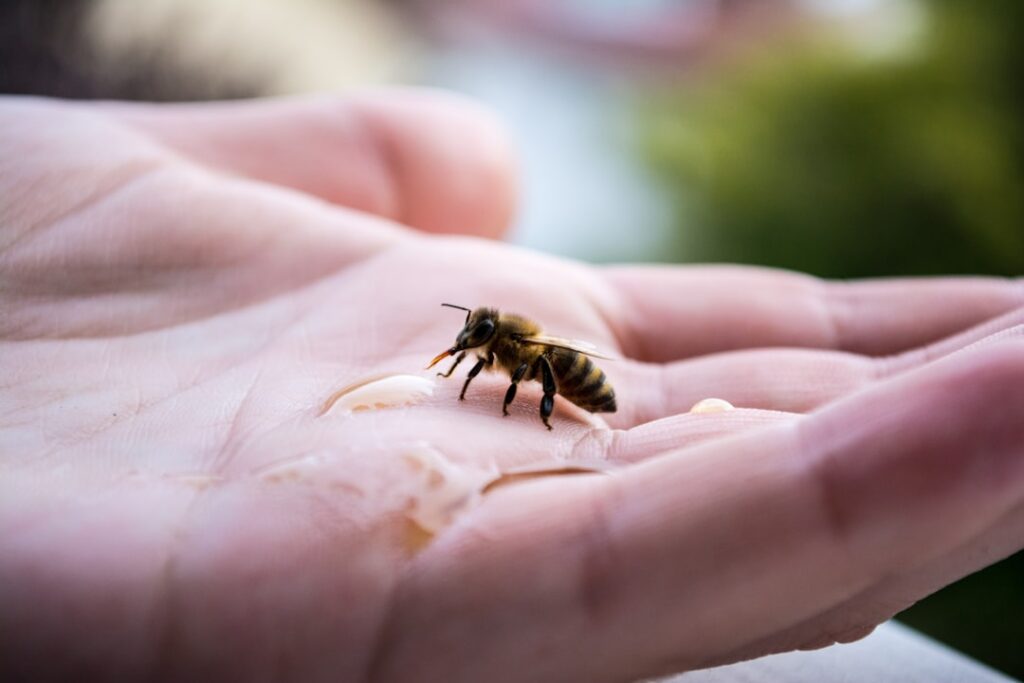
Knowing how to treat a bee sting quickly and correctly can minimize pain, reduce swelling, and – most importantly – help you recognize the rare but life-threatening allergic reaction that needs an ambulance. For most people a bee sting is a painful but short-lived event you can manage at home. But because a small number of people have severe reactions, the first thing to learn is how to spot an emergency.
CALL 911 IMMEDIATELY – this is a medical emergency if a stung person has any signs of a severe allergic reaction (anaphylaxis), which usually start within minutes:
- Trouble breathing, wheezing, or tightness in the chest or throat
- Swelling of the throat, tongue, lips, or face; trouble swallowing; a hoarse voice
- Hives or a rash spreading beyond the sting site
- Dizziness, fainting, confusion, or a feeling of impending doom
- Rapid or weak pulse
- Nausea, vomiting, cramping, or diarrhea
If an epinephrine auto-injector (such as an EpiPen) is available, use it right away – do not wait to see if symptoms get worse – then call 911. Have the person lie down with legs raised, unless they are struggling to breathe or vomiting, in which case let them sit up or lie on their side. Even if symptoms improve after epinephrine, they must still go to the emergency room, because a second wave of symptoms (a biphasic reaction) can occur hours later. A sting inside the mouth or throat, many stings at once, or a known bee/wasp allergy should all be treated as urgent – call 911 or get to emergency care.
The short version: Rule out an allergic emergency first (see the red box above). For a normal sting: scrape the stinger out fast, wash with soap and water, apply a cold compress, and use over-the-counter pain relief or an antihistamine following the label. Watch the site for a day or two, and see a doctor if it looks infected, keeps worsening, or if you had a whole-body reaction.
This guide covers step-by-step first aid, pain and swelling relief, how to tell a normal reaction from an allergic one, and when to seek medical care. For more health information, visit our medical conditions guide. Severe allergic reactions to insect stings are uncommon, but they cause the small number of sting-related deaths recorded each year in the United States, according to public-health data – which is exactly why recognizing anaphylaxis early matters so much.
Immediate First Aid: Step by Step
Once you have confirmed there are no signs of a severe allergic reaction, follow these steps for a normal sting.
Step 1: Remove the stinger as quickly as possible. Honeybees leave their barbed stinger embedded in the skin, attached to a venom sac that can keep releasing venom for a short time after the sting. The faster you remove it, the less venom enters the body. Scrape or flick the stinger out using a fingernail, credit card, or any flat-edged object. The exact technique matters less than the speed: current first-aid guidance emphasizes getting the stinger out immediately by whatever method is at hand, rather than hunting for the “perfect” tool.
Step 2: Move away from the area. When a honeybee stings, it releases alarm pheromones that can attract other bees. Calmly and quickly move away from where the sting happened. Do not swat at other bees, which can provoke more stings.
Step 3: Wash the sting site. Clean the area with soap and water to lower the risk of infection. Pat it dry gently with a clean towel.
Step 4: Apply a cold compress. Place an ice pack or a cloth-wrapped bag of ice on the sting site for 10 to 20 minutes to reduce swelling and numb the pain. Do not apply ice directly to bare skin. Remove the compress for about 10 minutes, then reapply as needed.
Step 5: Elevate the area if possible. If the sting is on an arm or leg, raising the limb can help reduce swelling.
Pain Relief and Swelling Reduction
After basic first aid, several treatments can help manage ongoing pain and itching. Always follow the directions on the package, use the lowest effective amount, and check with a pharmacist or clinician before giving any medicine to a child, during pregnancy, or if you take other medications.
Over-the-counter pain relievers such as ibuprofen (Advil, Motrin) or acetaminophen (Tylenol) can ease pain; ibuprofen also helps with inflammation. Take them only as directed on the label.
Oral antihistamines such as diphenhydramine (Benadryl) or cetirizine (Zyrtec) can reduce itching, swelling, and redness, and for stings they generally work better than topical antihistamines. According to the Mayo Clinic, taking an oral antihistamine after a sting can help calm the local reaction. Follow the label dosing.
Topical options that may soothe the area include hydrocortisone cream (0.5% or 1%) to reduce itching and inflammation, calamine lotion for itch relief, and a paste of baking soda and water applied to the site. Some people find a dab of plain white toothpaste soothing, though that is anecdotal rather than evidence-based.
Continue to watch the sting site for 24 to 48 hours. Local reactions often worsen during this window before they start to improve, which is normal and not by itself a sign of allergy.
Normal Reactions Versus Allergic Reactions
Understanding the difference between a normal reaction, a large local reaction, and a systemic (whole-body) allergic reaction is the most important part of treating a sting safely.
Normal Local Reaction
Most bee stings cause a normal local reaction: sharp, burning pain at the site, a red welt or bump, minor swelling that usually peaks within a day, and itching. These symptoms typically resolve within a few hours to a few days and need nothing more than basic first aid.
Large Local Reaction
Some people develop a large local reaction, with swelling that extends well beyond the sting – a sting on the hand might make the whole forearm swell. The swelling can keep increasing for 24 to 48 hours before gradually resolving over 5 to 10 days. Large local reactions are uncomfortable but are not, by themselves, life-threatening, and can be managed with antihistamines, ice, elevation, and over-the-counter pain relievers. Having a large local reaction does not necessarily mean you will have a systemic allergic reaction to a future sting, although it may modestly raise the risk – worth mentioning to your doctor.
Systemic Allergic Reaction (Anaphylaxis)
A systemic allergic reaction affects the whole body and can be fatal within minutes. Symptoms usually begin quickly and may include hives or rash spreading beyond the sting site; swelling of the face, lips, tongue, or throat; difficulty breathing or wheezing; a rapid or weak pulse; dizziness or fainting; nausea, vomiting, or diarrhea; a sense of impending doom; and loss of consciousness. This is the emergency described in the red box at the top of this article.
Reminder: If any signs of anaphylaxis appear, use an epinephrine auto-injector if available and call 911 immediately. Do not “wait and see.” Anyone who receives epinephrine still needs emergency evaluation, because symptoms can return hours later.
Special Situations
Some circumstances call for extra caution.
Stings to the mouth or throat: A sting inside the mouth or throat can cause swelling that blocks the airway even in people who are not allergic. Treat this as an emergency – call 911. While waiting for help, the person can suck on ice if they can swallow safely.
Multiple stings: Many stings at once can cause a toxic reaction from the sheer volume of venom, even without an allergy. A large number of stings (for example, more than about 10 in an adult, or proportionally fewer in a child) can cause nausea, vomiting, headache, dizziness, and in severe cases serious effects on the kidneys or other organs. Seek medical attention for multiple stings.
Stings in children: Children have smaller bodies and receive proportionally more venom per sting. Watch children closely after any sting for signs of an allergic reaction. Very young children may not be able to describe symptoms, so observation is especially important. Ask a pharmacist or your pediatrician which weight-appropriate antihistamine and dose to keep on hand for outdoor activities.
Stings in people with known bee allergies: Anyone with a known sting allergy should carry an epinephrine auto-injector at all times and consider a medical alert bracelet. Use the auto-injector at the first sign of a systemic reaction and call 911, even if symptoms seem mild at first.
Preventing Bee Stings
Prevention is easier than treatment. A few habits lower your risk.
Avoid bright colors, floral prints, and strong fragrances (perfume, scented lotion, hairspray) when spending time outdoors where bees are active. Wear closed-toe shoes on grass, since bees forage in clover and low flowers. Keep food and sweet drinks covered during outdoor meals, and clean up food and spills promptly.
Stay calm around bees. Swatting and sudden movements are more likely to provoke a sting. If a bee lands on you, stay still and let it fly away. If bees swarm, protect your head and face and walk quickly (do not run) to an enclosed space.
Check around your home for nests, especially in eaves, wall cavities, tree hollows, and the ground. Have nests removed by a professional pest-control service rather than trying to remove them yourself. Many stings happen when people accidentally disturb a nest or colony.
When to See a Doctor After a Bee Sting
Beyond the emergencies already described, schedule a medical visit if, after a day or two, the sting site shows signs of infection – increasing redness, warmth, swelling, pus, or red streaks spreading from the site; if swelling or pain keeps worsening after 48 hours; if you were stung many times; if you have a chronic condition such as heart or breathing problems; or if you want to discuss venom immunotherapy (allergy shots) after a systemic reaction.
Venom immunotherapy is a highly effective treatment for people with confirmed insect-sting allergy. It substantially lowers the risk of a future severe reaction and involves gradually increasing doses of purified venom over months, followed by maintenance injections, typically for several years. An allergist can test for venom allergy and decide whether immunotherapy is appropriate for you.
Frequently Asked Questions
Does putting honey on a bee sting help?
Honey has some natural antibacterial and anti-inflammatory properties, and some people find a small dab soothing. But there is no strong clinical evidence that honey treats bee stings, and a cold compress plus an oral antihistamine are more reliable. If you use honey, apply a small amount and cover with a bandage. Do not put honey on broken skin of infants.
How long does bee sting swelling last?
Normal swelling typically peaks within 24 to 48 hours and resolves within three to five days. Large local reactions may peak around 48 hours and take 5 to 10 days to fully settle. If swelling keeps worsening after 48 hours or comes with signs of infection, see a doctor.
Can you develop a bee allergy later in life?
Yes. Sting allergies can develop at any age, even if you have been stung before without a serious reaction – prior exposure is actually what allows the immune system to become sensitized. Any unusual reaction, such as hives away from the sting site or trouble breathing, warrants an allergy evaluation regardless of your age or history.
What is the difference between a bee sting and a wasp sting?
Honeybees leave their barbed stinger behind and can sting only once, while wasps, hornets, and yellow jackets keep their stinger and can sting repeatedly. The venoms differ slightly, but first-aid treatment is essentially the same. Being allergic to one type of venom does not automatically mean you are allergic to the other, though cross-reactivity can occur.
How do I know if I need to use an EpiPen?
Use an epinephrine auto-injector at the first signs of a systemic (whole-body) reaction – trouble breathing, throat or tongue swelling, widespread hives, dizziness or fainting, or vomiting soon after a sting – and then call 911. Epinephrine is safe to give when in doubt, and delaying it is the main risk in a serious reaction. It is not needed for a normal local reaction.
Be Prepared and Stay Calm
Knowing how to treat a bee sting means you can respond calmly whether the reaction is mild or severe. For most stings, fast stinger removal, ice, and an antihistamine are all you need. But recognizing anaphylaxis and acting immediately – epinephrine if available, then 911 – can save a life. Keep basic first-aid supplies handy during outdoor activities, know where the nearest emergency room is, and if you or a family member has a sting allergy, always keep an epinephrine auto-injector within reach and check that it has not expired.
This article is for general information and is not a substitute for professional medical care. When in doubt about a reaction, call 911 or your local emergency number.
Sources
- Mayo Clinic – bee stings: symptoms, treatment, and anaphylaxis
- MedlinePlus (NIH) – insect bites and stings first aid
- CDC / NIOSH – preventing insect stings among outdoor workers
- Cleveland Clinic – bee sting reactions and when to seek care
- American Academy of Allergy, Asthma & Immunology (AAAAI) – insect sting allergy and venom immunotherapy