
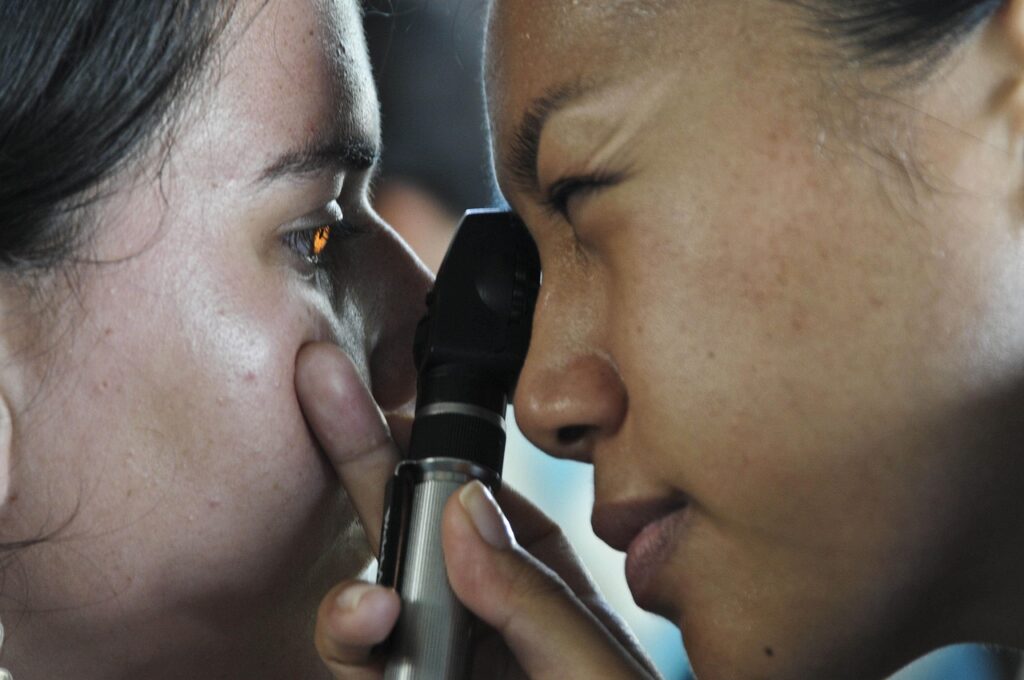
Whether your vision has been getting blurry, you are overdue for a routine eye exam, or you have been told you might need cataract surgery, the first step is the same: learning how to find an eye doctor near you. But “eye doctor” is a broad term that covers two very different types of providers — ophthalmologists and optometrists — and choosing the wrong one can mean an extra appointment, an unnecessary referral, and wasted time. About 93 million adults in the United States are at high risk for serious vision loss, according to the CDC, yet fewer than half have visited an eye care provider in the past year. This guide helps you find the right eye doctor for your situation, understand costs, spot the warning signs that need urgent care, and decide whether a telehealth eye exam makes sense.
The short version: For a routine exam, glasses, or contacts, an optometrist (OD) is usually the fastest and most affordable choice. For eye surgery, disease, or a complex diagnosis, you need an ophthalmologist (MD/DO). An optician fits and sells eyewear but does not examine your eyes. Check that your provider takes your plan — vision coverage and medical eye coverage are often separate. And know the emergencies: sudden vision loss, a curtain of flashes and floaters, eye trauma, a chemical splash, or a sudden painful red eye all need same-day or ER care. This article is educational and is not a substitute for an exam by a qualified clinician.
What Does an Eye Doctor Treat?
The term “eye doctor” encompasses two distinct professionals, plus a third eye-care role that is not a doctor at all. Understanding the difference is the most important first step in your search.
Ophthalmologist
An ophthalmologist is a medical doctor (MD or DO) who has completed four years of medical school plus a minimum three-year ophthalmology residency. They can perform comprehensive eye exams, diagnose and treat all eye diseases, prescribe medications, and perform eye surgery. According to the American Academy of Ophthalmology (AAO), ophthalmologists are the only eye care providers trained in the full spectrum of eye care — from prescribing glasses to performing complex retinal surgery. Subspecialties include retina, glaucoma, cornea, oculoplastics (eyelid surgery), pediatric ophthalmology, and neuro-ophthalmology.
Optometrist
An optometrist holds a Doctor of Optometry (O.D.) degree, which requires four years of optometry school after undergraduate education. Optometrists perform routine eye exams, prescribe glasses and contact lenses, diagnose many eye conditions, and in most states can prescribe a range of eye medications. They do not perform most surgeries (a limited number of states now allow certain laser and minor procedures, but scope of practice varies by state). For routine vision care, an optometrist is often the most accessible and cost-effective choice. Many are found in retail settings like Costco, LensCrafters, or Walmart Vision Centers, making walk-in or short-notice appointments easier.
Optician
An optician is not an eye doctor. Opticians are trained technicians who fit, adjust, and dispense eyeglasses and contact lenses based on a prescription written by an optometrist or ophthalmologist. They cannot examine your eyes, diagnose disease, or write a prescription. If someone is helping you pick frames and adjust the fit, that is an optician; if someone is examining the health of your eyes, that is a doctor.
If you are considering cataract surgery or eyelid surgery, you will need an ophthalmologist — specifically one who subspecializes in the procedure you need. For annual eye exams, contact lens fittings, or glasses prescriptions, an optometrist is typically the right fit.
Red Flags: When Eye Symptoms Are an Emergency
Seek emergency or urgent eye care right away — call 911, go to the nearest ER, or contact an ophthalmologist immediately — if you have any of the following:
- Sudden vision loss in one or both eyes, even if it is painless or temporary
- Flashes of light, a shower of new floaters, or a dark “curtain” or shadow moving across your vision — these can signal a retinal detachment, which can cause permanent blindness without prompt treatment
- Eye trauma or a penetrating injury — anything that hits, cuts, or lodges in the eye
- A chemical splash in the eye — flush with clean water immediately and get emergency care
- A sudden, severely painful red eye, especially with nausea, vomiting, halos around lights, or blurred vision — this can be acute angle-closure glaucoma, an emergency
- Sudden double vision, a droopy eyelid, or an eye that will not move, particularly with headache or weakness elsewhere — this can signal a neurological emergency such as a stroke
When in doubt, do not wait for a routine appointment. Time matters for the eye.
When Should You See an Eye Doctor?
Routine eye exams are not just about updating your glasses prescription. They can detect serious health conditions — including diabetes, high blood pressure, and brain tumors — before other symptoms appear. The AAO recommends a baseline comprehensive eye exam at age 40 for adults with no risk factors, and sooner for those with diabetes, a family history of glaucoma, or high myopia.
Schedule an eye exam if you notice blurry or distorted vision, difficulty seeing at night or while driving, frequent headaches, eye pain or redness that does not resolve, new floaters or flashes of light, double vision, a gradual loss of peripheral vision, or if it has been more than two years since your last comprehensive exam. Diabetic patients should have a dilated eye exam annually — diabetic retinopathy is a leading cause of blindness among working-age adults, and early detection through regular screening can prevent a large share of vision loss.
Telehealth vs In-Person Eye Exams
Telehealth eye care is a growing field, but it has clear limitations compared to other specialties. Your eyes require physical examination tools — slit lamps, tonometers, dilating drops — that simply cannot be replicated virtually.
When Telehealth Works Well
Virtual eye care works for prescription renewals for glasses or contacts when your prescription has not changed significantly, consultations about eye symptoms to determine urgency, post-operative follow-ups for stable patients, discussing surgical options before committing to an in-person evaluation, red eye or pink eye assessments (some platforms can prescribe treatment based on photos and history), and dry eye management. Some services offer remote refraction testing using smartphone apps and at-home test kits, though the AAO notes these should not replace comprehensive in-person exams that include dilation.
When You Need an In-Person Visit
Comprehensive eye exams with dilation, glaucoma screening (intraocular pressure measurement and optic nerve evaluation), cataract evaluation and surgery, contact lens fittings (especially specialty lenses), diabetic retinopathy screening, and any surgical procedure require an in-person visit. Any of the red-flag symptoms above also require in-person care, not a virtual visit. If you are over 40 or have risk factors for eye disease, annual in-person exams are essential.
How to Find an Eye Doctor Near You
Finding the right eye doctor near you depends on what you need. Here is a step-by-step approach.
First, determine whether you need an optometrist or ophthalmologist. For routine exams and prescriptions, an optometrist is usually faster to schedule and less expensive. For medical eye conditions, surgery, or complex diagnoses, start with an ophthalmologist. The AAO’s Find an Ophthalmologist tool and the American Optometric Association’s doctor finder are both reliable starting points.
Check whether the provider accepts your specific insurance plan — and note that medical eye insurance (for conditions like glaucoma, cataracts, or macular degeneration) typically runs through your health insurance, while routine vision care (glasses and contacts) often requires a separate vision plan like VSP or EyeMed. This distinction confuses many patients and can lead to unexpected bills. Verify both coverage types before booking.
If surgery is involved, ask about the surgeon’s volume and complication rates. For cataract surgery — one of the most common surgeries in the United States, with several million procedures performed annually — experienced surgeons who perform hundreds of cases per year generally have better outcomes and lower complication rates. For other specialist searches, the same credentialing principles apply: verify board certification, confirm the provider is in-network, and read recent patient reviews with a critical eye.
Average Cost of an Eye Doctor Visit
Eye care costs vary based on the type of provider, the nature of the visit, your location, and your insurance coverage. The ranges below are general estimates as of early 2026 and can vary widely, so confirm pricing with the specific practice.
A routine eye exam with an optometrist commonly costs $75 to $200 without insurance. A comprehensive medical eye exam with an ophthalmologist often runs $150 to $400 without insurance. Contact lens fittings add $50 to $200 on top of the exam fee. Diagnostic testing — such as optical coherence tomography (OCT) or visual field testing — can add $50 to $300 per test. As for procedures, cataract surgery is frequently quoted at $3,500 to $7,000 per eye without insurance for a standard lens, while premium lens implants can push costs higher. These are estimates only; get a written quote before proceeding.
With vision insurance, routine exams typically have a copay of $10 to $40, with allowances for frames and lenses. Medical eye exams billed through health insurance follow standard specialist copay or coinsurance rules. Many retail optometry locations (Costco, Walmart, Target Optical) offer competitive self-pay rates for routine exams — making them a practical option for uninsured patients who need a basic refraction and glasses prescription.
Protecting Your Vision Between Appointments
Finding the right eye doctor is essential, but so is protecting your eyes between visits. The National Eye Institute (NEI) recommends several evidence-based strategies: wear sunglasses that block 99% to 100% of UV-A and UV-B radiation, take regular breaks from screens using the 20-20-20 rule (every 20 minutes, look at something 20 feet away for 20 seconds), do not smoke (smoking increases the risk of macular degeneration and cataracts), eat a diet rich in leafy greens, fish, and foods high in omega-3 fatty acids, and always wear protective eyewear during sports and activities involving projectiles, chemicals, or debris. These habits reduce your risk of the most common causes of preventable vision loss.
Questions to Ask Your Eye Doctor
Make the most of your eye appointment by preparing targeted questions. Bring your current glasses or contacts, a list of medications (many drugs affect the eyes), and information about your family’s eye health history.
Ask your eye doctor: What is the current health of my eyes beyond just my prescription? Am I at risk for glaucoma, macular degeneration, or diabetic eye disease? How often should I be getting comprehensive exams given my age and risk factors? Are there lifestyle changes that could protect my vision (nutrition, UV protection, screen habits)? If surgery is recommended — what is your experience with this procedure, what are the realistic outcomes, and what are the alternatives?
For patients considering eyelid surgery (blepharoplasty), ask whether the procedure is medically necessary (obstructed vision) or cosmetic, as this determines insurance coverage. For those being monitored for glaucoma, ask about the target intraocular pressure and what progression would trigger a change in treatment.
Frequently Asked Questions
What is the difference between an ophthalmologist, an optometrist, and an optician?
An ophthalmologist is a medical doctor (MD/DO) who can perform eye surgery and treat all eye diseases. An optometrist (O.D.) provides routine eye exams, prescribes corrective lenses, and manages many common eye conditions but generally does not perform surgery. An optician is a technician who fits and dispenses glasses and contacts from a prescription and does not examine or diagnose. Both ophthalmologists and optometrists can prescribe eye medications in most states.
How often should I get my eyes checked?
The AAO recommends a baseline comprehensive exam at age 40, then periodic exams whose frequency increases with age (roughly every two to four years through the mid-50s, every one to three years into the mid-60s, and every one to two years after 65). If you have diabetes, a family history of eye disease, or wear contact lenses, annual exams are recommended regardless of age. Follow the schedule your own eye doctor sets for you.
Does insurance cover eye exams?
Routine vision exams are typically covered by separate vision insurance plans (like VSP or EyeMed), not standard health insurance. However, medical eye exams — for conditions like cataracts, glaucoma, or diabetic retinopathy — are usually covered by your regular health insurance as a medical visit. Medicare Part B covers annual diabetic eye exams and glaucoma screenings for high-risk individuals; verify your specific benefits before your visit.
Can I get glasses or contacts prescribed online?
Some online services offer prescription renewals based on remote vision testing. These can be convenient for young, healthy adults with stable prescriptions. However, they do not replace a comprehensive eye exam, which includes evaluation for conditions like glaucoma and macular degeneration that have no early symptoms. If you have any new symptoms, do not rely on an online refraction.
Medical disclaimer: This article is for general educational purposes and is not medical advice. It cannot diagnose your condition or replace an in-person exam by a licensed optometrist or ophthalmologist. If you have any of the red-flag symptoms described above, seek emergency care immediately.
The Bottom Line
Learning how to find an eye doctor starts with understanding whether you need an optometrist for routine vision care or an ophthalmologist for medical eye conditions and surgery — and knowing that an optician only fits eyewear. Check your insurance carefully, since vision and medical eye coverage are often separate, and prioritize comprehensive exams over simple prescription checks, especially after age 40. Above all, recognize the emergencies: sudden vision loss, a curtain of flashes and floaters, trauma, a chemical splash, or a sudden painful red eye all need urgent care. Your eyes rarely give early warning when something is going wrong, which makes regular screening one of the most valuable investments in your long-term health.
Sources
- American Academy of Ophthalmology (AAO) — Eye exam guidelines and “Find an Ophthalmologist”
- American Optometric Association (AOA) — Doctor finder and eye health resources
- National Eye Institute (NEI) — Eye health and diabetic retinopathy information
- Centers for Disease Control and Prevention (CDC) — Vision health data
- MedlinePlus — Retinal detachment and acute glaucoma (emergency eye conditions)