
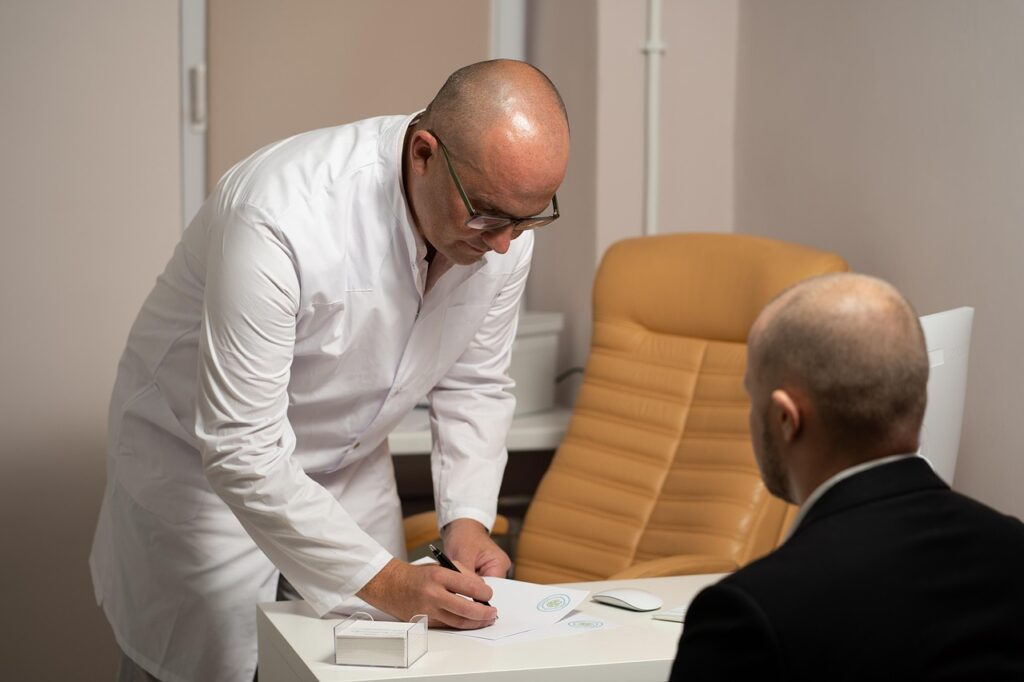
Texas is one of the top states in the country for direct primary care physician density, and Houston — with its sprawling medical complex and booming employer base — is one of the model’s healthier local markets. Direct primary care Houston has grown alongside Memorial Hermann, Houston Methodist, MD Anderson, Baylor College of Medicine, and Kelsey-Seybold without competing directly with them. Most DPC patients still see specialists in those systems while using DPC for everyday primary care. This guide covers membership fee ranges in the Houston metro, how DPC interacts with insurance and HSAs (including a major 2026 change), and where to find verified clinics from inside the Loop out to Katy, The Woodlands, Sugar Land, and Pearland.
What direct primary care is and how it differs from traditional insurance-based care
DPC is a flat monthly subscription paid directly to a primary care physician. The clinic does not bill insurance, take copays, or contract with health plans for primary care services. In return, members get longer appointments — typically 30–60 minutes versus the 15–20 minute insurance norm — same-day or next-day access, direct text or phone contact with the doctor, and labs and generic medications at wholesale prices.
The structural lever is panel size. A Houston insurance-based family physician usually carries roughly 2,000–2,500 patients to keep the practice solvent. A DPC physician typically caps panels at a few hundred. The American Academy of Family Physicians recognizes DPC as a delivery model that improves the physician-patient relationship by stripping out insurance overhead. For a wider view of the model nationally, see our direct primary care guide.
Typical DPC monthly fees in Houston
Houston DPC pricing generally tracks national averages and tends to sit below the coastal metros, though every clinic sets its own rates, so treat the following as ranges to verify rather than quotes. Adult memberships commonly run in the range of roughly $50–$100 per month, with many clinics clustering in the middle of that band. Children are usually a fraction of the adult rate, and many practices include the first child or two at a discount with an adult membership. Family caps in the low-to-mid hundreds per month are common, which is part of why DPC appeals to Houston families.
The Texas DPC scene is more mature than many markets, partly because Texas law defines DPC as not insurance and partly because Texas employers have been receptive to DPC as a benefit. Some clinics also charge a modest one-time enrollment fee. To put a DPC subscription in the context of your overall annual spend, our overview of US healthcare costs covers how to model premiums, deductibles, and out-of-pocket spending alongside a membership.
Notable DPC clinics and networks operating in Houston
Most Houston DPC practices are independent solo or small-group physicians, and specific clinics open, move, and close often enough that the only reliable move is to check a live directory rather than a static list. Rather than naming individual practices, addresses, or phone numbers here — which go stale quickly — use the verified directories below. A few structural patterns are worth knowing, though. The Texas DPC ecosystem is well organized, with a statewide coalition advocating for the model, and Kelsey-Seybold’s traditional integrated model coexists with the DPC scene rather than competing head-on.
You’ll also encounter membership-style practices that are not pure DPC. One Medical (owned by Amazon) has Houston locations but accepts insurance alongside an annual membership fee, so it is a concierge-style hybrid rather than DPC. Employer-sponsored on-site or near-site clinics operate for some Houston-area employers. Independent DPC physicians have opened practices across the Heights, Memorial, the Galleria area, the Energy Corridor, Katy, Sugar Land, The Woodlands, and Pearland. Because clinics change, the DPC Frontier mapper and Hint Connect are the best verified, up-to-date directories. Texans often also compare options across DPC in Dallas-Fort Worth.
How DPC works alongside insurance, Medicare, Medicaid, and HSA/FSA
DPC is not insurance, full stop. Members still need a plan for hospitalization, specialists, advanced imaging, and emergencies. Most Houston DPC patients pair the membership with a high-deductible health plan (HDHP), a marketplace bronze or silver plan, an employer plan, or a healthcare sharing ministry. Because Texas has a large self-employed and small-business population, sharing ministries are an unusually common pairing here.
The HSA rules changed for 2026. For years, IRS guidance such as Notice 2014-23 was read to treat a DPC arrangement as a second health plan that disqualified HSA contributions, meaning DPC fees generally couldn’t be paid with HSA dollars. That changed with the 2025 federal budget reconciliation law (commonly called the One Big Beautiful Bill Act, or OBBBA), which included a long-sought fix. Beginning in 2026, a qualifying DPC arrangement is no longer treated as disqualifying coverage, so you can generally keep an HSA-eligible HDHP and a DPC membership at the same time, and pay qualifying DPC fees from an HSA — subject to a monthly fee limit and other conditions in the statute and forthcoming IRS guidance. Because the exact caps and implementation details are still being clarified, confirm the current rules with your tax advisor and the clinic before relying on this. Separately, Medicare patients can use DPC if the physician has opted out of Medicare or signed a private contract; Texas Medicaid does not reimburse DPC fees but doesn’t prohibit paying out of pocket.
What’s typically included in a DPC membership
A typical Houston DPC membership covers unlimited primary care visits, annual physicals, sick visits, chronic disease management for conditions like type 2 diabetes, hypertension, high cholesterol, asthma, and depression, and most minor in-office procedures. Wholesale labs are usually a major selling point: common tests like a metabolic panel, lipid panel, A1c, thyroid panel, or CBC are often available for a few dollars each, versus far higher retail prices at hospital labs. Generic medications dispensed in-office or shipped from a wholesale source often cost a small fraction of retail. (Exact pricing varies by clinic — ask for the current fee schedule.)
Telehealth is included in most Houston DPC memberships at no extra charge, which is genuinely useful in a metro that sprawls dozens of miles end to end. Our telehealth guide walks through how virtual visits typically work. Many clinics also handle minor procedures such as skin biopsies, joint injections, IUD placement, simple laceration repair, ingrown-toenail removal, and ear lavage. What’s generally not included: specialists, hospitalization, the ER, advanced imaging like MRI or CT, surgery, and specialty medications — which is exactly why you keep a wraparound plan.
Pros and cons of DPC for Houston residents
The pros work especially well in Houston. The metro’s traffic makes longer, fewer-trips appointments more valuable. Houston families can save meaningfully on a family DPC plan that includes everyone’s routine labs and generic meds. Self-employed Houstonians on high-deductible plans often see big savings on lab pricing. And direct doctor access is an unusually strong fit for the city’s many shift workers, oil-and-gas employees on rotation, and remote workers. With the 2026 HSA change, the model also becomes easier to combine with a tax-advantaged HDHP.
The cons are familiar. DPC fees are on top of insurance, not a substitute for it. Pure DPC density is highest inside Loop 610 and in the larger suburban hubs, which can be inconvenient if you live in a smaller outlying town. And patients with complex chronic conditions and frequent specialist visits may find that DPC’s leverage is concentrated in primary care, while the expensive parts of their care live elsewhere.
How to find a DPC doctor in Houston
Start with the DPC Frontier mapper, which is the most authoritative DPC directory and lets you filter the Houston metro by ZIP. Hint Connect lists practices on the Hint Health platform, where many active DPC clinics appear. The DPC Coalition and Direct Care Coalition are advocacy organizations with additional provider resources. Vet any clinic by asking whether it bills any insurance for any service, what its panel size is, how after-hours coverage works, how it handles specialist referrals and labs, and what the current membership and enrollment fees are.
When to seek emergency care: Direct primary care is for routine and chronic care, not emergencies. Call 911 or go to the nearest emergency room if you experience chest pain, signs of stroke (face droop, arm weakness, slurred speech), severe difficulty breathing, severe bleeding that won’t stop, a head injury with loss of consciousness, or severe burns. For a mental health crisis, call or text 988. Most DPC clinics don’t accept walk-ins for urgent issues — call your DPC doctor first, or go to urgent care or the ER as appropriate.
Frequently Asked Questions
How much does DPC cost in Houston?
Adult memberships in Houston generally run in the range of about $50–$100 per month, with children and family caps costing less per person. Pricing tracks the national average and is typically lower than coastal metros, but every clinic sets its own rates, so confirm the current fee schedule directly.
Is DPC legal in Texas?
Yes. Texas passed legislation explicitly defining DPC as not insurance and exempting DPC arrangements from insurance regulation, which has helped the model grow. Texas DPC physicians operate under standard medical licensure within this favorable legal framework.
Can I pair DPC with a healthcare sharing ministry in Houston?
Yes, and it’s a common pairing in Texas. DPC handles primary care for a flat monthly fee while the sharing ministry helps with hospitalization and major medical events. Sharing ministries are not insurance and don’t guarantee payment, so read the guidelines carefully before relying on the combination.
Can I use my HSA for DPC in Houston?
Starting in 2026, generally yes, thanks to the 2025 federal law (OBBBA) that makes qualifying DPC arrangements HSA-compatible — reversing the old rule that treated DPC fees as disqualifying coverage. A monthly fee limit and other conditions apply, and IRS guidance is still being finalized, so confirm the current details with your tax advisor and the clinic.
Does DPC work for Medicare patients in Houston?
Yes, but the physician must have opted out of Medicare or signed a private contract. Texas has a substantial number of opted-out DPC physicians who can accept Medicare-eligible members. Note that Medicare won’t reimburse the DPC membership fee itself. Confirm the arrangement with the clinic before enrolling.
The bottom line: is DPC right for you in Houston?
Houston has one of the better DPC markets in the country. Pricing is reasonable, the legal framework is friendly, and the supply of DPC physicians is healthier than in most coastal metros — and the 2026 HSA change makes the model easier to combine with a tax-advantaged high-deductible plan. DPC fits Houstonians who want unhurried appointments, predictable monthly cost, and wholesale labs and meds, and who already have or can get an HDHP, marketplace plan, or sharing ministry as the wraparound. Use the DPC Frontier mapper and Hint Connect to identify verified clinics, ask the core vetting questions before enrolling, and run the total-cost math. For many Houston families and self-employed patients, the model produces real savings and a much better day-to-day primary care experience.
TL;DR: Direct primary care in Houston is a flat monthly membership paid straight to a primary care doctor — longer visits, direct access, and wholesale labs and generic meds, with no insurance billing. Adult fees generally fall in the roughly $50–$100/month range (verify locally), and DPC is not insurance, so you pair it with a high-deductible, marketplace, employer, or sharing-ministry plan. A 2025 federal law (OBBBA) makes qualifying DPC arrangements HSA-compatible starting in 2026. Use the DPC Frontier mapper and Hint Connect to find verified, up-to-date clinics rather than relying on any static list.
This article is general educational information, not medical, tax, or insurance advice, and prices and rules change. Verify current fees, HSA eligibility, and plan details with the clinic and a qualified advisor.