
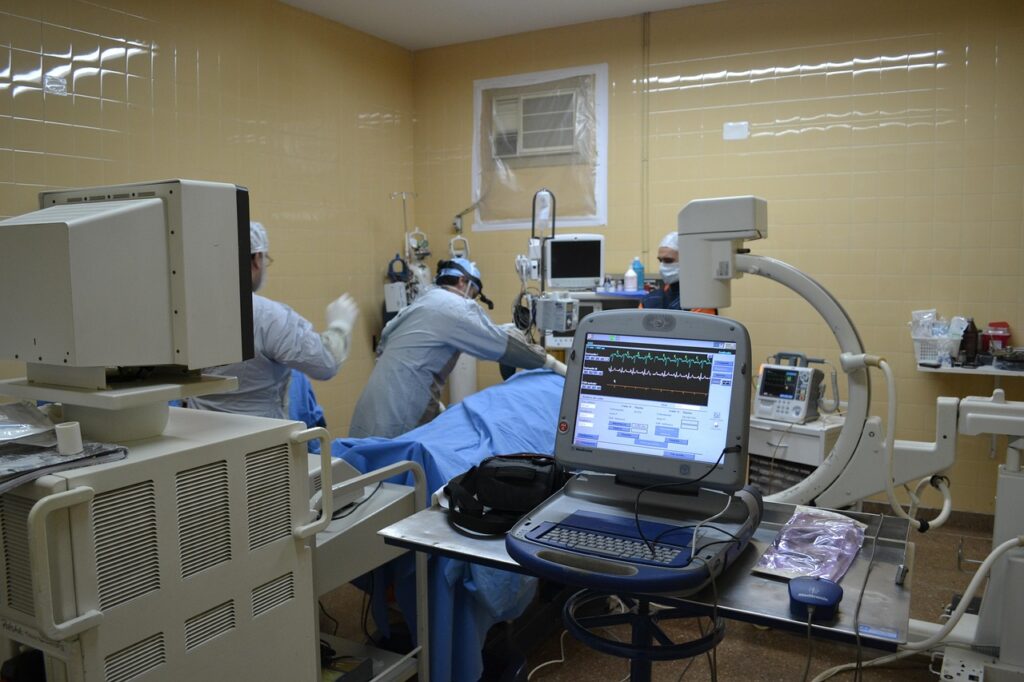
PRK was the original laser vision correction procedure, and it remains a preferred choice for patients with thin corneas, active lifestyles, or jobs that make LASIK riskier. The prk surgery cost is broadly similar to LASIK, and at many practices the two procedures are priced comparably. Despite being overshadowed by LASIK in marketing, PRK delivers equivalent long-term visual outcomes for suitable candidates and is often the safer option when a corneal flap would be a concern. This guide is part of our healthcare costs guide to help you compare your options clearly. Prices below are approximate ranges that vary widely; treat them as ballpark figures and get written quotes from qualified surgeons before you decide.
Average PRK Surgery Cost in 2026
Across the United States, the typical prk surgery cost commonly falls somewhere in the low-to-mid thousands of dollars per eye, with many practices quoting roughly $2,000 to $4,000 per eye (about $4,000 to $8,000 for both eyes). The wide range reflects differences in technology, surgeon experience, geographic location, and what the quote includes. Practices using wavefront-guided or topography-guided lasers tend to charge at the higher end, while those using more conventional excimer laser platforms may price more competitively. These figures are estimates only and are not guaranteed; your actual price depends on your eyes, your surgeon, and your market.
Premium practices in major metro areas often quote toward the higher end, particularly when advanced diagnostic testing and a lifetime enhancement guarantee are bundled in. Deeply discounted “budget” laser rates advertised by some centers can look attractive, but those headline prices frequently exclude pre-operative exams, medications, and follow-up visits, so the all-in cost can end up higher than it first appears. Because averages and advertised rates move over time and differ by region, do not treat any single number as fixed; compare current, itemized quotes.
For comparison, if you are weighing LASIK as an alternative, our guide to LASIK surgery cost covers pricing for that procedure.
PRK vs LASIK: Price Comparison
PRK and LASIK cost roughly the same at most practices. Where a difference exists, it usually reflects the additional femtosecond laser step used to create the LASIK flap. PRK does not require a flap, which eliminates one step and one piece of expensive equipment, so some practices discount PRK modestly relative to LASIK.
Many practices, however, charge identical fees for both procedures, reasoning that the surgeon’s skill and the excimer laser treatment are the primary value drivers regardless of technique. A handful of centers even quote more for PRK than LASIK, which typically reflects lower patient demand rather than higher underlying cost. Because the pricing relationship varies from practice to practice, the safest approach is to ask each surgeon directly what they charge for each procedure and why.
The more meaningful cost difference between PRK and LASIK often shows up in recovery rather than the sticker price. PRK generally requires more follow-up visits, a longer course of post-operative eye drops, and a longer period before vision fully stabilizes. Those indirect costs, including additional time off work, should factor into your total budget alongside the surgical fee.
What Is Included in the Quoted Price
Reputable practices offer all-inclusive pricing that covers the pre-operative exam, the procedure itself, post-operative medications, and all follow-up visits for a defined period (often one year). Ask specifically whether the quote includes the following items, because any excluded element can become an out-of-pocket surprise.
Pre-operative testing typically includes corneal topography, wavefront analysis, pachymetry (corneal thickness measurement), and a dilated eye exam, and these can add a few hundred dollars if billed separately. Post-operative medications include antibiotic drops, anti-inflammatory (steroid) drops, and preservative-free artificial tears, which add a modest but real amount. Follow-up visits, which for PRK may occur at one day, one week, and then at intervals over the following months, can add up if they are not bundled into the quote. Some practices also include an enhancement guarantee, meaning they will re-treat the eye at no additional surgical fee if your vision regresses within the covered window. That guarantee has real value, since a minority of PRK patients may benefit from an enhancement over the years, though the exact rate varies by patient and study.
PRK Cost Without Insurance
Laser vision correction is classified as an elective procedure, which means standard health insurance generally does not cover it. The large majority of PRK patients pay out of pocket. However, several options can reduce your effective cost.
Vision discount plans through employers or organizations such as VSP and EyeMed sometimes offer a percentage discount on laser eye surgery at participating providers. Health Savings Accounts (HSAs) and Flexible Spending Accounts (FSAs) let you pay for PRK with pre-tax dollars, effectively lowering the cost by your marginal tax rate. Because PRK is an IRS-qualified medical expense, using HSA or FSA funds is one of the most reliable ways to save, though the exact savings depend on your tax situation. Medical financing through CareCredit, practice-specific payment plans, or similar options often provides promotional interest-free periods, spreading the cost over time; read the terms carefully, since deferred-interest plans can be costly if not paid off within the promotional window. According to the Mayo Clinic, patients should budget for the full cost, including all follow-up care, before committing to surgery.
Does Insurance or Vision Coverage Help?
Standard medical insurance plans generally do not cover PRK or LASIK because they are considered elective. There are limited exceptions. Some plans may cover laser vision correction when there is a documented medical need, such as a corneal condition that makes contact lenses unsafe. Military and VA benefits cover PRK for eligible service members and veterans, and PRK is often the preferred refractive procedure in military settings because there is no corneal flap that could be dislodged during demanding physical activity.
Vision insurance plans occasionally provide a discount or a fixed allowance toward laser eye surgery at participating providers rather than full coverage. Benefit amounts vary by plan and change over time, so check your specific plan documents or call your vision insurer to confirm what, if anything, is available before you assume a benefit applies.
Factors That Influence PRK Pricing
Technology Level
Conventional PRK using a standard excimer laser generally costs less than wavefront-optimized or custom wavefront-guided PRK. The advanced options aim to reduce higher-order aberrations and night-vision issues for suitable candidates, as discussed in peer-reviewed literature on PubMed. Topography-guided PRK, a newer option, is often the most expensive and can be particularly useful for patients with irregular corneas. Which platform is right for you is a clinical decision, not just a budget one.
Surgeon Experience
Surgeons who have performed a high volume of refractive procedures often charge more than those earlier in their careers, and that premium is generally tied to experience rather than marketing. Board certification by the American Board of Ophthalmology and fellowship training in cornea or refractive surgery are reasonable minimum qualifications to look for. A thorough evaluation and a surgeon who clearly explains your candidacy matter far more than shaving a few hundred dollars off the price.
Geographic Location
PRK tends to cost more in high-cost-of-living metro areas than in smaller markets, reflecting local overhead and demand rather than any difference in the procedure itself. If you live in an expensive market, it can be worth comparing quotes from reputable practices in nearby regions, provided you can attend all required follow-up visits.
Candidacy and Safety
Cost should never be the only factor in a decision about elective eye surgery. Good candidates for PRK generally have a stable eyeglass prescription, healthy corneas of adequate thickness, no active eye disease, and realistic expectations. PRK is frequently recommended over LASIK for people with thinner corneas or those in contact sports, law enforcement, or the military, precisely because there is no flap. Like any surgery, PRK carries risks, which can include dry eye, glare or halos, undercorrection or overcorrection, and, less commonly, corneal haze or infection. A qualified surgeon should review your candidacy, the realistic range of outcomes, and the risks with you before you proceed. The U.S. FDA and the American Academy of Ophthalmology both publish patient information on what laser vision correction can and cannot do, and reviewing that material is a good way to prepare questions for your consultation.
How to Save on PRK Surgery
Use your HSA or FSA to pay with pre-tax money. This is one of the simplest and most impactful savings strategies, reducing your effective prk surgery cost by your marginal tax rate. If you do not currently have an HSA-eligible plan, you may be able to switch during your next open enrollment period and build up funds before scheduling surgery. See our HSA and FSA guide for details.
Compare quotes from at least three practices, and focus on all-inclusive pricing that bundles exams, medications, and follow-up care so you are comparing like with like. Avoid choosing a surgeon based solely on the lowest advertised price, since some budget centers use older technology or less experienced surgeons, and a poor outcome is far more expensive than any discount. Look for practices that include an enhancement guarantee, which can protect you from additional surgical fees if your vision changes over time.
Ask about promotions and discounts. Many laser eye centers offer reduced pricing during slower months, and military and first-responder discounts are common. Some practices offer referral credits when an existing patient refers a new one. Just make sure any discount does not come at the expense of a thorough evaluation, appropriate technology, or complete follow-up care.
Frequently Asked Questions
Is PRK cheaper than LASIK?
PRK is sometimes modestly cheaper than LASIK because it does not require the femtosecond laser used to make a flap, but many practices charge the same for both. The total cost difference is usually small and less important than the clinical reasons for choosing one procedure over the other.
Why is PRK expensive?
The prk surgery cost reflects costly excimer laser technology, the surgeon’s expertise, pre-operative diagnostics, post-operative care, and practice overhead. Spread across the many years of reduced dependence on glasses or contacts that a successful procedure can provide, the per-year cost is often quite reasonable for suitable candidates.
Can I use my HSA or FSA for PRK?
Yes. PRK is an IRS-qualified medical expense, making it eligible for payment through Health Savings Accounts and Flexible Spending Accounts. This lets you pay with pre-tax dollars and effectively reduces the cost by your marginal tax rate. Confirm current rules with your plan administrator and IRS guidance.
How long does PRK recovery take compared to LASIK?
PRK recovery is slower than LASIK. Functional vision typically returns within about one to two weeks, but full visual stabilization can take one to three months or longer. LASIK patients often see clearly within a day or two. The longer recovery is the main trade-off for PRK’s advantage of not creating a corneal flap.
Is PRK worth the cost?
For eligible candidates, PRK can provide long-term visual acuity comparable to LASIK with a lower risk of flap-related complications. Research summarized by the National Institutes of Health and the American Academy of Ophthalmology indicates that PRK and LASIK produce broadly equivalent refractive outcomes over time for suitable patients. Whether it is worth it for you depends on your eyes, your candidacy, and your budget, which is why a professional evaluation is essential.
The Bottom Line
PRK is a proven, effective vision correction procedure with costs broadly similar to LASIK. Your best strategies for managing the expense are to pay with HSA or FSA dollars, compare all-inclusive quotes from multiple reputable practices, and confirm that your quoted price includes all follow-up care and any enhancement guarantee. Do not choose a surgeon on price alone. The quality of your vision for decades to come depends far more on your candidacy, the technology used, and the skill of the person operating than on the size of a discount.
Key Points
- Price: PRK is broadly similar to LASIK per eye; ranges vary widely, so get itemized quotes rather than trusting one number.
- Coverage: elective and usually not insured, but an IRS-qualified HSA/FSA expense; military/VA and some plans are exceptions.
- Why PRK: no corneal flap makes it a strong fit for thin corneas, active lifestyles, and military roles, at the cost of a longer recovery.
- Choose well: candidacy and surgeon quality matter more than the cheapest advertised rate.
This article is for general educational purposes only and is not medical, tax, or financial advice. Prices are approximate, vary widely, and change over time. Candidacy, risks, and outcomes are individual; consult a qualified ophthalmologist and review FDA and American Academy of Ophthalmology patient materials before deciding.
Sources
- Mayo Clinic — LASIK and PRK (photorefractive keratectomy) patient information
- American Academy of Ophthalmology (AAO.org) — refractive surgery guidance and candidacy
- U.S. Food and Drug Administration (FDA) — LASIK and laser refractive surgery information
- IRS.gov — qualified medical expenses (HSA/FSA eligibility)