
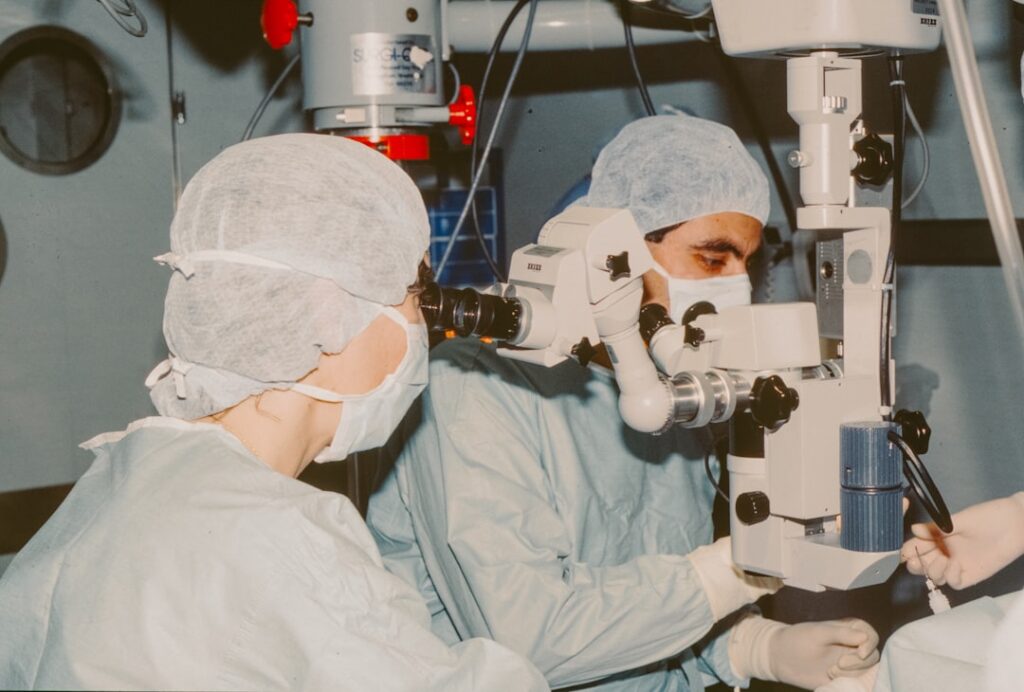
- Medicare Part B covers medically necessary cataract surgery, and the coverage is generally the same whether the surgeon uses a traditional blade or a laser.
- After your Part B deductible, you typically pay 20% of the Medicare-approved amount; a Medigap plan may cover some or all of that coinsurance.
- Medicare covers a standard (conventional) intraocular lens, plus one pair of eyeglasses or a set of contacts after surgery.
- Premium lens upgrades — such as multifocal or astigmatism-correcting lenses — and some laser add-ons are usually paid out of pocket, and estimates commonly cited run from about $1,000 to $4,000 per eye.
- All dollar figures here are estimates that vary by facility, region, your specific plan, and your surgeon's charges.
- Confirm your exact costs with Medicare and your surgeon's office before scheduling.
If a cataract is clouding your vision, you may be weighing surgery and wondering what it will cost — especially if your surgeon mentions a laser or a “premium” lens. The short version is that Medicare covers the core operation, but certain upgrades are usually yours to pay. This article explains the laser cataract surgery cost with Medicare in plain terms: what Medicare pays for, what you may owe, and why the numbers you see online are estimates rather than a quote. It is general education about coverage, not a bill or a guarantee — your exact cost depends on your plan, your surgeon, and where the procedure is done.
What Medicare covers for cataract surgery
Medicare Part B covers cataract surgery when it is medically necessary — that is, when a cataract has progressed enough to interfere with your vision and daily life. According to Medicare.gov, this includes the surgeon’s services, the outpatient facility, and a conventional (standard) intraocular lens, the artificial lens that replaces your clouded natural one. Medicare also covers one pair of eyeglasses with standard frames, or one set of contact lenses, after a surgery that implants an intraocular lens — a benefit that is unusual, since routine vision correction generally is not covered.
Importantly, coverage does not hinge on whether your surgeon uses a traditional blade or a computer-guided laser to perform steps of the operation. As MedicalNewsToday explains, Medicare’s coverage and payment amount are generally the same either way. In other words, choosing a surgeon who uses laser technology does not, by itself, change what Medicare will pay toward the covered procedure.
What you typically pay
Under Part B, after you meet your annual Part B deductible, you generally pay 20% of the Medicare-approved amount for the surgeon and the facility, and Medicare pays the rest. That 20% coinsurance has no built-in cap under Original Medicare alone, which is one reason many people carry a Medigap (Medicare Supplement) plan — depending on the plan, it may cover some or all of that coinsurance and the deductible.
How much is 20% in real dollars? Medicare-cited figures put the average total cost of cataract surgery at roughly $1,928 to $2,944 per eye, depending largely on whether it is done in a hospital outpatient department or an ambulatory surgical center, per MedicalNewsToday. Your share is a slice of the approved amount, not necessarily of a surgeon’s list price. Treat these as ballpark estimates: the actual approved amounts change over time and by region.
Where the “laser” and “premium” costs come in
Here is the distinction that trips people up. Medicare covers the procedure and a standard lens. It generally does not pay extra for elective, “advanced-technology” upgrades, even when they are delivered with a laser:
- Premium intraocular lenses (IOLs). Multifocal lenses (aimed at reducing dependence on glasses) and toric lenses (which correct astigmatism) are typically upgrades you pay for out of pocket. Surgery Cost Guide describes premium-IOL upgrades commonly running an additional $1,000 to $4,000 per eye that Medicare and most commercial plans will not reimburse.
- Laser-assisted refractive steps. When a femtosecond laser is used specifically to deliver a premium, refractive outcome (rather than the basic covered surgery), the added portion is often billed to you as a non-covered upgrade.
- Astigmatism correction and related add-ons. If your surgeon corrects astigmatism or adds other elective refinements during the operation, those extras usually come out of pocket.
The takeaway: you can often have laser-assisted or premium-lens surgery while still using your Medicare benefit for the covered core — you simply pay the difference for the elective upgrade.
| Item | Generally covered by Medicare Part B? | Your likely responsibility |
|---|---|---|
| Medically necessary cataract surgery (blade or laser) | Yes | Part B deductible, then ~20% coinsurance |
| Standard (conventional) intraocular lens | Yes | Part of the covered amount |
| One pair of eyeglasses or contacts after surgery | Yes (standard frames) | 20% of approved amount for the standard pair |
| Premium IOL (multifocal, toric/astigmatism) | No (elective upgrade) | Out of pocket — often ~$1,000–$4,000/eye (varies) |
| Laser refractive upgrade for a premium outcome | No (elective portion) | Out of pocket |
Every figure above is an estimate that varies. Use it to frame questions, not to predict your bill.
Medicare Advantage and Medigap can change the math
If you have a Medicare Advantage (Part C) plan instead of Original Medicare, your plan must cover at least what Original Medicare covers, but your copays, network rules, and prior-authorization requirements may differ — so your out-of-pocket experience can look quite different. If you have a Medigap policy alongside Original Medicare, it may absorb much of the 20% coinsurance and the deductible. Because the details vary so much between plans, the only reliable numbers are the ones tied to your coverage.
How to get a real estimate
Before scheduling, ask the surgeon’s office for a written cost breakdown that separates the Medicare-covered procedure from any elective upgrades, and ask specifically which lens they are recommending and why. Confirm whether the surgeon accepts Medicare assignment, since that affects what you can be charged. Then check your own coverage: Medicare.gov and your plan documents (or a call to Medicare or your Medigap/Advantage insurer) can tell you your deductible status and expected share. Asking about cost upfront is exactly what Medicare advises.
Frequently asked questions
Does Medicare cover laser cataract surgery? Medicare covers medically necessary cataract surgery, and coverage is generally the same whether a blade or laser is used. The elective, refractive portion of a laser upgrade is typically not covered.
Why am I being quoted thousands of dollars extra? That usually reflects a premium lens or laser refractive upgrade, which are elective and paid out of pocket — commonly cited around $1,000 to $4,000 per eye, though it varies.
Will Medicare pay for a lens that reduces my need for glasses? Medicare covers a standard lens. Multifocal or astigmatism-correcting “premium” lenses are generally upgrades you pay for yourself.
Does Medicare cover glasses after cataract surgery? Yes — Part B covers one pair of eyeglasses with standard frames, or one set of contacts, after surgery that implants an intraocular lens.
How much is the 20% coinsurance in dollars? It depends on the Medicare-approved amount and facility type. It is a share of the covered cost, not the surgeon’s list price, so ask for your specific estimate.
Can Medigap or Medicare Advantage lower my cost? Often yes. Medigap may cover the coinsurance and deductible; Medicare Advantage plans have their own copays and rules. Check with your plan.
This article is general education and is not medical advice. Talk to a qualified clinician about your situation.
For more plain-language coverage and pricing explainers, see our healthcare costs guide, or read about what an MRI can cost and why prices vary.
Sources
- Medicare.gov — Cataract surgery coverage (what Part B covers, conventional lens, post-surgery eyeglasses, 20% coinsurance and deductible)
- MedicalNewsToday — “Does Medicare cover cataract surgery?” (laser vs. blade coverage; average cost ranges per eye)
- Surgery Cost Guide — Premium IOLs for cataract surgery (out-of-pocket upgrade estimates)