
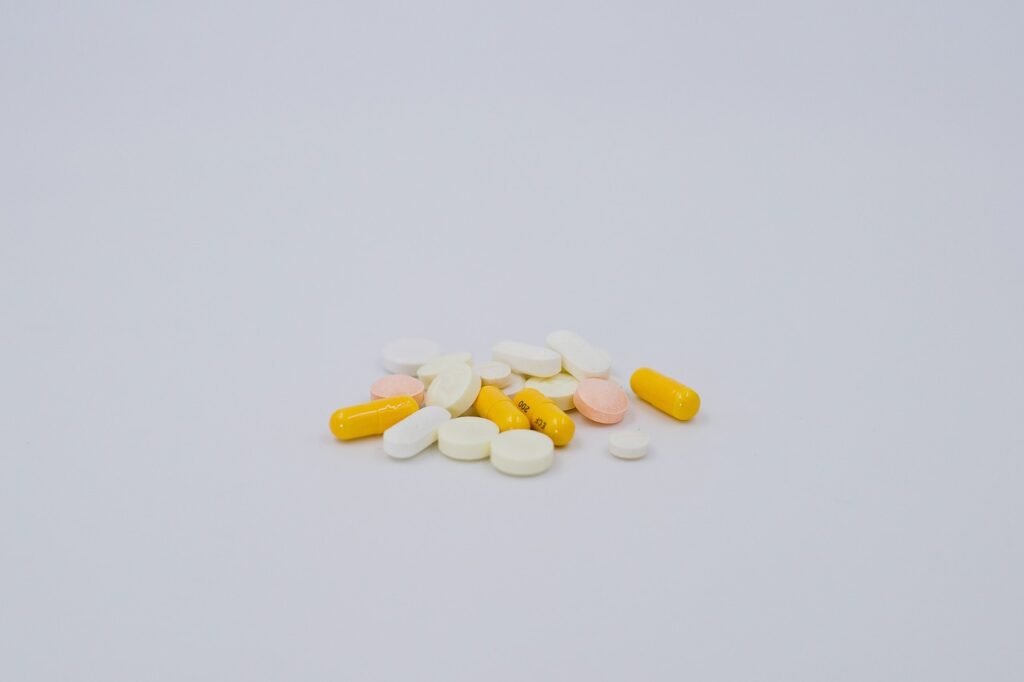
- Amoxicillin tablets and capsules contain the same active drug and are considered bioequivalent, so absorption and effectiveness are essentially identical — the choice is practical, not clinical.
- Capsules are typically stocked in 250 mg and 500 mg strengths and film-coated tablets in 500 mg and 875 mg; chewable tablets and oral liquid exist for people who cannot swallow pills.
- Which form and strength you receive depends on your prescription and pharmacy stock; pharmacists can often substitute an equivalent strength after checking with the prescriber.
- Amoxicillin is a prescription antibiotic: the right dose is individualized by your prescriber based on the infection, your weight, and kidney function — never self-dose from leftovers or someone else's supply.
- Take every dose on schedule and finish the full course even if you feel better; stopping early or misusing antibiotics fuels antibiotic resistance.
- Tell your clinician about any penicillin allergy before starting, and call Poison Control at 1-800-222-1222 if you suspect an overdose.
When your pharmacist hands you a bottle of amoxicillin, whether it comes as a tablet or a capsule depends mostly on the strength your prescriber wrote for and what the pharmacy has in stock. The amoxicillin tablets vs capsules question comes up far more for practical reasons — swallowing, splitting, cost — than clinical ones, because both forms deliver the same drug and are considered bioequivalent. Explore related medication topics in our medical conditions guide. Short answer: amoxicillin capsules are standard for 250 mg and 500 mg doses, while tablets are typical for 500 mg and 875 mg strengths, plus chewable tablets for children. Absorption and effectiveness are essentially identical. This article is general education, not medical advice, and amoxicillin is a prescription medicine you should take only as directed by your own clinician.
Quick Comparison Overview
Amoxicillin is the active ingredient, and manufacturers package it in several formats: capsules (hard gelatin shells containing powder), film-coated tablets (compressed powder with a coating), chewable tablets for children, and oral suspension (a liquid reconstituted from powder). FDA labeling and the FDA Orange Book list capsules in 250 mg and 500 mg strengths, film-coated tablets in 500 mg and 875 mg strengths, and chewable tablets in strengths such as 125 mg and 250 mg. Powder for oral suspension is available in several concentrations. All of these forms are approved for the same infections, and the FDA classifies the tablet and capsule versions as therapeutically equivalent.
How Each Form Delivers the Drug
Amoxicillin capsules contain drug powder inside a two-piece gelatin shell that dissolves in the stomach, releasing the contents quickly. Tablets are compressed powder held together by binders and covered with a thin film. Both forms disintegrate in the upper GI tract and release amoxicillin for absorption in the small intestine.
Bioavailability — the fraction of drug reaching the bloodstream — is high for oral amoxicillin regardless of form, generally estimated in the range of about 75 to 95 percent depending on the source and dose. Peak serum levels occur roughly 1 to 2 hours after a dose for both tablets and capsules. Food slightly delays absorption but does not meaningfully reduce the total amount of drug available, so amoxicillin can usually be taken with or without meals unless your label or pharmacist says otherwise.
Differences in Practical Use
Capsules are often easier to swallow because they are smooth-coated and slippery, though they cannot be split. Tablets can sometimes be split in half along a score line for partial doses, though amoxicillin tablets are usually not scored because standard regimens rarely require halving — and you should never split or alter any dose without your prescriber’s or pharmacist’s direction. Chewable tablets are made for children who cannot swallow pills; they have a fruity flavor and dissolve in the mouth.
If a patient cannot swallow either form, capsules can generally be opened and the powder sprinkled onto a small amount of soft food (applesauce works well) or mixed with water. Tablets can be crushed, though the taste is notoriously bitter and chalky. If swallowing is a problem, ask your pharmacist about the best approach or about switching to chewable tablets or an oral suspension rather than improvising on your own.
Effectiveness and Absorption
Amoxicillin tablets and capsules are considered therapeutically equivalent by the FDA and are interchanged routinely at the pharmacy counter. Bioequivalence studies comparing different oral amoxicillin formulations have found no clinically meaningful differences in peak concentration or total absorption between the standard oral forms, which is why the two are treated as interchangeable at equivalent strengths.
For most outpatient infections — strep throat, ear infections, uncomplicated urinary tract infections, skin infections, and dental infections — it does not matter which form you take, only that you complete the full prescribed course and keep the dose timing consistent. Missing doses or letting hours slip reduces effectiveness far more than the formulation ever could, and it gives bacteria a chance to survive and adapt.
How Dosing Is Decided
There is no one-size-fits-all amoxicillin dose, and this article deliberately does not provide a schedule for you to follow. The right strength, frequency, and length of treatment are set by your prescriber and are individualized to the specific infection being treated, your body weight (this matters especially for children), your kidney function, and your allergy history. High-dose regimens used for some ear infections in children, for example, are chosen by a clinician following pediatric guidance from bodies like the American Academy of Pediatrics — not something to estimate at home.
Follow the directions on your label exactly. Take each dose with a full glass of water; food is optional but can reduce nausea. Complete the entire course as prescribed even if you feel better after a few days, because stopping early raises the risk of the infection returning and of resistant bacteria. Never start, restart, or extend antibiotics using leftover pills, and never take amoxicillin that was prescribed for someone else — sharing or self-starting antibiotics is a core driver of antibiotic resistance. Store capsules and tablets at room temperature; store any liquid suspension as directed (usually refrigerated) and discard it after the number of days on the label, typically about 14.
Antibiotic Stewardship: Why the Full Course Matters
Amoxicillin only helps when it is the right drug for a bacterial infection, taken correctly. According to public-health guidance from the CDC, antibiotics do nothing for viral illnesses like most colds, flu, and many sore throats, and using them when they are not needed contributes to antimicrobial resistance — a growing threat that makes future infections harder to treat. Taking every dose on time, finishing the course your clinician prescribed, and not stockpiling leftovers are the everyday habits that keep amoxicillin working. If your symptoms are not improving, worsen, or you develop new symptoms, contact your clinician rather than adjusting the medicine yourself.
Which Is Better for Children
For children who cannot swallow pills (typically under about age 6 or 7), chewable tablets or liquid suspension are the standard. Chewable tablets are an alternative to liquid and can sidestep the measuring errors that sometimes happen with syringes. Liquid suspension is measured by volume and should be shaken well before each dose and given with the dosing device provided, never a kitchen spoon. Weight-based dosing for children is always set by the prescriber.
Older children and adults who can swallow pills can take capsules or tablets based on preference. Capsules are often easier for first-time pill swallowers, while some adults prefer a tablet. Whatever the form, the goal is the same: every dose, on schedule, for the full course.
Cost and Availability
Both forms are generic and inexpensive. As of 2026, a typical course of generic amoxicillin often costs only a few dollars to around $15 at U.S. pharmacies, and discount programs or coupons through services like GoodRx or SingleCare can bring a fill of 500 mg capsules down to roughly $3 to $10, depending on the pharmacy and quantity. Not every chain still runs a flat “$4 generic” list, so it is worth comparing a couple of nearby pharmacies. Brand-name Amoxil is rarely dispensed now because the generic is widely available and identical.
Availability varies by pharmacy and by strength. If your prescription is written for a specific form and the pharmacy is out, the pharmacist can usually substitute an equivalent dose in a different form after contacting the prescriber. The active ingredient and total dose stay the same.
Interactions and Warnings
Amoxicillin can interact with medicines including probenecid (which raises amoxicillin levels), allopurinol (which may increase rash risk), and warfarin (which can raise INR), and it may reduce the effectiveness of the oral typhoid vaccine. It should not be used by people with a true penicillin allergy, including a history of anaphylaxis or severe skin reactions — always tell your prescriber and pharmacist about any penicillin or cephalosporin allergy before starting.
Common side effects include diarrhea, nausea, and rash. Serious adverse effects are uncommon but include anaphylaxis, severe skin reactions such as Stevens-Johnson syndrome, and C. difficile-associated colitis; seek care promptly for hives, swelling, trouble breathing, or severe or bloody diarrhea. For related reading, see our amoxicillin clavulanate vs amoxicillin comparison, our amoxicillin vs penicillin allergy guide, and our amoxicillin rash vs hives article.
Frequently Asked Questions
Do amoxicillin tablets and capsules work the same?
Yes. Both forms are bioequivalent and deliver the same amoxicillin with nearly identical absorption and peak blood levels. The FDA classifies them as therapeutically equivalent, so an equivalent strength in either form works the same way.
Can I open an amoxicillin capsule and mix it with food?
Usually yes — the contents can be sprinkled onto applesauce, yogurt, or similar soft food and swallowed immediately, or mixed with water. Take the full prescribed amount at once, and check with your pharmacist first if you are unsure, especially for a child.
Why was I given capsules when my prescription said tablets?
Pharmacists can substitute equivalent strengths between tablets and capsules unless the prescriber specifies “dispense as written.” The active ingredient and dose are the same, and effectiveness is unchanged.
Are chewable tablets only for children?
They are labeled for children but can be used by adults who have difficulty swallowing pills. Taste is the biggest drawback for adults. Ask your pharmacist before switching forms.
Can I use leftover amoxicillin the next time I feel sick?
No. Antibiotics are prescribed for a specific infection and course. Using leftovers, or someone else’s prescription, can mean the wrong drug, the wrong dose, and a real risk of promoting resistant bacteria. Always see a clinician for a new problem.
The Bottom Line
Amoxicillin tablets vs capsules is a practical choice, not a clinical one. Both forms deliver equivalent drug and produce the same treatment outcomes for every approved indication, so pick whichever form you or your child can swallow consistently. What actually determines whether amoxicillin works is taking it correctly: the exact dose and course your prescriber set, every dose on schedule, the full course finished, and no self-starting from leftovers or sharing with others. If swallowing is a problem, ask your pharmacist about chewable tablets, oral suspension, or opening a capsule onto soft food. The form matters far less than taking every dose exactly as prescribed.
This article is general education and is not medical advice. Amoxicillin is a prescription antibiotic; the correct dose and length of treatment are individualized by your prescriber based on the infection, your weight, and your kidney function. Take it exactly as directed, finish the full course, never self-start leftover antibiotics or share them, and tell your clinician about any penicillin allergy. Call Poison Control at 1-800-222-1222 if you suspect an overdose.
Sources
- MedlinePlus (U.S. National Library of Medicine) — Amoxicillin drug information
- U.S. Food and Drug Administration (FDA) — Amoxicillin labeling and Orange Book therapeutic-equivalence listings
- DailyMed (NIH) — Amoxicillin capsule and tablet prescribing information (strengths, storage, administration)
- Centers for Disease Control and Prevention (CDC) — Antibiotic use and antimicrobial resistance / stewardship guidance
- American Academy of Pediatrics (AAP) — principles of weight-based pediatric antibiotic dosing
- GoodRx and SingleCare — 2026 generic amoxicillin cash-price and coupon estimates
- American Association of Poison Control Centers — Poison Help line, 1-800-222-1222