
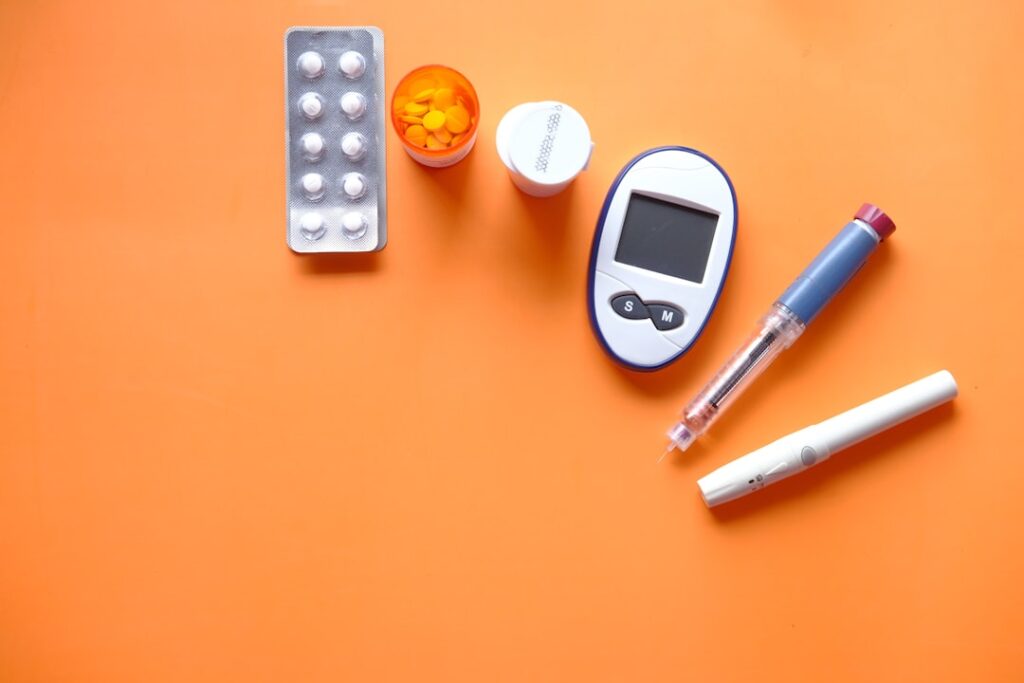
- The A1c reflects your average blood sugar over roughly the past three months and does not require fasting.
- The ADA cites A1c below 5.7% as normal, 5.7-6.4% as prediabetes, and 6.5% or higher as consistent with diabetes.
- A diagnosis usually needs confirmation with a second test on another day rather than one elevated result.
- A common treatment target is below 7%, but individual goals differ and are set with your clinician.
- Certain conditions can make A1c less reliable, so results are interpreted in context, not self-diagnosed.
PASTE BELOW THIS LINE INTO THE WORDPRESS EDITOR
————————————————————
A1c Test Explained: What the Number Means for Diabetes
The A1c test (also written HbA1c or hemoglobin A1c) is one of the most widely used blood tests for diabetes. Unlike a fingerstick reading, it summarizes your blood sugar over months rather than a single moment. If your report shows an A1c percentage and you are unsure what it means, this guide walks through what the test measures, the ranges clinicians use, and why the number always needs interpreting in context.
This is general education, not a diagnosis. The specific meaning of your result belongs to the clinician who ordered it.
What the A1c measures
Hemoglobin is the oxygen-carrying protein inside your red blood cells, and glucose in your bloodstream naturally attaches to it. The A1c test measures the percentage of hemoglobin that has glucose attached. Because red blood cells live for around three months, that percentage reflects your average blood glucose over roughly the past two to three months.
A practical advantage is that A1c does not require fasting and is not thrown off by what you happened to eat that morning. That makes it convenient for both diagnosis and long-term monitoring, and it complements, rather than replaces, the day-to-day glucose checks that many people with diabetes perform themselves.
Why a clinician orders it
Clinicians use the A1c for two main jobs: to help diagnose prediabetes and type 2 diabetes, and to monitor how well diabetes is being managed over time. For someone already living with diabetes, the A1c is often checked at least twice a year to see how treatment is working. For someone with prediabetes, it may be repeated about once a year to watch for change.
The ADA ranges
The American Diabetes Association (ADA) uses the following A1c thresholds. Remember that laboratory methods can differ slightly, so read these alongside the range printed on your own report.
| Category | A1c |
|---|---|
| Normal | Below 5.7% |
| Prediabetes | 5.7% to 6.4% |
| Diabetes | 6.5% or higher |
For many adults living with diabetes, a common treatment target is an A1c below 7%. That is general guidance, not a universal rule. An individual goal depends on factors such as age, how long someone has had diabetes, the risk of low blood sugar, and other health conditions, and it is something to set together with your clinician.
Diagnosis usually needs confirmation
A single elevated A1c is generally not enough to diagnose diabetes. The ADA notes that a diagnostic test usually needs to be repeated on a second day. Confirmation might use a repeat A1c, a fasting plasma glucose test, or an oral glucose tolerance test. An exception can apply when blood glucose is very high or there are clear symptoms of high blood sugar alongside one positive test, in which case a clinician may not require a second test.
For reference, the ADA lists a fasting plasma glucose of 126 mg/dL or higher, and a two-hour oral glucose tolerance test value of 200 mg/dL or higher, as consistent with diabetes. These are other routes to the same diagnosis, chosen and interpreted by your clinician.
A1c as an average, and what it does not show
Because the A1c summarizes months of blood sugar into one figure, some labs also report an estimated average glucose alongside the percentage to make the number easier to relate to everyday readings. The trade-off is that an average hides the ups and downs. Two people can share the same A1c while one has steady blood sugar and the other swings between highs and lows. That is why A1c and day-to-day glucose monitoring answer different questions and are often used together rather than one instead of the other.
For someone managing diabetes, watching the A1c trend over successive tests can be more informative than any single value, since it shows whether a treatment and lifestyle plan is moving things in the intended direction over time.
What can make A1c less reliable
The A1c depends on red blood cells behaving in a typical way, so conditions that affect red blood cells or hemoglobin can shift the result up or down without reflecting a true change in blood sugar. Certain types of anemia, some hemoglobin variants, recent blood loss or transfusion, and other conditions are examples. When A1c may be unreliable, a clinician can rely more on direct glucose measurements. This is one more reason the number is not meant to be read in isolation.
Why a clinician interprets the result
A percentage on a page does not, by itself, tell you what to do. Your clinician considers your full picture, including symptoms, other test results, medications, and any conditions that could affect accuracy, before deciding whether the result means a new diagnosis, a stable trend, or a reason to adjust a plan. Please do not use an A1c number to diagnose yourself or to start, stop, or change any medication on your own.
Frequently asked questions
Do I need to fast before an A1c? No. One of the test’s advantages is that fasting is not required, though you may need to fast if other tests are drawn at the same time.
How is A1c different from a daily glucose reading? A fingerstick shows your blood sugar at that moment. A1c reflects an average over about three months, so the two answer different questions.
What does an A1c in the prediabetes range mean? It signals higher-than-normal average blood sugar and an increased risk of developing diabetes. It is a prompt for follow-up and lifestyle discussion with your clinician, not a diabetes diagnosis.
Can one high A1c confirm diabetes? Usually not on its own. Confirmation typically requires a second test on another day, unless a clinician determines otherwise based on very high glucose or clear symptoms.
Why might my A1c not match my home readings? Conditions affecting red blood cells, timing, and normal biological variation can all contribute. Your clinician can reconcile the two.
What should my personal A1c goal be? That is individual. A common target is below 7% for many adults with diabetes, but yours should be set with your clinician.
This article is general education and is not medical advice. Talk to a qualified clinician about your situation.
Sources
- MedlinePlus, “A1C”
- American Diabetes Association, “Diagnosis”